Alabama
How Regional Jail Policies Shape ICE Arrest Rates in the Northeast
As more states seek ways to limit immigration enforcement, a Stateline analysis shows one tactic has had an effect: making it more difficult for local law enforcement to hand over people they are holding in city or county jails to…

Last updated:
Key points
How Regional Jail Policies Shape ICE Arrest Rates
- States with non-cooperation policies like New York, Massachusetts, and Connecticut show the lowest rates of jail-based ICE arrests.
- Federal street-level enforcement operations occur widely in both cooperative and non-cooperative states, often involving individuals without criminal records.
- Courts continue to treat federal detainers as voluntary requests, leading neighboring states around Southern Vermont to set strict rules on local jail holds.
NewsWK — For communities across Bennington County and our neighboring borders in New York and Massachusetts, the relationship between local law enforcement and federal immigration authorities remains a central topic of public policy. A recent national review of federal enforcement records reveals that statewide policies limiting jail cooperation significantly reduce the number of custody transfers to Immigration and Customs Enforcement.
The data shows that states with established non-cooperation frameworks, including New York, Massachusetts, and Connecticut, consistently record the lowest rates of immigration arrests inside correctional facilities. Conversely, jurisdictions that actively prohibit sanctuary protections, such as West Virginia, Wyoming, Mississippi, and Alabama, experience the highest rates of jail-based federal arrests.
Why it matters here
Residents in Southern Vermont live in close proximity to Rensselaer County and Washington County in New York, as well as Berkshire County in Massachusetts. Because our regional economy, healthcare networks, and daily commutes regularly cross state lines, differing state laws create a patchwork of law enforcement protocols within just a few miles of Bennington, Pownal, and Shaftsbury.
In northeastern states that limit local involvement in federal civil immigration actions, county facilities generally do not hold individuals beyond their scheduled release dates solely on federal administrative requests. Supporters of these measures argue they foster trust between immigrant communities and local police, ensuring residents feel safe reporting crimes and cooperating with local investigations. Opponents contend that restricting cooperation creates unnecessary public safety risks.
Street operations and enforcement trends
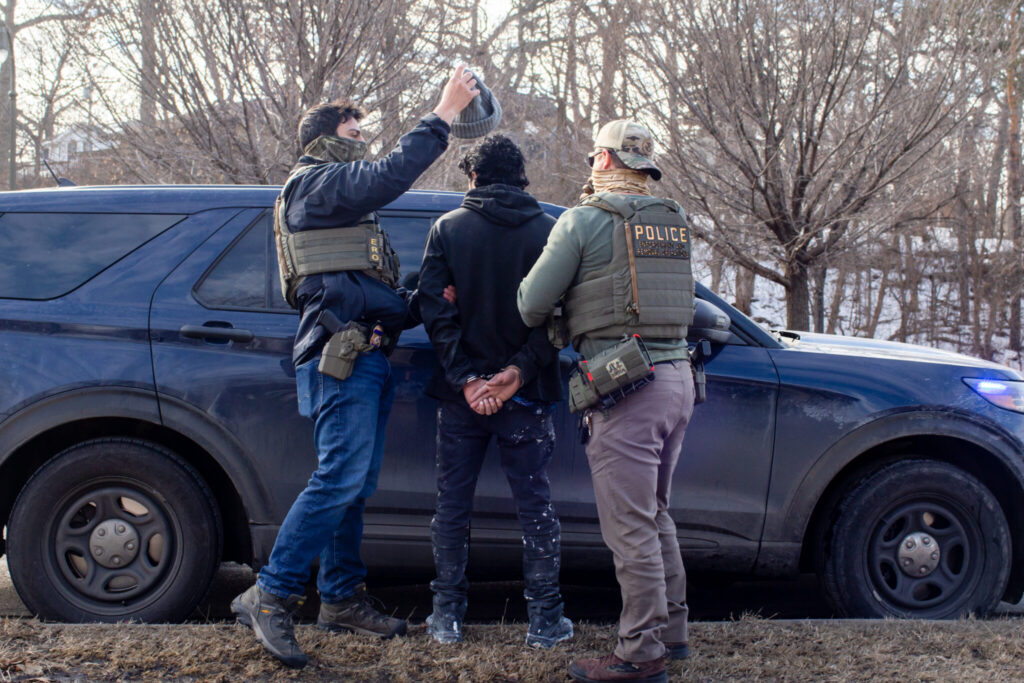
While local policies effectively curb transfers directly from county holding centers, they do not prevent federal authorities from conducting operations in the community. Federal officials previously pledged to increase street-level enforcement in areas with non-cooperation policies, yet national data indicates widespread activity across both cooperative and non-cooperative states alike.
Nationally, areas such as Maine, Minnesota, and the District of Columbia experienced elevated rates of street-level apprehensions relative to their noncitizen populations. However, states with high levels of local cooperation also saw significant community enforcement actions. For example, West Virginia saw hundreds of individuals taken into custody during targeted winter operations despite having a relatively small noncitizen population.
Federal figures show that street-level apprehensions frequently involve individuals without serious criminal records. In the District of Columbia, 81 percent of street arrests involved civil immigration violations rather than criminal charges, a pattern mirrored across more than a dozen other states.
The legal framework around detainers
At the core of the debate is the federal immigration detainer, an administrative notice asking local jails to hold an inmate for up to 48 hours beyond their normal release time so federal agents can take custody. Federal courts have repeatedly determined that these detainers are voluntary requests rather than mandatory judicial warrants.
Colleen Putzel-Kavanaugh, an associate policy analyst at the Migration Policy Institute, noted that local facilities generally differentiate based on public safety severity. “Generally if someone poses a real threat to safety, public safety or national security, that detainer is generally respected,” Putzel-Kavanaugh explained.
Federal officials, however, argue that limiting cooperation compromises community well-being. “Sanctuary policies continue to disregard U.S. immigration law and put communities at risk by releasing illegal aliens prone to criminal activity into our communities,” said Robert Guadian, a field office director for enforcement and removal operations with ICE.
Regional and national outlook
Across the country, several states have attempted to calibrate their statutes by allowing jail transfers only for individuals convicted of specified serious offenses while barring holds for minor municipal infractions. Other regions participate in federal 287(g) agreements, which authorize local officers to perform certain immigration functions inside local facilities, though those programs remain concentrated primarily in southern states like Texas and Florida.
As federal leadership adjusts enforcement strategies and overall monthly arrest totals fluctuate across the country, local municipal departments and county sheriff offices in our tri-state region continue to operate under state-specific guidance designed to define the clear boundaries of local municipal authority.
This article was produced with the assistance of AI and reviewed by our editorial team.
Sources
Related: Multistate Lawsuit Challenges Federal Immigration Rules on Public Safety Grants
Related: Cities Turn to Artificial Intelligence to Clear Housing Permit Backlogs
Related: How Towns Use Controlled Burns to Prevent Wildfires
Related: Federal Court Protects Over 1,400 Churches from ICE Enforcement
Related: NewsWK App now available for Iphone and Android Users
Related: Supreme Court Clears Mail Ballot Order as VT, NY, and MA Fight Rules
Related: The Origins and History Behind the Bennington Triangle
Related: Navigating AI in Classrooms: Local Schools Face Tech and Privacy Risks
Related: Rising Water Costs Due to Climate Change: What Bennington Residents Need to Know
Related: Changes to Fire Codes in Vermont: What Local Residents Need to Know
Related: About
Related: Gridlock in Bennington: Bridge Closures, Roundabout Overhauls, and Sewer Repairs Stall Commuters
Related: DHS Proposes $100,000 H-1B Visa Fee for High-Skilled Foreign Hires
Related: Federal Abortion Ruling on Patient Health Sets Stage for High Court
Related: States Push for Closer Review in Domestic Violence Deaths
Related: As Youth Crime Laws Target Parents, Region Weighs Impact
Related: States Fortify Polling Safeguards as Midterm Elections Approach
Related: DOJ Sues Vermont, New York Over In-State College Tuition Rules
Related: Five Detained in Londonderry ICE Operation, Local Leaders Respond
Related: VT Gains Federal Education Dollars Flexibility Under New Waivers
Related: Western Wildfires Highlight Growing Property Insurance Risks
Related: Changes to Asylum Procedures May Impact Local Refugees in Vermont
Related: State Attorneys General Step Up Consumer Protection Efforts Amid Rising Prices
Related: Homicide Rates Drop Significantly in U.S. Cities, Impacting Local Communities
Related: Bennington Battle Day Marked as Historic Monument Awaits Repairs
Related: Two Gulf Breeze Residents Arrested on Animal Cruelty Charges in Santa Rosa County
Related: FTC Amazon Advertising Lawsuit: Vermont Joins Multistate Action
Related: Mifepristone Lawsuit Paused: Local Impact and Next Steps
Related: Federal Judge Reinstates Freeze on Mail In Ballot Rules
Related: New Paramedic and EMT Join Bennington VT Emergency Medical Services
Related: Coordinated State Legislation in the Northeast Gains Traction Among National Groups
Related: Border County Tax Pressures Mount as New York Shifts SNAP Costs
Related: Bennington 250 Announces ‘250 for 250’ Year-End Gala to Support Anniversary Celebrations
Related: Local Impact of Indefinite Immigrant Detention Policies
Related: How Endangered Species Act Changes Impact Vermont Wildlife Protections
Related: How Endangered Species Act Changes Impact Vermont Wildlife Protections
Related: Sanctuary Policy Lawsuits: Southern Vermont Watches Federal Legal Challenges
Related: Sanctuary Policy Lawsuits: Southern Vermont Watches Federal Legal Challenges
Related: Federal Funding Cuts to Indigenous Services in Vermont Spark Concern Over Unmet Needs
See a typo? Report it here.