Arizona
DHS Noncitizen Voter Investigation Targets Nonprofits, Documents Show
The Department of Homeland Security obtained tens of millions of unspecified records as part of a sweeping nationwide effort to find voter fraud, according to internal DHS reports, and weighed using undercover agents to investigate voter registration efforts by nonprofit…

Last updated:
Key points
- Internal federal reports show Homeland Security Investigations monitored dozens of nonprofit groups involved in voter registration.
- Federal officials gathered nearly 100 million records from independent sources and the Department of Justice to search for noncitizen voters.
- The documents show that investigators considered using undercover agents to monitor voter registration efforts in several states.
NewsWK — Federal authorities have quietly launched a massive effort to scrutinize voter registration groups. Also, they have gathered millions of personal records. The operation focused heavily on swing states. However, the revelations draw attention from civic organizations in Southern Vermont. Local advocates emphasize the importance of maintaining transparent, accessible voting systems free from federal overreach.
How does the federal probe affect Southern Vermont voters?
Federal investigators focused on other states. However, the sweeping federal investigation noncitizen voting raises concerns for local civic groups. Town clerks in Bennington, Pownal, and Shaftsbury rely on established state systems. Therefore, they ensure local elections remain secure and accessible without federal interference.
Local election officials in Bennington County emphasize that voter registration follows strict state guidelines. Vermont uses secure databases to verify eligibility. However, local advocacy groups worry that federal surveillance could intimidate eligible voters. They fear it might discourage participation in civic processes. Meanwhile, clerks in nearby towns like Arlington and Woodford report that local registration remains steady.
In Neighboring Rensselaer County, New York, and Berkshire County, Massachusetts, local officials also maintain independent control over voter rolls. These administrators focus on local accuracy rather than federal directives. Yet, the scale of the federal investigation noncitizen voting shows a clear trend. Federal agencies are expanding their reach into local election administration.
What do the Democracy Forward DHS documents reveal?
Newly released federal records show that Homeland Security Investigations monitored dozens of nonprofit voter registration groups. The agency examined 82 organizations in Pennsylvania and dozens more across the Midwest and Northeast. Furthermore, they even considered using undercover agents to monitor these groups. This disclosure comes from the Democracy Forward DHS documents released this week.
The internal federal reports from May and June detail a broad Homeland Security voter fraud investigation. Investigators specifically targeted non-governmental organizations involved in voter registration. For example, the agency reviewed 41 groups in New Jersey. They also began researching 22 organizations in Minnesota. This list included a prominent educators union. Additionally, federal officials flagged the Pennsylvania chapter of the Council on American-Islamic Relations for further investigation.
The documents reveal that federal agents discussed using undercover resources. They wanted to deploy undercover agents to support field investigations. The reports stated the goal was to identify groups that registered or encouraged noncitizens to vote. However, many targeted groups defended their work. Ahmet Selim Tekelioglu, executive director of the Pennsylvania Muslim civil rights group, stated, “Our voter registration program follows all applicable voter registration rules and requirements.”
Why did the ICE voter registration probe gather millions of records?
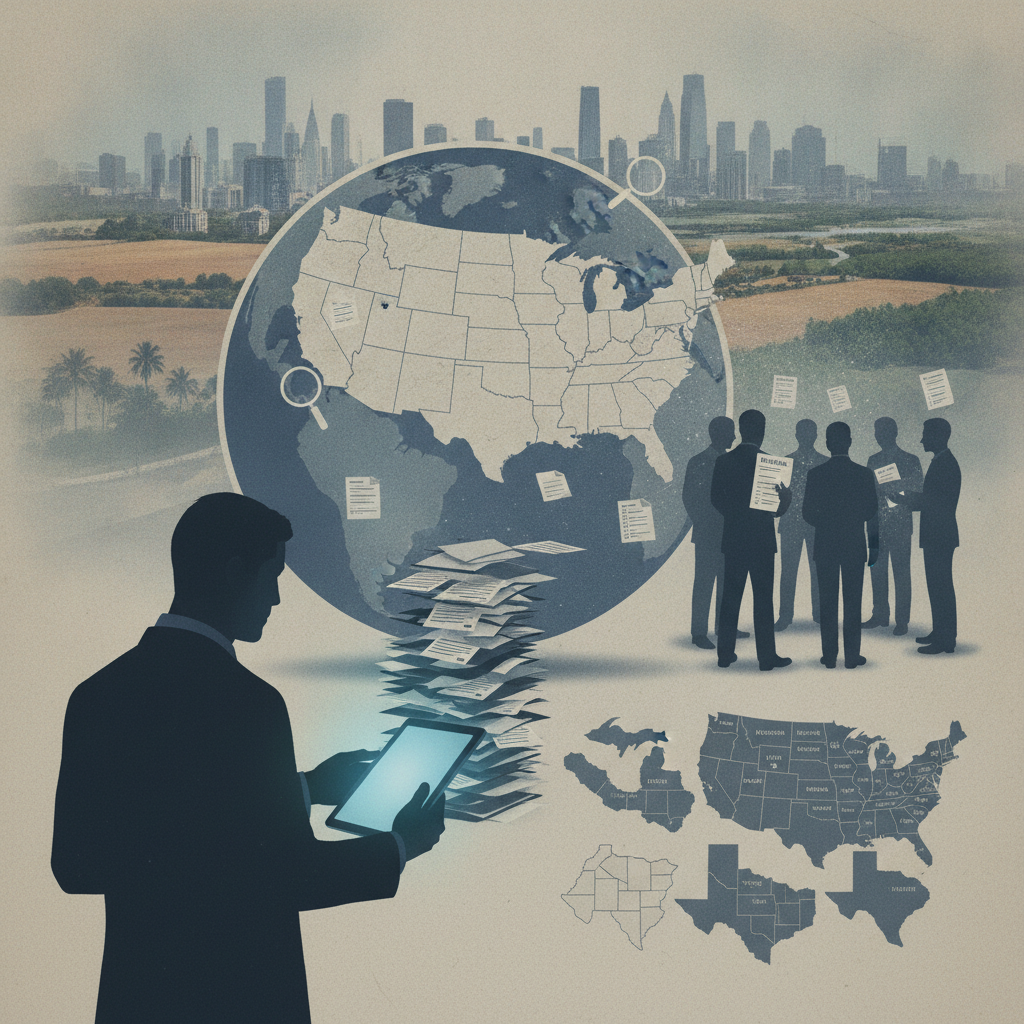
The federal investigation aimed to identify potential noncitizen voters by analyzing massive datasets. Officials obtained over 48 million records from independent sources. Then, they also took 50 million from the Department of Justice. This data collection was central to the ICE voter registration probe.
The reports show that a Department of Homeland Security official obtained 48.4 million records through independent sources. Meanwhile, the agency drew another 50.6 million records from the Department of Justice. The exact nature of these records remains unclear. However, the Justice Department has previously sued multiple states to obtain sensitive voter data. This data includes driver’s license and Social Security numbers.
How did the DHS noncitizen voter investigation prioritize its targets?
The DHS noncitizen voter investigation focused its resources on specific states with high-value targets. Investigators prioritized 26,563 records for deep vetting. They focused on key states like Michigan, Minnesota, New Jersey, Ohio, and Pennsylvania. They sent these records to an innovation lab for secondary enrichment.
The agency also prioritized records from several other states. Specifically, these states included:
- Arizona
- California
- Florida
- Georgia
- Texas
Federal officials then analyzed this data to find potential noncitizen voters. However, studies consistently show that noncitizen voting is extremely rare. The Justice Department brought only a few dozen cases this year. This is a tiny fraction of the 154 million people who voted in the 2024 election.
Voting rights advocates argue that the massive data collection is unnecessary and harmful. Hart Wood, senior oversight counsel at Democracy Forward, stated, “This trove of ICE documents provides chilling new insights into the breadth and depth of the Trump-Vance administration’s efforts to pursue baseless claims of widespread election fraud.” Despite these federal actions, local officials in Southern Vermont assure residents that their voting rights remain protected under state law.
This article was produced with the assistance of AI and reviewed by our editorial team.
Sources
Related: How the Noncitizen Voting Supreme Court Ruling Impacts Southern Vermont Voters Ahead of the Midterms
Related: Judge Issues Voter Privacy Rights Ruling Against Trump Administration Policy
See a typo? Report it here.