Bennington
The Origins and History Behind the Bennington Triangle
How the mysterious ‘Bennington Triangle’ came to be


Last updated:
Key points
The Origins and History Behind the Bennington
- The term ‘Bennington Triangle’ was coined in 1992 by Vermont author Joseph A. Citro to describe unsolved disappearances centered around Glastenbury Mountain between 1945 and 1950.
- The 1946 disappearance of Bennington College student Paula Jean Welden prompted statewide reform that led to the creation of the Vermont State Police.
- Local officials remind modern hikers to practice backcountry safety when exploring the rugged terrain of the Green Mountain National Forest.
NewsWK — For generations of residents in Bennington County, the dense woods and rugged ridges surrounding Glastenbury Mountain have carried a distinct reputation. Known widely in regional folklore as the Bennington Triangle, the area encompasses a stretch of southwestern Vermont that captured public attention following a series of unsolved disappearances in the mid-twentieth century.
While the stories often evoke supernatural speculation in popular culture, the reality is rooted in local geography, historical events, and the unforgiving terrain of the Green Mountains. Understanding how this concept came to be offers valuable perspective on our region’s past and the unique character of our surrounding wilderness.
Why it matters here
The legacy of the Bennington Triangle touches several aspects of community life in Bennington, Woodford, Shaftsbury, and Glastenbury. It shapes local heritage and attracts hikers, historians, and folklore enthusiasts to the Long Trail and the Green Mountain National Forest each year.
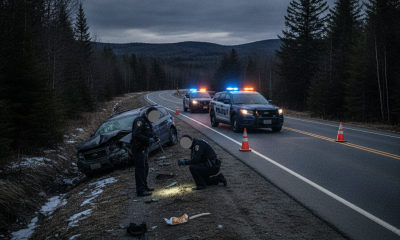
More importantly, the historical events tied to this area led directly to major civic developments in Vermont. The high-profile searches conducted in the late 1940s underscored the state’s need for coordinated law enforcement, ultimately spurring the establishment of the Vermont State Police in 1947.
How the term was coined
Although the unexplained events took place decades earlier, the phrase itself was introduced in the early 1990s. Vermont author and folklorist Joseph A. Citro coined the term to describe a geographical area centered on Glastenbury Mountain, drawing inspiration from the concept of the Bermuda Triangle.
The designated zone roughly connects Bennington with nearby communities such as Woodford, Shaftsbury, and Somerset. Citro used the label to categorize a cluster of mysterious disappearances and strange occurrences recorded in the area between 1945 and 1950.
The five central disappearances
The lore of the area is primarily anchored by five well-documented cases that occurred over a five-year span following World War II.
- Middie Rivers (1945): On November 12, 1945, the 74-year-old experienced hunting guide vanished while leading a party in the woods near Bickford Hollow in Glastenbury. Despite extensive searches by local volunteers and authorities, only a single rifle cartridge was ever recovered.
- Paula Jean Welden (1946): On December 1, 1946, Welden, an 18-year-old sophomore at Bennington College, set out for an afternoon hike along the Long Trail. She was seen by several witnesses near Woodford Hollow, but she never returned to campus. The massive search effort drew national media attention and involved hundreds of volunteers, state officials, and outside investigators.
- James Tedford (1949): On December 1, 1949, exactly three years after Welden went missing, Tedford disappeared while traveling on a bus returning to the Bennington Soldiers’ Home. Witnesses reported seeing him on board earlier in the route, but he was gone before the bus reached its destination.
- Paul Jepson (1950): On October 12, 1950, the eight-year-old boy went missing from his family’s truck at a local dump in Bennington. Search dogs tracked his scent to a nearby highway intersection before losing the trail entirely.
- Frieda Langer (1950): On October 28, 1950, the 53-year-old experienced hiker vanished near the Somerset Reservoir after slipping into a brook and heading back toward camp to change clothes. Her body was discovered months later in May 1951 in an open area that had been thoroughly searched previously, though a cause of death could not be determined.
The rugged nature of Glastenbury Mountain
Beyond the unresolved cases, the physical landscape plays a major role in the area’s mystique. Glastenbury was once a small logging and mining community that peaked in population in the late nineteenth century before declining rapidly into an unincorporated ghost town.
The terrain is characterized by sudden weather shifts, dense tree cover, steep elevation changes, and hidden ravines. Experienced local hikers frequently note that disorientation can occur quickly when stepping off marked trails, particularly during late autumn when daylight fades fast and early snowfalls conceal footpaths.
Safety and respect in the backcountry
Today, the trails around Glastenbury, including the Long Trail and Appalachian Trail corridor, remain popular destinations for outdoor recreation. Local emergency management and conservation officials continue to emphasize safety protocols for anyone exploring the wilderness.
Hikers are advised to plan ahead, carry proper navigation tools, pack adequate cold-weather layers, and notify family or friends of their intended route before heading out. While the mysteries of the mid-twentieth century remain unsolved, the mountain continues to be appreciated as a rugged, vital part of southern Vermont’s natural landscape.
This article was produced with the assistance of AI and reviewed by our editorial team.
Related: How Towns Use Controlled Burns to Prevent Wildfires
Related: Bennington 250 Announces ‘250 for 250’ Year-End Gala to Support Anniversary Celebrations
Related: NewsWK App now available for Iphone and Android Users
Related: Bennington Battle Day Marked as Historic Monument Awaits Repairs
Related: PFOA Plume Spreads to Shaftsbury and South Bennington
Related: Navigating AI in Classrooms: Local Schools Face Tech and Privacy Risks
Related: Traffic Reports
Related: Rising Water Costs Due to Climate Change: What Bennington Residents Need to Know
Related: Changes to Fire Codes in Vermont: What Local Residents Need to Know
Related: Bennington and Surrounding areas Events
Related: Weather
Related: About
Related: Gridlock in Bennington: Bridge Closures, Roundabout Overhauls, and Sewer Repairs Stall Commuters
Related: What to Do in Bennington: Live Music, Arts, and Trails This Week
Related: Five Detained by ICE in Londonderry, Prompting Local Response
Related: HISTORIC HONOR IN SUNDERLAND: New Marker Commemorates Literary Pioneer Lucy Terry Prince
See a typo? Report it here.