Bennington
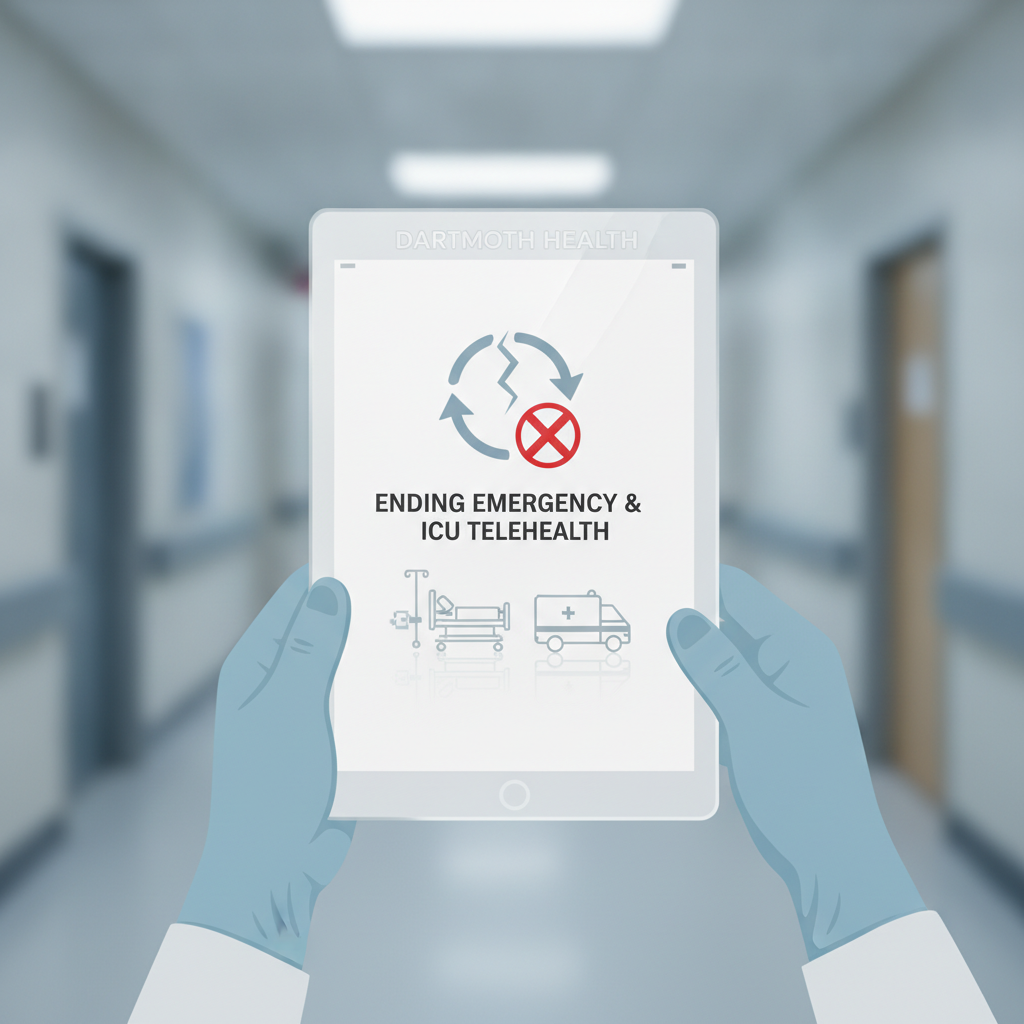
Dartmouth Health to End Emergency and ICU Telehealth Services
Dartmouth Health says it needs to close telehealth services for emergency and intensive care

Last updated:
Key points
Dartmouth Health to End Emergency and ICU
- Dartmouth Health plans to discontinue its telehealth services for emergency and intensive care across regional networks.
- These specialized programs provided rural hospitals with 24/7 remote access to critical care specialists and emergency physicians.
- Local emergency departments remain fully operational for in-person care while regional health systems assess alternative clinical consultation models.
NewsWK — Dartmouth Health has announced plans to discontinue its specialized telehealth services for emergency and intensive care, marking a notable shift in how remote clinical support is delivered across regional medical centers in Vermont and New Hampshire.
For patients and healthcare providers in Southern Vermont and neighboring rural areas, regional hospital networks and virtual specialty care often serve as critical lifelines when immediate on-site specialist coverage is limited.
The health system confirmed that it needs to wind down these specific remote services, which have historically provided virtual backup to bedside medical teams managing acute, life-threatening conditions.
Why it matters here
Virtual emergency and intensive care services, often referred to as tele-emergency and tele-ICU care, allow community hospitals to connect bedside doctors and nurses directly with critical care specialists at larger tertiary centers. For smaller medical facilities across Bennington County, Windham County, and the broader region, these programs can provide vital second opinions during acute medical crises.
When a local facility faces complex trauma, severe respiratory failure, or sudden cardiac events, remote specialists can review vital signs, examine imaging in real time, and help stabilize patients before a potential transfer.
The planned closure of these virtual programs highlights several important points for regional healthcare delivery:
- Emergency care continuity: Local emergency departments must ensure alternative clinical consultation channels or on-site resources are available when acute crises arise.
- Critical care management: Rural intensive care units rely on specialist consultations to safely manage complex patients closer to home whenever possible.
- Patient transfers: Reductions in virtual specialty oversight at smaller hospitals may influence decisions regarding how quickly patients need to be transferred to larger regional medical centers.
Understanding tele-ED and tele-ICU programs
Telehealth expanded rapidly across Northern New England over the past decade, driven by the need to bridge staffing gaps and deliver specialty medical expertise to rural facilities. In emergency departments and intensive care units, virtual care systems typically integrate two-way audiovisual technology, remote diagnostic monitoring, and real-time electronic health record access.
Under these models, a board-certified emergency physician or critical care intensivist stationed at a central hub can assist rural doctors during complex resuscitations, medication dosing, ventilator management, and emergency intubations.
These programs were developed to ease the burden on bedside staff, reduce unnecessary transfers for patients who could be safely managed locally, and improve survival rates in time-sensitive emergencies.
Background and regional context
Healthcare systems throughout Vermont and New England continue to face intense financial pressures, workforce shortages, and the high operational costs associated with maintaining specialized round-the-clock technological platforms.
While telehealth for routine outpatient visits has become common across medical practices, maintaining 24/7 dedicated virtual staffing for acute emergency and intensive care requires significant clinical personnel, specialized software, and continuous operational infrastructure.
Dartmouth Health, anchored by Dartmouth-Hitchcock Medical Center in Lebanon, New Hampshire, serves as a primary tertiary referral center and clinical partner for dozens of health centers and community hospitals across Vermont and New Hampshire. While the organization has determined that its acute telehealth operations for emergency and intensive care must close, specific dates for the transition and the complete list of contracted partner facilities affected by the decision have not yet been fully detailed.
What to watch going forward
As regional healthcare leaders adapt to changes in available virtual services, attention turns to how regional hospitals will adjust their day-to-day emergency workflows and critical care consultation strategies.
Community members seeking emergency medical attention should continue to visit their nearest emergency department or call 911 immediately in life-threatening situations. Local hospital emergency rooms remain open around the clock to provide direct, on-site emergency stabilization and care.
Further updates regarding transition timelines and replacement consultation networks are expected as regional health administrators evaluate their operational plans.
This article was produced with the assistance of AI and reviewed by our editorial team.
Sources
Related: September Jobs Report Hiring Slowdown Hits Vermont Healthcare
See a typo? Report it here.