Bennington
How the Noncitizen Voting Supreme Court Ruling Impacts Southern Vermont Voters Ahead of the Midterms
Five weeks before Election Day, President Donald Trump’s sprawling effort to identify and remove noncitizen voters hasn’t produced the kind of large purges that could meaningfully affect the midterm elections. Even a recent U.S. Supreme Court decision giving states access…

Last updated:
Key points
- A 6-3 Supreme Court ruling allows states to use the federal SAVE database to verify voter citizenship on a voluntary basis.
- The federal 90-day “quiet period” blocks mass voter purges right before elections, meaning the ruling will have limited immediate impact on the midterms.
- Data shows noncitizen voting remains extremely rare, with critics warning that database errors could accidentally target eligible naturalized citizens.
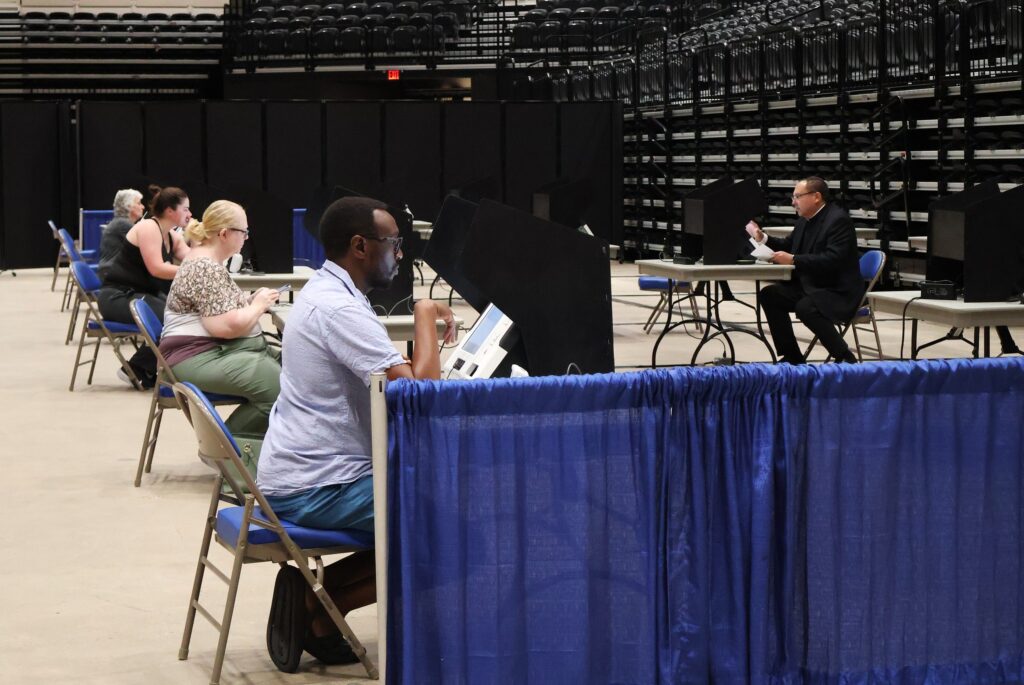
NewsWK — Local election officials in Bennington County are preparing for the upcoming midterms under familiar guidelines. Recently, a decision by the nation’s highest court sparked national debate. However, it will not change how Southern Vermont communities manage their voting lists this fall.
Why it matters
This development ensures that registered voters in Bennington, Pownal, and Shaftsbury face no sudden removals from voter rolls. They will not see automated purges right before they cast their ballots. Furthermore, federal protections remain firmly in place to prevent last-minute administrative errors. These safeguards protect eligible local citizens during a critical election season.
As a result, local town clerks continue to manage voter checklists using verified, secure state procedures.
What is the noncitizen voting supreme court ruling?
On September 25, a 6-3 Supreme Court decision allowed states to access a federal database to check voter citizenship. Officials can use this tool, called the Systematic Alien Verification for Entitlements, or SAVE. Federal agencies originally created the system to verify benefit eligibility. However, the ruling clears the path for states to use the database voluntarily.
The Trump administration recently repurposed the database to help states identify noncitizens on voter rolls. Earlier, a district court judge blocked the program in June. Nevertheless, the Supreme Court decision cleared the way for states to proceed voluntarily.
Meanwhile, federal courts continue to limit how aggressively the administration can push this tool. For example, a federal judge recently blocked efforts to force states to use the database. The administration had tried to tie its use to federal emergency grants.
How does the voter list maintenance quiet period protect local voters?
The voter list maintenance quiet period is a vital federal rule. It prevents states from conducting mass voter cleanups within 90 days of an election. Because of this rule, the Supreme Court decision will have very little immediate impact on the upcoming midterm elections. Consequently, registered voters remain protected from sudden purges ahead of voting day.
Under the National Voter Registration Act, states cannot systematically purge voters so close to an election. Therefore, officials can only use the database to investigate individual voter files. In fact, even the conservative majority on the Supreme Court acknowledged these limits. They confirmed that the quiet period restricts the ruling’s short-term effects.
David Becker, executive director of the nonpartisan Center for Election Innovation & Research, emphasized that the voting process remains secure. Becker stated, “This decision will not have any significant impact on the 2026 election, as systematic voter list maintenance is prohibited within 90 days of a federal election, which the Supreme Court explicitly confirmed.”
Why is the save system voter registration check controversial?
The SAVE system voter registration check is controversial because critics say the database relies on outdated information. As a result, it can lead to false positives and threaten the registration of legal, naturalized citizens. For example, civil rights groups pointed to cases in Texas where eligible voters faced removal.
In those instances, naturalized citizens almost lost their voting rights due to inaccurate database records. Tim Harper, a project lead at the Center for Democracy & Technology, also warned of these database flaws. Harper stated, “SAVE was never designed to verify citizenship: it relies on outdated and inaccurate data that produces false matches, risks disenfranchising eligible voters, and exposes sensitive personal information to misuse and bad actors.”
What is the truth about noncitizen voting numbers?
Verified data from government agencies and nonpartisan studies show that noncitizen voting is exceptionally rare. In fact, the vast majority of voter registration lists remain highly accurate. Actual instances of illegal voting represent a tiny fraction of ballots cast. Thus, these cases make up less than a fraction of a percent of total votes.
For instance, the U.S. Census identified only about 24,000 instances of noncitizen voting in the 2020 election. This occurred out of roughly 160 million total votes cast, equaling just 0.015% of all ballots. Furthermore, a study of the 2016 election placed the rate even lower, at 0.0001%.
Meanwhile, federal efforts to find massive numbers of ineligible voters have repeatedly fallen short. In Nevada, federal officials initially flagged nearly 16,000 potential noncitizens. However, after further review, the state received a list of only 185 names. In the end, every single person on that list turned out to be a legal U.S. citizen.
Additionally, most rare cases of noncitizens appearing on voter rolls stem from simple administrative errors. For example:
- A software glitch in New Jersey accidentally registered about 6,600 noncitizens.
- Clerical errors in Texas led to some noncitizens being registered despite marking on their applications that they were not citizens.
- Human error during routine DMV transactions sometimes triggers automatic registrations incorrectly.
How does this affect Southern Vermont and border town voters?
Local voters in Bennington, North Bennington, and Woodford can rest assured that their voting rights remain secure. Vermont maintains robust, localized systems to verify eligibility when residents register. In addition, town clerks keep careful watch over local checklists to ensure accuracy. Therefore, local procedures will keep voting smooth and steady throughout the region this fall.
Similarly, state laws provide strong protections for neighbors in Hoosick, New York, and Williamstown, Massachusetts. National rhetoric surrounding a Trump noncitizen voter purge continues to make headlines. Still, local election workers remain focused on keeping voting accessible for every eligible citizen.
If you want to verify your registration status before the midterms, you can do so easily:
- Vermont residents can check their status online through the Secretary of State’s MyVoterPage.
- New York residents can use the State Board of Elections voter lookup tool.
- Massachusetts residents can verify their registration through the Secretary of the Commonwealth’s website.
Ultimately, keeping your registration updated ensures a quick and easy process at the polls this November.
This article was produced with the assistance of AI and reviewed by our editorial team.
Sources
Related: Border County Tax Pressures Mount as New York Shifts SNAP Costs
Related: Damp Late-August Stretch Brings Rain, Drizzle, and Cooler Temperatures to Bennington County
See a typo? Report it here.