
Alaska
How SNAP Benefits Cuts Are Impacting Local Families and State Budgets
Tens of thousands of Americans continue to lose access to food assistance each month, even as Congress debates slowing down major cuts to federal food stamps. New data from the U.S. Department of Agriculture shows more than 330,000 Americans lost…

Last updated:
Key points
- More than 5 million Americans have lost SNAP benefits since federal policy changes took effect last year.
- The new regulations shift administrative and benefit costs to state governments, creating unprecedented budget pressures.
- Congress is currently debating a one-year delay to these cost shifts as the farm bill deadline approaches.
NewsWK — Families across Bennington County and Southern Vermont face tougher choices at the grocery checkout. Recent federal policy shifts have reduced food assistance for millions of households nationwide. Consequently, these reductions are sending ripples through local communities. Regional food pantries are preparing for increased demand. Meanwhile, lawmakers in Washington remain locked in debate over these vital safety net programs.
Why it matters
Local food security relies heavily on federal funding to keep families fed and healthy. When federal assistance shrinks, the burden shifts directly to municipal budgets, state resources, and local non-profits. As a result, local residents face emptier plates and higher demand at neighborhood food shelves.
Who is losing food stamps across the country?
More than 5 million Americans have lost food assistance since federal lawmakers enacted major safety net changes last summer. This massive decline represents a significant shift in the national social safety net. Recent federal data highlights a steady monthly drop in participation. Consequently, millions of low-income households now lack crucial nutritional support.
According to recent federal statistics, over 330,000 Americans lost their benefits between May and June alone. This downward trend stems from a major tax and spending package passed last year. That legislation altered eligibility rules and ended several work requirement exemptions. As a result, families in almost every state are seeing their food assistance vanish.
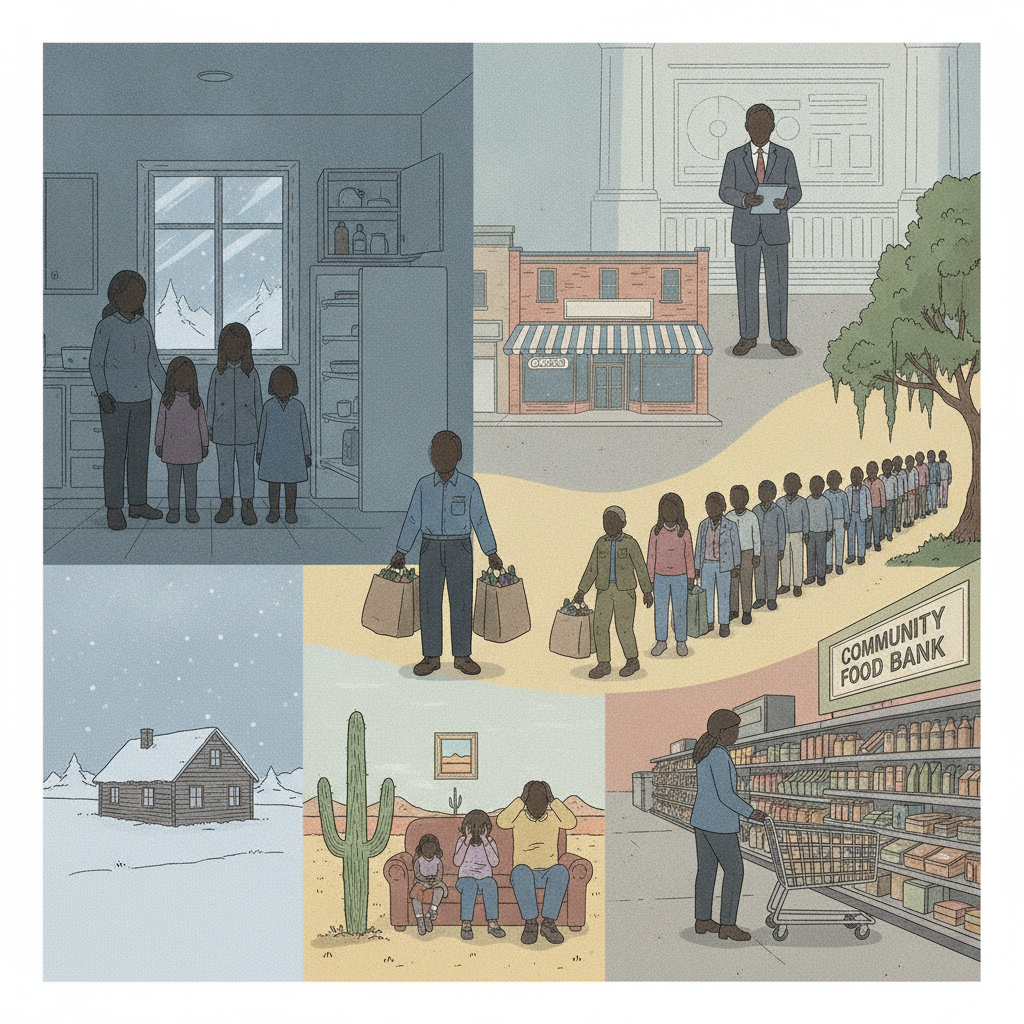
Only Alaska has bucked this national trend. Unique geographic challenges, high food prices, and seasonal unemployment helped that state maintain enrollment levels. However, other states experienced dramatic drops. For example, Arizona saw its participation plummet by more than half. Meanwhile, Illinois and Louisiana lost hundreds of thousands of recipients.
How do Congress farm bill SNAP cuts affect state funding?
The proposed Congress farm bill SNAP cuts will force state governments to shoulder unprecedented administrative and benefit costs. Historically, the federal government fully funded these nutritional benefits. Under the new rules, however, states must establish new IT systems and budget lines. Therefore, states face heavy financial obligations to keep programs running.
In addition, the new law penalizes states based on their payment error rates. These rates measure technical overpayments and underpayments rather than actual fraud. If states fail to meet strict federal accuracy standards, they could face billions of dollars in penalties. This shift deeply concerns state administrators who have never funded these benefits directly.
To ease this transition, the Senate Agriculture Committee recently approved a proposal to delay the cost shift for one year. This delay would give states until October 2028 to improve administrative systems. However, many advocates argue that a single year is not enough time to prevent severe disruptions to local families.
What are the food stamps eligibility changes causing this drop?
Recent food stamps eligibility changes include stricter work requirements for able-bodied adults and reduced exemptions for vulnerable populations. In addition, the federal government shifted more administrative costs to the states. Together, these combined factors make it much harder for low-income residents to qualify for and maintain their monthly benefits.
Furthermore, these changes created administrative hurdles for both applicants and state agencies. For instance, applicants must navigate complex paperwork to prove their eligibility. Meanwhile, agency workers must process these files with fewer resources. Because of these barriers, many eligible families simply drop off the rolls. Here are some of the primary factors driving the decline:
- New work rules for adults without dependents
- Fewer state-level exemptions from federal requirements
- Increased administrative burdens on state agencies
- Stricter penalties for state administrative errors
What does the USDA SNAP participation data reveal about the decline?
The latest USDA SNAP participation data reveals a steady, nationwide decline in enrollment over the past year. This downward trend persists even as grocery prices remain high across the Northeast. Ultimately, the data confirms that millions of people are losing access to essential nutritional support during a difficult economic period.
National policy experts have highlighted these growing concerns as Congress works to finalize the next farm bill. Local advocates also warn that these cuts will worsen hunger in Southern Vermont. When families lose benefits, they often turn to local food pantries for help. Consequently, this shift puts immense pressure on community organizations that rely on donations.
Furthermore, the loss of food assistance creates a domino effect on other local programs. For example, children in households that lose benefits may also lose free school meals. Therefore, this connection multiplies the impact of federal policy changes on local school districts and family budgets alike.
As the September 30 legislative deadline approaches, local leaders are watching Washington closely. The final version of the farm bill will shape how Vermont manages its nutritional programs for years to come. For now, local food shelves are preparing for a busy autumn as more neighbors seek assistance.
This article was produced with the assistance of AI and reviewed by our editorial team.
Sources
Related: Border County Tax Pressures Mount as New York Shifts SNAP Costs
Related: Damp Late-August Stretch Brings Rain, Drizzle, and Cooler Temperatures to Bennington County
See a typo? Report it here.