Alaska
DOJ Election Monitors 2026: Federal Observers Deploy to All 50 States
The U.S. Department of Justice plans to send election monitors to every state ahead of Election Day, expanding a long-standing practice that’s spurred concern this year among Democrats and voting rights advocates because of President Donald Trump’s push to influence…

Last updated:
Key points
- The Department of Justice plans to send roughly 1,000 election monitors across all 50 states for the November 3, 2026 midterm elections.
- Federal observers are legally restricted to observing polling places and reporting potential violations without interfering with voters or staff.
- With more than 95,000 polling places nationwide, election experts note the federal presence will remain limited, while municipal clerks retain full control.
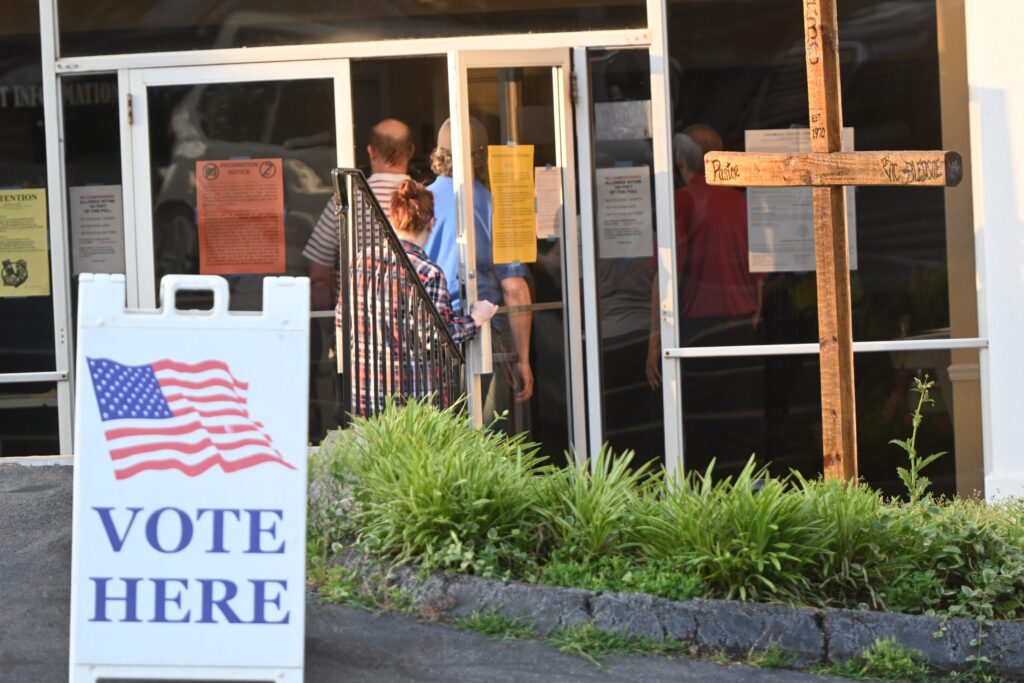
NewsWK — Local Voters Across Bennington County and Southern Vermont are preparing for the upcoming 2026 midterm elections. Neighboring communities are also getting ready. Meanwhile, federal officials are preparing a nationwide monitoring effort across all 50 states. The U.S. Department of Justice plans to deploy about 1,000 observers ahead of Election Day on November 3, 2026. Specific town assignments remain unreleased. However, local election clerks in our region continue routine preparations for smooth voting.
What do DOJ election monitors 2026 mean for regional polling places?
For voters in Bennington County, federal oversight will likely be subtle or absent entirely. The same applies to nearby communities in Massachusetts and New York. Only 1,000 monitors will spread across tens of thousands of voting locations nationwide. Therefore, most local polling sites will operate under standard municipal supervision. Local clerks continue to manage local polling sites directly.
State and town officials across Vermont and adjacent states maintain primary control over election day operations. However, federal authorities have started notifying select counties across the nation about observer visits. Observers may appear in major New England regional hubs. Still, federal officials have not publicly confirmed specific polling locations in Vermont or neighboring states.
In nearby Maine, state officials confirmed that observers will visit Portland and Lewiston. Meanwhile, local election workers in Bennington, Manchester, and Arlington are conducting standard equipment checks. They are also training poll workers as usual. Voting rights groups emphasize that standard state protections remain fully in place across the region.
How will federal election monitoring operate across the country?
Federal teams will observe voting locations on Election Day. Afterward, they will report potential federal law violations to Justice Department attorneys. Personnel must comply with legal standards that prohibit direct interaction with voters. Furthermore, observers will not wear official insignia. They will also not intervene directly in local polling operations.
What role do Department of Justice election monitors play inside polling sites?
Department of Justice election monitors observe polling operations to verify compliance with federal voting rights laws. Observers record notes on local procedures. However, they lack authority to issue directives or alter local election workflows during active voting hours.
Department of Justice spokesperson Kiersten Pels outlined the operational guidelines for federal personnel this month. Pels stated, “Every monitor will merely observe and report any potential violations of federal law to the Department, which will be reviewed after Election Day.”
This year’s program marks a clear expansion from previous midterm cycles. During the 2022 midterm elections, federal officials sent observers to 64 jurisdictions across 24 states. In contrast, the 2026 effort extends federal coverage into all 50 states for the first time in recent history.
Here is a quick look at where officials have confirmed observer deployments so far:
- Maine: Observers will monitor locations in Portland and Lewiston.
- Washington: Federal personnel Will Monitor King County, including Seattle.
- Oregon: Teams will watch voting sites in the greater Portland metropolitan area.
- Utah: Observers will Visit Salt Lake County.
Why are state officials watching Trump administration election monitors?
State leaders and voting rights advocates are watching the federal expansion closely. Recent legal disputes over election administration sparked their concern. Previously, federal lawsuits sought sensitive voter data from dozens of states. Consequently, election administrators from both major parties are watching closely. They want to ensure federal observers do not exceed their legal boundaries.
Concerns grew among state leaders earlier this year after primary elections in August. For example, Republican Wyoming Governor Mark Gordon raised concerns when observers monitored state primary voting. He called the federal actions unusual.
In response, state election officials are issuing clear reminders about local legal boundaries. Democratic Maine Secretary of State Shenna Bellows noted that her staff will carefully watch federal personnel. She wants to prevent any potential overreach at municipal voting venues.
Similarly, Utah Lieutenant Governor Deidre Henderson confirmed that federal officials gave clear assurances about observer behavior. Henderson noted that federal personnel will not approach voters directly. Additionally, they will not wear badges that could intimidate citizens at polling places.
Meanwhile, legal organizations are seeking detailed records regarding federal monitoring plans. The NAACP filed a federal lawsuit in Washington, D.C., seeking public disclosures about observer Assignments. U.S. District Court Judge Sparkle Sooknanan recently denied an emergency request for immediate record production. Still, the broader lawsuit remains active before the court.
What context explains the scope of Department of Justice voting rights enforcement?
Federal election oversight has existed for decades. This law helps safeguard ballot access. However, recent litigation by federal officials against state election departments has created tension. Nevertheless, experts stress that 1,000 observers cannot physically cover more than a fraction of national polling places.
The scale of the federal presence remains small when compared to the vast national election infrastructure. According to U.S. Election Assistance Commission survey data, the 2024 general election featured over 95,000 polling places nationwide.
Harry Black is a senior counsel at the nonpartisan Brennan Center for Justice. He highlighted this reality during a recent panel discussion. Specifically, Black pointed out that 1,000 observers spread across 50 states cannot fundamentally disrupt or control national voting operations.
Meanwhile, federal attorneys have engaged in Several Active Court battles against state election offices:
- Voter Data Lawsuits: Federal prosecutors sued dozens of state departments seeking full voter registration lists. However, federal courts rejected 27 of those cases and granted none.
- California Litigation: Federal attorneys filed suit to block ballots from roughly 20,000 voters flagged as potential noncitizens. They want to prevent state officials from counting those ballots.
- Alaska Preemptive Suit: Federal officials sued to block election certification in a close U.S. Senate race. The suit applies if an incumbent loses to another candidate with the same surname.
State law governs election administration in Vermont and neighboring states. Because of this, local town clerks retain full operational control on Election Day. Therefore, voters in Southern Vermont can cast their ballots as usual on November 3. Local nonpartisan procedures remain firm and secure across our community.
This article was produced with the assistance of AI and reviewed by our editorial team.
Sources
Related: ICE at Polling Places Lawsuit Challenges Federal Election Policy
Related: Federal Troops at Polling Places: What It Means for Local Voters
See a typo? Report it here.