Bennington
Federal Troops at Polling Places: What It Means for Local Voters
WASHINGTON — President Donald Trump said earlier this year he’d “do anything necessary to make sure we have honest elections” this fall, declining to rule out sending the National Guard or federal law enforcement officers to polling locations throughout the…

Last updated:
Key points
- Longstanding federal statutes and constitutional rules strictly bar presidents from deploying military troops or armed agents to polling stations.
- Joint Chiefs Chairman Gen. Dan Caine confirmed the armed forces have no plans to deploy troops or seize election materials during midterms.
- Local town clerks and state authorities retain complete administrative control over polling operations, safety rules, and facility access.
WASHINGTON NewsWK — Local voters in Bennington County expect calm, orderly voting every election season. Discussions in Washington regarding federal troops at polling places have drawn sharp national scrutiny. However, robust legal barriers protect local ballot boxes from executive interference. Town clerks across Southern Vermont and border communities maintain full authority over polling operations.
Why it matters here
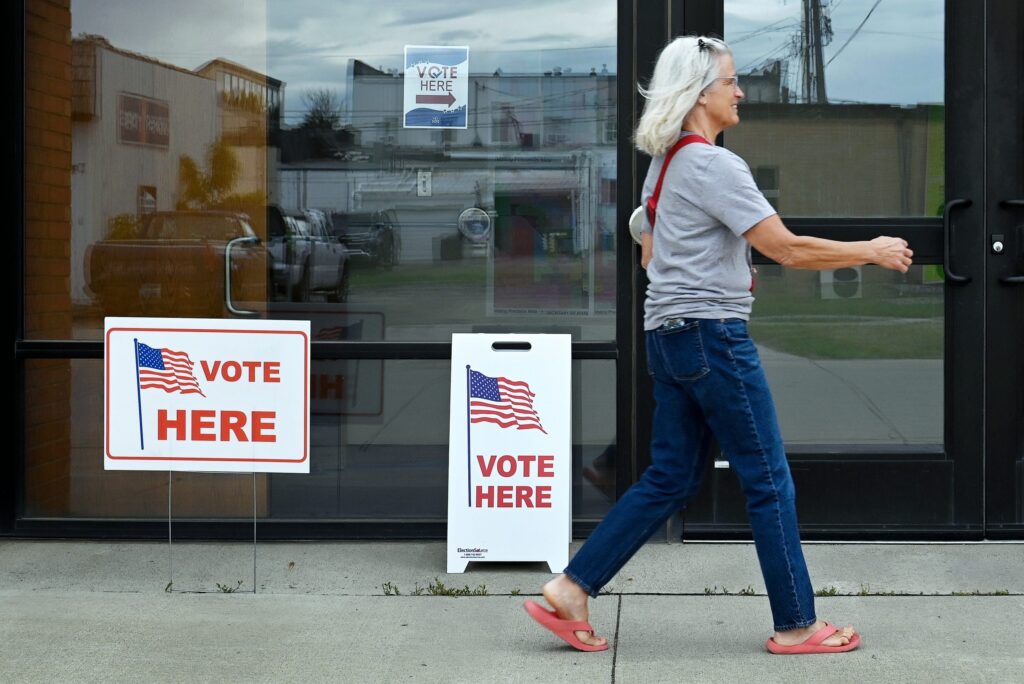
In Bennington, Shaftsbury, and Manchester, municipal clerks run local polling places under state guidelines. Federal officers have no jurisdiction to intervene in local ballot tallying or voter processing. Therefore, area residents will cast ballots without uninvited federal oversight. They will vote peacefully at their neighborhood firehouses, schools, and town halls.
Local voters frequently ask about election integrity and legal protections. Meanwhile, our neighbors in Hoosick, New York, and Williamstown, Massachusetts, share similar community-run ballot protections.
Can the President Send Troops to Polls During Midterms?
Federal law directly prohibits the executive branch from sending armed personnel to voting booths. Statutes dating back to the nineteenth century make troop deployment at elections a federal offense. Therefore, legal experts affirm that the president lacks lawful mechanisms to deploy troops. As a result, no armed agents can lawfully supervise election sites.
Steve Huefner, a law professor at Ohio State University, addressed these historical constraints. He noted that federal law traces back to the Civil War era. Specifically, it strictly forbids armed federal officials at polling places unless repelling foreign enemies. Past abuses during the Jim Crow era inspired strict statutory protections against armed intimidation. Because of these statutes, any executive order deploying soldiers would spark immediate judicial intervention.
Furthermore, congressional leaders recently sought formal assurances from top military leadership. Democratic Sen. Elissa Slotkin questioned defense officials regarding potential domestic deployments. In response, Gen. Dan Caine, chairman of the Joint Chiefs of Staff, offered an unambiguous written reply.
“The Joint Force has no plans to send Federal military personnel or Federalized members of the National Guard to polling places during the 2026 elections,” Caine wrote.
His statement reiterated that states maintain primary constitutional authority over voting logistics.
How Do Polling Place Security Laws Protect Ballots?
State and federal statutes establish strict perimeter rules to shield voters from intimidation. Armed agents cannot linger near polling sites or question residents within protected voting zones. Consequently, local election supervisors hold full power to remove disruptive individuals. They maintain peaceful access for every registered voter.
For instance, election boundaries typically extend 100 feet from town hall doorways. Within that zone, election workers enforce strict codes of conduct. Neither armed federal agents nor civilian partisans may challenge or interrogate citizens there.
Also, Department of Homeland Security leadership addressed rumors regarding border officers. Homeland Security Secretary Markwayne Mullin confirmed that Immigration and Customs Enforcement agents do not patrol voting sites. Instead, agents only operate in public to execute specific active warrants or counter direct threats.
What Limits Presidential Power Over Elections?
The United States Constitution assigns election management to state legislatures and Congress. The president cannot adjust polling dates, rewrite voter registration standards, or seize voting machines. Because state officials control the voting apparatus, executive actions targeting elections face insurmountable legal barriers in court.
In addition, state leaders across the country are actively preparing standard election safeguards. Maine Secretary of State Shenna Bellows stressed that legal guardrails remain fully intact.
“The president can say whatever he wants, but his powers are extraordinarily limited in this way,” said Bellows.
She added that state officials will vigorously prosecute any unauthorized interference with voting rights. Similarly, state election directors in Washington and Michigan affirmed their independent control over local proceedings.
What Is the Role of DOJ Election Monitors?
Civilian observers from the Department of Justice visit select communities under an established oversight program. These observers collect factual data and cannot issue orders to poll workers or voters. Furthermore, monitors must follow state guidelines. Local election clerks also retain full authority over facility access.
Federal plans call for roughly 1,000 civilian observers nationwide this autumn. Yet, these federal employees carry no police powers. Stuart Holmes, director of elections for Washington state, clarified their restricted duties. He explained that federal visitors enjoy no greater privileges than ordinary citizen observers.
For example, monitors cannot inspect voter IDs or disrupt voting lines. If observers exceed their mandate, town and county officials can immediately revoke facility access.
Key protections safeguard community elections:
- State laws guarantee municipal control over every town polling site.
- Federal statutes prohibit armed troops near voting booths.
- Civilian federal monitors must follow local election rules.
- Buffer zones prevent harassment within 100 feet of ballot boxes.
Residents heading to the polls this November can expect regular, professional operations. In fact, town clerks continue routine preparations to guarantee smooth, secure voting across our region.
This article was produced with the assistance of AI and reviewed by our editorial team.
Sources
Related: Bennington 250 Announces ‘250 for 250’ Year-End Gala to Support Anniversary Celebrations
Related: Bennington Battle Day Marked as Historic Monument Awaits Repairs
Related: ICE at Polling Places Lawsuit Challenges Federal Election Policy
Related: Lawsuit ICE Agents at Polls: Civil Rights Groups Sue Administration
Related: Trump Midterm Election Interference Fears Prompt Local Security Prep
See a typo? Report it here.