Arlington
E-Rate Program Funding Under Federal Review as Schools Voice Alarm
A multi-billion-dollar federal program that helps schools and libraries afford broadband internet is under review by the Trump administration, leaving education officials and advocates worried about potentially significant cuts. The E-Rate program provides about $3 billion annually for internet access…

About E-Rate Program Funding
Last updated:
Key points
- The FCC is reviewing the nearly 30-year-old E-Rate program, which provides $3 billion annually for school and library internet access.
- Public comments on potential program changes and funding restrictions remain open through October 13.
- Education officials warn that subsidy cuts could strain local budgets and compromise school safety, transportation, and daily digital operations.
NewsWK — Every day across Southern Vermont and neighboring border communities, students rely on fast digital access. Classrooms in Bennington County depend heavily on reliable connectivity. Public libraries in towns like Hoosick Falls and Williamstown also count on steady internet connections. However, a crucial federal pipeline supporting that local infrastructure is now under administrative review.
Meanwhile, federal officials are evaluating the multi-billion-dollar system that offsets telecommunications costs for educational facilities. National education leaders warn that potential changes could place fresh financial pressure on municipal budgets and daily operations.
Why it matters
Local school districts and public libraries operate on tight annual budgets. High-speed internet is an essential utility for modern learning. If federal funding drops, local taxpayers may need to cover the difference. Alternatively, districts could face tough choices regarding staffing, classroom resources, or building maintenance.
In rural communities throughout our region, school buildings and public libraries serve as foundational public access hubs. Families often utilize library connections for job searches, remote coursework, and essential civic tasks. Therefore, any reduction in federal aid creates immediate ripple effects across towns like Arlington, Manchester, and Pownal.
What are the proposed FCC E-Rate changes?
The Federal Communications Commission is studying whether to narrow or restructure the program after nearly 30 years. Regulators opened a formal inquiry in June to examine whether current connectivity goals are met. Agency leaders are currently collecting public feedback through October 13 before drafting specific proposals.
Specifically, the commission is asking whether aid should focus primarily on rural regions. Regulators are also weighing whether to restrict funding to areas served by only one provider. In addition, officials want feedback on whether some funded services are no longer necessary. Furthermore, they want to examine how to address student screen time.
FCC Chairman Brendan Carr noted that the review aims to empower families and ensure strong educational outcomes. Yet administrators nationwide fear the process could shrink essential relief. The program currently distributes about $3 billion annually. In fact, it reaches more than 100,000 schools and 11,000 libraries across the United States.
How E-Rate Program Funding supports everyday operations
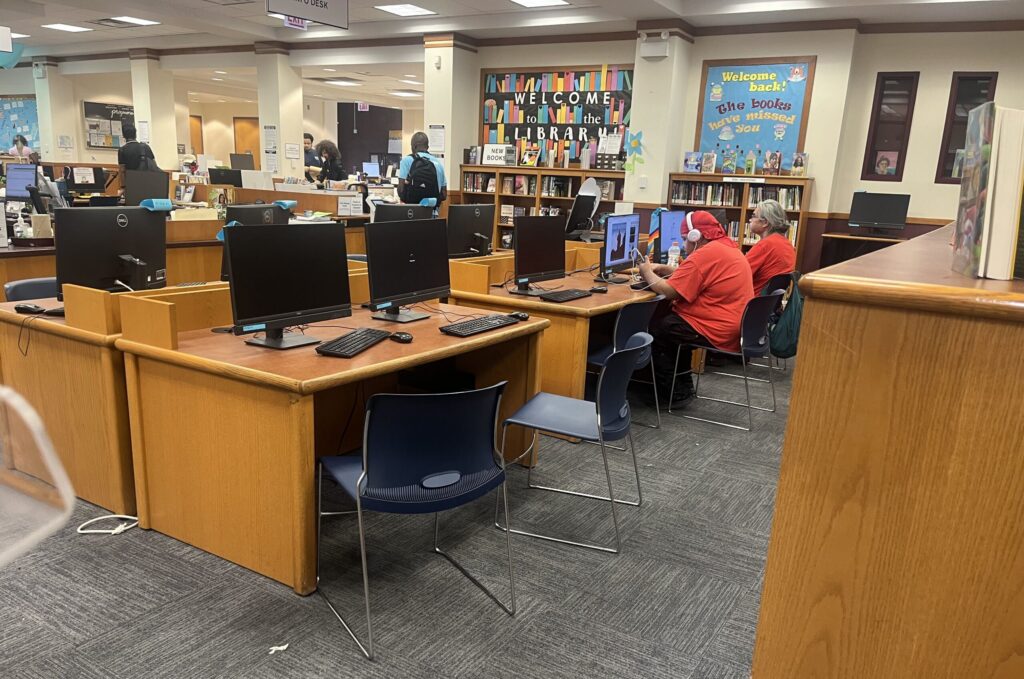
Modern schools rely on digital networks for security cameras, bus tracking, and health records. Libraries also depend on subsidies to offer free community Wi-Fi. Without these discounts, districts would have to divert instructional money toward basic network operations each year.
Currently, the federal system provides discounts between 20% and 90% on eligible connectivity services. The highest discounts assist districts with the greatest economic need. Consequently, modern facilities depend on steady networks from before sunrise until evening events conclude.
Stacy Hawthorne, executive director of EdTech Leaders Alliance, described this operational reality during a recent national briefing.
“It’s not just email and Google Docs. Imagine it’s 5:30 a.m., the buses start coming to life. They use GPS routing, and they have parent-facing tracking apps,” Hawthorne said. “Cameras come to life, the security systems start running at full speed. Visitor management scans driver’s licenses against offender registries before a single visitor gets access to any of our school buildings.”
Similarly, public libraries rely on the discount network. According to the American Library Association, 73% of public libraries nationwide use this funding. They rely on it to pay internet bills or upgrade internal hardware. In rural towns, the local library often provides the only open, fast connection available to residents.
How could federal broadband funding schools rely on shift?
When Congress established the program in 1996, only 14% of classrooms had internet access. Today, the funding stream ranks as the fifth-largest federal education resource. Restructuring could force districts nationwide to absorb sudden budget deficits without simple alternatives.
School leaders participating in a recent national town hall expressed significant worry about the inquiry. For example, LaTonya M. Goffney leads the Aldine Independent School District in Texas. She explained how funding cuts could harm local schools directly.
“Internet connectivity is not a one-time purchase,” Goffney said. “If E-Rate were reduced or eliminated, Aldine ISD would face an immediate and significant budget shortfall and that means millions of dollars would have to be redirected from somewhere else in our budget… there’s no way to absorb a loss of this magnitude without affecting people.”
Key facts surrounding the federal program include:
- More than 102,000 schools and nearly 12,000 libraries secured funding commitments in 2024.
- New York facilities alone accounted for more than 6,200 funding recipients in recent federal data.
- The FCC holds regulatory control over program rules, but ending a congressionally created program involves unsettled legal questions.
- The federal public comment period closes on October 13.
What should local communities watch next?
Local residents and school boards will need to monitor the federal rulemaking process over the coming months. Any eventual reduction in federal support could land squarely on local tax bills during future district budget votes. For now, educational leaders urge the public to track agency proceedings closely before regulators publish formal policy shifts.
This article was produced with the assistance of AI and reviewed by our editorial team.
Sources
Related: Schools Revisit Immigration Enforcement Rules as Federal Policies Shift
Related: Border County Tax Pressures Mount as New York Shifts SNAP Costs
See a typo? Report it here.