Bennington
How 9/11 Changed Government Surveillance Across Small Towns and Cities
Twenty-five years after 9/11, the surveillance infrastructure built and expanded in its aftermath has become part of a far larger digital ecosystem — producing tools that can collect and analyze information on a scale unimaginable in 2001. The terrorist attacks…

About How 9/11 Changed Government Surveillance
Last updated:
Key points
- Interagency intelligence networks created after 9/11 now support routine local police work rather than just counterterrorism.
- Modern surveillance relies heavily on automated license plate readers, commercial smartphone data, and artificial intelligence.
- Privacy advocates note that emergency surveillance tools adopted a generation ago have permanently reshaped American civil liberties.
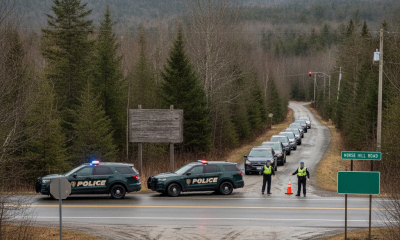
NewsWK — The legacy of Sept. 11, 2001, extends far beyond federal intelligence headquarters in Washington. In our area, that legacy reshaped everyday privacy across Bennington, Rensselaer, and Berkshire counties. Consequently, local residents now live in a world where interagency tracking quietly touches daily routines.
Why it matters
National security surveillance tools now reach rural highways and small-town village centers. For example, license plate readers and state intelligence networks monitor regional travel corridors like Route 7. As a result, this steady tracking directly affects personal privacy and municipal police budgets. It also challenges constitutional rights across Southern Vermont.
How has government surveillance since 9/11 reshaped local policing?
Government surveillance since 9/11 dismantled the traditional walls dividing local police from federal intelligence networks. Consequently, officials established statewide fusion centers to gather records and evaluate potential threats. Over the past 25 years, however, these collaborative networks shifted focus. Today, they routinely support everyday municipal investigations rather than just counterterrorism.
After the 2001 attacks, federal authorities identified critical intelligence blind spots. Different agencies held vital pieces of information. However, they failed to communicate across institutional boundaries. Therefore, national leaders pushed to build an integrated security architecture.
In response, state and federal partners created intelligence fusion centers in every state. These regional hubs connect municipal police officers, county sheriff deputies, and federal analysts under one digital roof.
David Viola, an adjunct professor at John Jay College of Criminal Justice, emphasized the permanence of these shared networks. “These are institutions that have cemented the close coordination between state, local, federal, tribal authorities in the past 25 years, and they’re going nowhere, for better or worse,” Viola said.
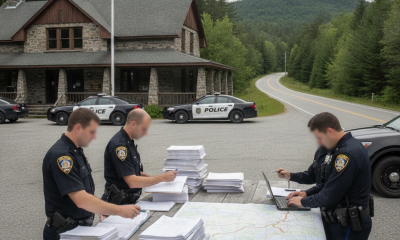
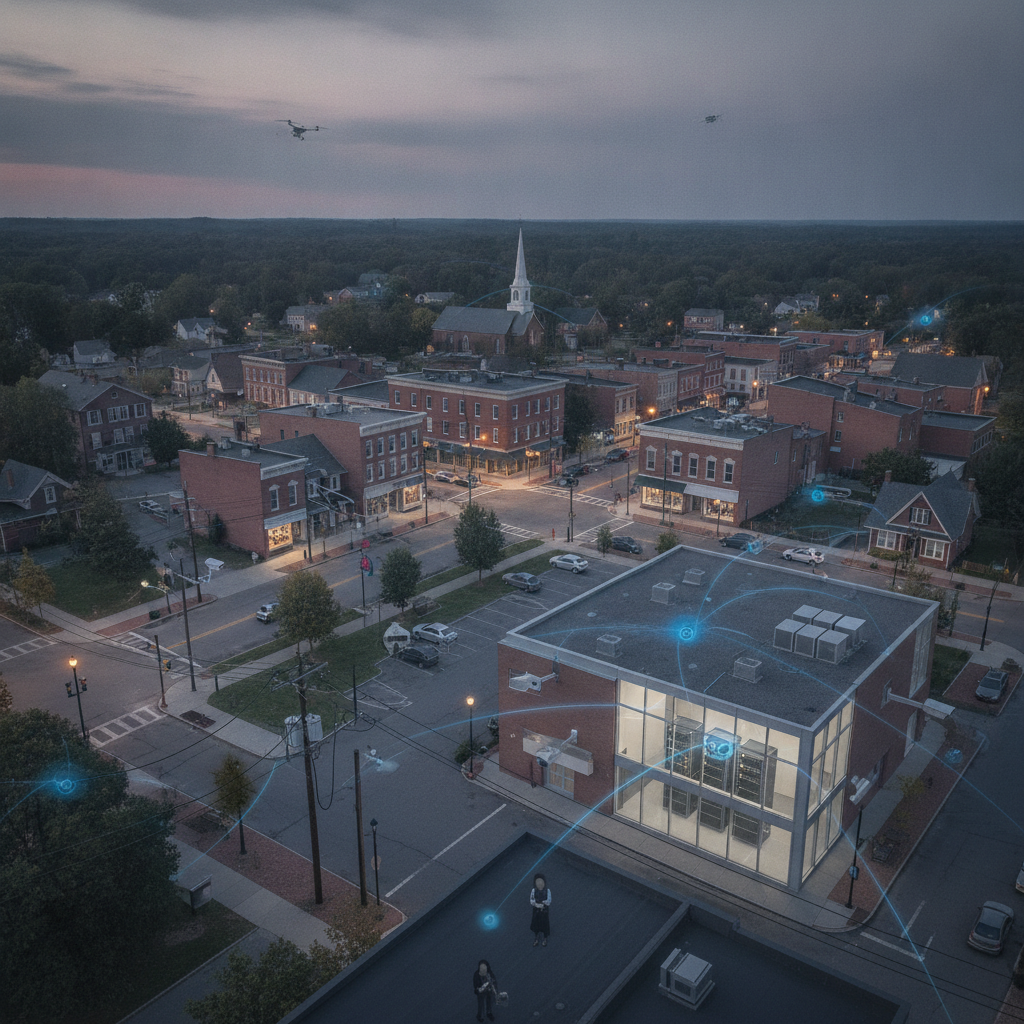
Meanwhile, local departments established specialized monitoring centers. These facilities integrate street cameras, regional dispatch alerts, and commercial databases into centralized computer dashboards.
Where does police surveillance technology appear in daily life?
Modern police surveillance technology logs ordinary civic movement through automated roadside scanners, location tracking, and facial recognition programs. In addition, private software brokers supply commercial data that tracks where people live, work, and travel. Consequently, these integrated digital tools allow investigators to map movements in seconds across entire communities.
Furthermore, technological capability expanded rapidly alongside government policy changes. Today, law enforcement agencies utilize a wide range of monitoring equipment:
- Automated license plate readers that scan vehicles along regional highways.
- Cellular location records that document daily travel histories.
- Public camera networks positioned at intersections and crosswalks.
- Artificial intelligence platforms that connect separate municipal databases.
In fact, private consumer applications constantly harvest location and purchase records. Law enforcement agencies frequently buy this commercial data. As a result, they bypass traditional warrant requirements. Therefore, analysts can assemble detailed profiles that once required extensive physical surveillance.
How did mass surveillance in America replace privacy boundaries?
Mass surveillance in America gradually eroded privacy boundaries as everyday digital technology spread nationwide. Millions of Americans adopted connected smartphones, social platforms, and GPS devices that continuously record personal data. Today, advanced artificial intelligence can process these vast records faster than any human detective could ever manage.
Gregory Nojeim, a director at the Center for Democracy & Technology, described this shift as a powerful convergence. “That storm is both the expansion of the legal powers that have been conferred on the government to collect and share information, combined with the advance of technology, which has given the government more tools to collect information from more people in more contexts,” Nojeim said.
Yet, most citizens never see the backend software that tracks their habits. Private vendors exchange records behind closed doors. Therefore, public transparency remains remarkably limited.
What happened to civil liberties after 9/11?
Civil liberties after 9/11 faced immediate tests following emergency national legislation like the USA PATRIOT Act. While Congress allowed some temporary provisions to expire, the broader monitoring infrastructure became permanent law. In addition, minority groups and immigrant communities shouldered an unequal share of government scrutiny across the country.
Initially, many Americans supported expanded monitoring as a necessary compromise for domestic security. However, civil rights organizations cautioned that emergency powers would slowly outlive the original crisis.
Furthermore, heightened surveillance fell heavily on specific groups. For example, federal agencies intensely monitored Muslim Americans during the years following 2001. Later, similar digital tracking tools expanded toward public demonstrations and broader community policing.
Today, local communities face important decisions about data governance and transparency. Ultimately, understanding how these tools operate helps our region protect public safety and long-standing constitutional freedoms.
This article was produced with the assistance of AI and reviewed by our editorial team.
Sources
Related: Border County Tax Pressures Mount as New York Shifts SNAP Costs
Related: Damp Late-August Stretch Brings Rain, Drizzle, and Cooler Temperatures to Bennington County
See a typo? Report it here.