Bennington
Trump Administration Naturalization Delays Impact New Voters
The Trump administration cut naturalization sharply over the past year, leading to accusations it’s holding back hundreds of thousands of people who might have voted in the midterms. It’s hard to say how those people might have voted had they…

Last updated:
Key points
- Federal naturalization approvals dropped by nearly 50 percent over the past year, affecting roughly 380,000 prospective citizens.
- USCIS implemented stricter background checks, social media screening, and enhanced civics and language requirements.
- Naturalized citizens account for 10 percent of voters nationally and up to 19 percent in neighboring New York state.
NewsWK — Federal immigration policy shifts cut naturalization approvals nationwide by nearly half over the past year. Fewer legal immigrants are completing the naturalization process before major elections.
How are Trump administration naturalization delays changing voter growth?
Federal immigration policy shifts cut naturalization approvals nationwide by nearly half over the past year. Between April and June 2026, officials approved roughly 55,000 citizenship applications. Previously, approvals reached over 230,000 during the same period in 2025. This massive drop prevented an estimated 380,000 immigrants from gaining voting rights before upcoming elections.
Overall annual approvals plummeted from about 871,000 to roughly 481,000 over the past 12 months. Therefore, hundreds of thousands of prospective voters remained stuck in administrative queues. Furthermore, naturalization requires adult status. As a result, virtually all affected applicants would have been eligible to vote immediately.
Immigrant advocacy organizations expressed strong concern over the sharp decline. Nicole Melaku serves as executive director of the National Partnership for New Americans. “We see a very clear attempt to curb legal pathways,” Melaku said.
Meanwhile, federal officials defended the procedural changes as necessary security measures. USCIS spokesperson Zach Kahler noted that citizenship is a privilege rather than a right. “USCIS will not take shortcuts in the naturalization process,” Kahler stated.
What caused the USCIS citizenship processing delays?
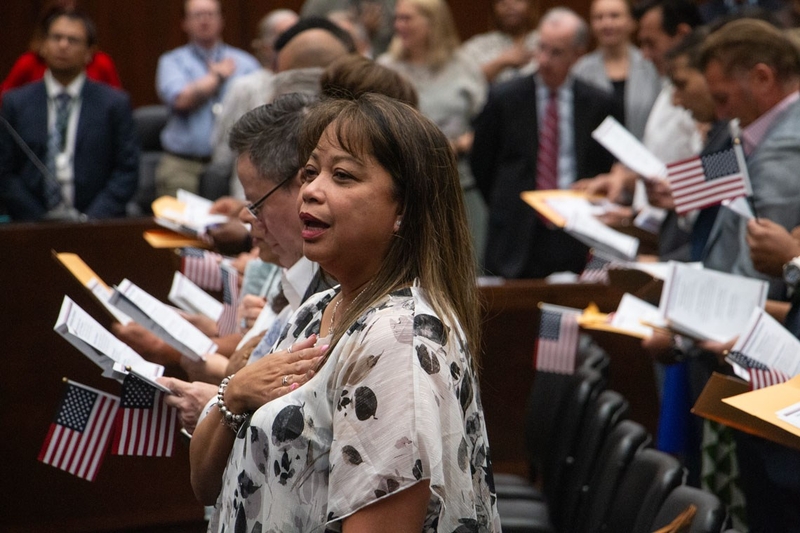
New federal procedural hurdles created significant USCIS citizenship processing delays for applicants nationwide. Specifically, federal agents added social media screenings for anti-American activities. They also enhanced civics exams and expanded English language requirements. Consequently, the timeline between an interview approval and the final Oath of Allegiance expanded dramatically.
In addition, the new agency guidelines require deeper background checks into an applicant’s character. Officials now review social media accounts to search for potential anti-American activities. Moreover, applicants must meet stricter standards for English language proficiency and civics knowledge.
Why did federal officials implement the citizenship application slowdown?
Federal leadership instituted the citizenship application slowdown to enforce stricter vetting standards for prospective citizens. Spokespersons emphasized that citizenship remains an earned privilege rather than an automatic right. However, voting rights organizations argue that prolonged wait times intentionally prevent eligible individuals from participating in democratic elections.
Furthermore, advocacy groups pointed out that processing times grew significantly long after interview approvals. As a result, many applicants completed their testing but could not take their final oath. Civil rights groups recently accused federal officials of targeting naturalized citizens. They also warned that these delays threaten legitimate voters with disenfranchisement.
How do federal immigration backlogs affect local Vermont communities?
Federal immigration offices handle processing regionally. In neighboring New York, naturalized immigrants represent nearly 19 percent of all eligible voters. Consequently, processing backlogs delay full civic participation for healthcare workers, farmworkers, and business owners across Southern Vermont.
In Vermont and surrounding regional centers, community groups help immigrants navigate complex paperwork. However, national backlogs slow down local integration efforts despite strong community support. Key figures illustrating the recent shift include:
- Nationwide naturalization approvals dropped from 871,000 to 481,000 in one year.
- Quarterly approvals fell from 230,000 to 55,000 between spring 2025 and spring 2026.
- Naturalized citizens account for 10 percent of all eligible U.S. voters nationwide.
- Neighboring states show high naturalized voter shares. Specifically, New York sits at 19 percent and New Jersey reaches 20 percent.
How are demographic surveys reacting to the USCIS naturalization backlog?
Recent U.S. Census Bureau data revealed unusual shifts in how residents report their citizenship status. Across the nation, 1.2 million fewer respondents reported being noncitizens. Meanwhile, 1.3 million more people identified as naturalized citizens. Demographers explain that fear of deportation likely prompted many noncitizens to claim citizen status on government surveys.
Additionally, demographers noted that government survey responses do not match official USCIS approval numbers. For example, Texas saw 155,000 fewer noncitizens on survey forms. Yet, the state recorded 244,000 more self-reported citizens. Texas State Demographer Lloyd Potter explained that increased enforcement creates fear among noncitizens during government surveys.
Moreover, analysts note that executive power over immigration has expanded dramatically under recent presidential administrations. Steven Camarota works as research director at the Center for Immigration Studies. He observed that Congress has surrendered authority over immigration policy. As a result, executive orders and administrative policy shifts directly dictate who becomes a citizen and when.
What lies ahead for prospective citizens?
Local community organizations in Bennington County urge applicants to file paperwork early. They also advise residents to prepare for longer waiting periods. Finally, residents needing help with immigration forms can contact local legal aid resources or regional support networks.
This article was produced with the assistance of AI and reviewed by our editorial team.
Sources
Related: DHS Voter Investigations Naturalized Citizens Spark Lawsuit
Related: Supreme Court Birthright Citizenship Vermont Decision Impacts Local Families
See a typo? Report it here.