Bennington
Schools Revisit Immigration Enforcement Rules as Federal Policies Shift
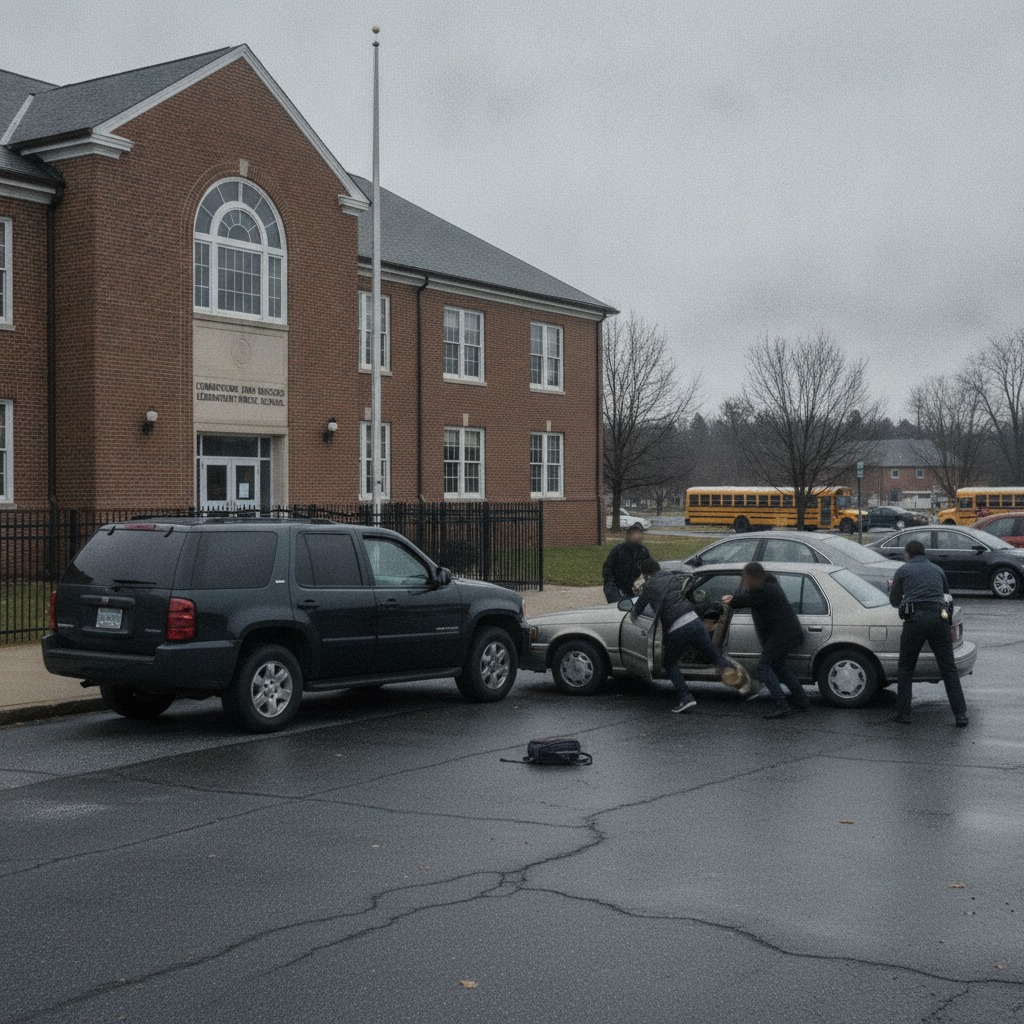
On June 11, ICE agents trailed a car into the parking lot of Commodore John Rodgers Elementary/Middle School in Baltimore. For the family riding in that car, an everyday school drop off quickly devolved into chaos. ICE agents pulled Jesus Acevedo Sanchez…

Last updated:
Key points
Schools Revisit Immigration Enforcement Rules as
- Federal policy shifts rescinded sensitive-location protections that previously kept immigration enforcement away from public schools.
- More than a dozen states and local school boards require judicial warrants before federal agents can access school property for non-emergencies.
- Federal law guarantees that all children residing in a district have a right to attend public school regardless of immigration status.
NewsWK — As national policy changes alter federal immigration enforcement near public facilities, school administrators and families in Bennington County and surrounding border communities are examining how local districts handle law enforcement presence on campus.
Public school systems across the nation are legally obligated to provide primary and secondary education to all residing children regardless of citizenship or legal status. Recent incidents near school grounds in other parts of the country have prompted district leaders to clarify visitor access procedures and legal boundaries.
Why it matters here
For families residing in Bennington, North Bennington, Shaftsbury, Pownal, Manchester, and neighboring communities in Rensselaer, Washington, and Berkshire counties, school stability is closely tied to community trust. Educational leaders emphasize that when enforcement actions occur near schools, student attendance drops and classroom routines are disrupted.
In Vermont and nearby states, school boards rely on clear administrative guidelines to maintain safe learning environments. Understanding how local districts manage requests from federal agencies helps parents, teachers, and school staff understand their rights and responsibilities during the academic year.
Federal policy shifts and school encounters
The issue gained renewed national attention after federal officials rescinded a long-standing 2011 policy. That previous guidance established strict limits on immigration enforcement actions at sensitive locations, including public schools, healthcare facilities, and places of worship.
Following the reversal of those protections, independent education research groups documented at least 17 separate enforcement encounters involving federal immigration agents on or near school grounds nationwide.
In a notable June incident in Baltimore, immigration agents followed a family car into an elementary school parking lot during morning drop-off. Agents arrested a parent and detained his spouse as their two young children watched from inside the vehicle, while school staff quickly escorted nearby students into the building.
A federal judge later ordered the parent’s release, ruling that agents lacked probable cause for the arrest and criticizing the enforcement action for lacking due process outside a school facility.
Legal limits and judicial warrant requirements
While federal law governs national immigration enforcement, individual states and local school boards control access to school facilities and dictate how local staff respond to visiting authorities.
More than a dozen states have enacted statutes restricting school personnel and local municipal employees from assisting in immigration enforcement unless presented with a judicial warrant signed by a judge. Legal experts note that requiring a federal judge’s warrant before granting entry to non-public areas of a school does not violate federal authority, but provides necessary legal oversight.
Verjeana McCotter-Jacobs, president of the National School Boards Association, noted that routine law enforcement operations can cause unnecessary disruption for students and teachers.
“We don’t see a need for law enforcement to be executing any activities on school grounds, unless it’s in response to an emergency situation,” McCotter-Jacobs said.
In response to concerns from educators, federal representatives state that officers do not conduct general enforcement sweeps inside educational buildings.
Department of Homeland Security spokesperson Katherine Currie stated that agents focus on public safety concerns rather than school operations.
“ICE is not going to schools to arrest children, we are protecting children,” Currie said, adding that enforcement on school grounds would only occur if a dangerous individual or public safety emergency entered campus property.
Varied legal standards across state lines
State responses to immigration enforcement on school grounds vary significantly across the country, creating distinct legal environments for neighboring school systems.
- State protective statutes: Maryland and several northeastern states restrict local public resources from being used in federal immigration actions without a court order.
- Mandatory cooperation laws: States such as Indiana have passed legislation barring local school districts and universities from limiting employee cooperation with federal immigration agents.
- District-level policies: In states without specific legislative bans, local superintendents rely on board policies that instruct staff to direct all visiting federal officers to central office administrators.
Under typical district protocols, administrators request that any non-emergency federal law enforcement matters be conducted outside of standard school hours and away from campus property to avoid disturbing students.
Preparing for the upcoming school year
School districts are also preparing for potential impacts from broader federal policy decisions, including the planned termination of Temporary Protected Status for more than 330,000 Haitian nationals nationwide. Changes in residency status can create uncertainty for families with enrolled school-age children.
Teacher associations and education advocates are providing guidance to school staff regarding student constitutional protections. Federal case law guarantees that every child living in a school district has a legal right to attend public school regardless of immigration status.
What this means for local families
School officials encourage parents and guardians to keep emergency contact records updated with their child’s school office. Parents seeking information regarding campus visitor policies, emergency procedures, or student record privacy rights are encouraged to contact their local school principal or district administration office.
This article was produced with the assistance of AI and reviewed by our editorial team.
Sources
Related: Trump Green Card Restrictions Lawsuit: VT, NY Join Challenge
Related: E-Rate Program Funding Under Federal Review as Schools Voice Alarm
Related: As School Districts Restrict AI Use, Local Classrooms Watch Closely
Related: What the Indiana School Cellphone Ban Teaches Southern Vermont Educators
Related: Federal Education Spending Monitoring Suspended: What It Means for Southern Vermont Schools
Related: How the Skilled Trade Worker Shortage Impacts Bennington Area Builders
See a typo? Report it here.