
Bennington
New York Sheriffs ICE Lawsuit Challenges State Ban on Immigration Enforcement
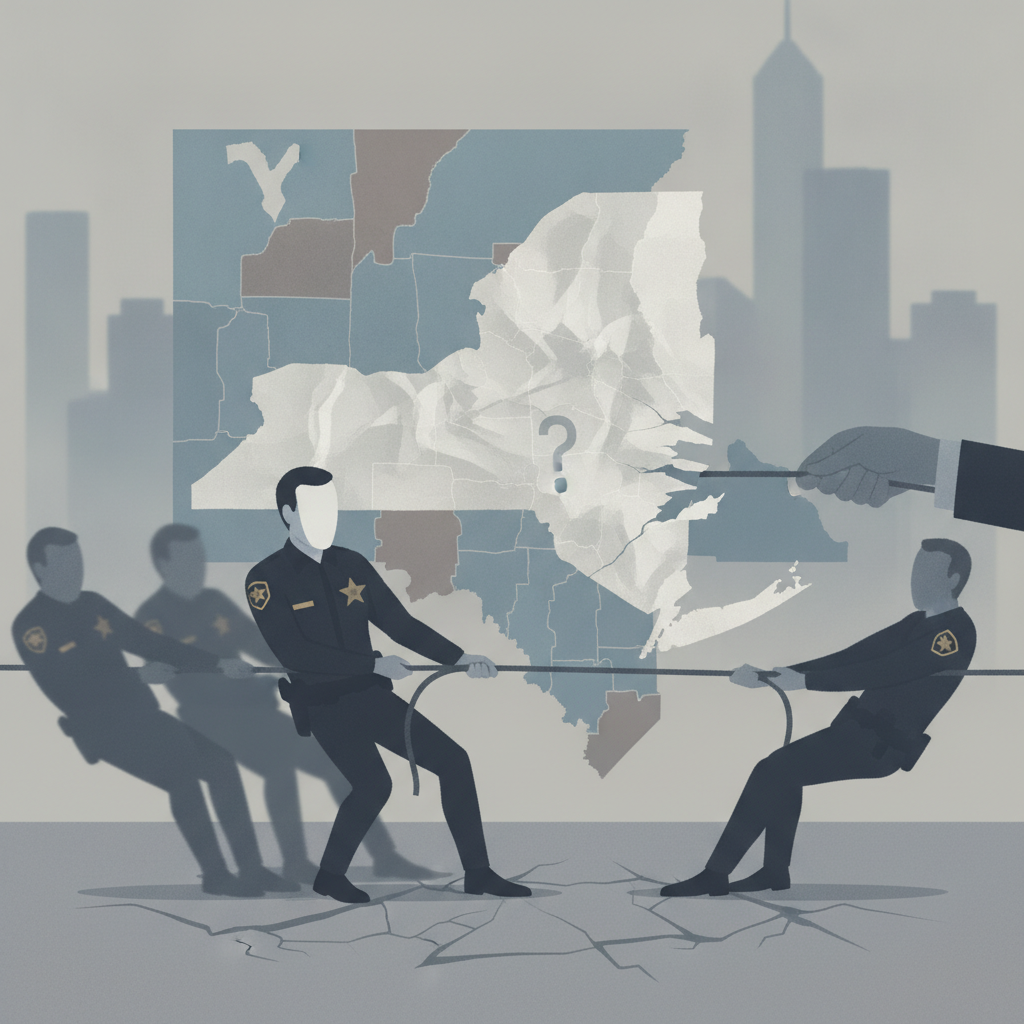
A vaguely written new law raises questions about how and when the state will take action against "informal" collaboration. Some sheriffs are suing.

Last updated:
Key points
- Fifteen New York sheriffs, including the Rensselaer County sheriff, have sued to block a new state law banning formal and informal agreements with ICE.
- The lawsuit argues that the state ban threatens federal funding programs like Operation Stonegarden and the State Criminal Alien Assistance Program.
- The state has established the Office of Immigrant Trust NY to investigate local police departments and enforce compliance with the new restrictions.
NewsWK — A new legal battle over immigration enforcement is unfolding just across the state line in neighboring Rensselaer County, New York. This conflict could reshape how local police interact with federal immigration authorities near the Vermont border.
Why it matters
For residents of Bennington County and nearby New York communities, this legal fight directly impacts regional law enforcement. The Rensselaer County Sheriff’s Office is at the center of the dispute. Consequently, changes in local police cooperation with ICE New York agreements could alter local public safety. These changes may also affect taxpayer costs in our shared border region.
What is the New York sheriffs ICE lawsuit?
The New York sheriffs ICE lawsuit is a legal challenge filed by 15 county sheriffs against a new state law. This law bans local law enforcement from maintaining formal or informal agreements with federal immigration authorities. The sheriffs argue the ban is unconstitutional and threatens vital federal funding.
The legal battle began in late August. Fifteen sheriffs filed a lawsuit in federal court to block the new state law. These sheriffs argue that the legislation goes too far. They claim it disrupts long-standing, routine relationships between local jails and federal agencies.
Furthermore, the plaintiffs worry about financial losses. Local departments receive federal money through programs like the State Criminal Alien Assistance Program and Operation Stonegarden. The sheriffs argue that stopping cooperation could cause the federal government to withhold these funds. Therefore, local taxpayers might have to cover the budget shortfalls.
Why are local police cooperation with ICE New York policies changing?
State leaders passed a NY law banning ICE agreements to stop local police from acting as federal immigration agents. This law aims to build trust in immigrant communities. However, the law’s broad language has created confusion. It bans both formal and informal agreements, leaving many local officials unsure of what is allowed.
State lawmakers designed the ban to protect immigrant communities from local deportation efforts. But the final bill was a compromise. An earlier proposal, called New York For All, failed because Governor Kathy Hochul worried it would harm criminal investigations.
The resulting law has caused significant confusion. It bans “informal agreements” but does not define them. Because of this, legal experts expect the courts to decide what the term actually means.
Meanwhile, the state has created the Office of Immigrant Trust NY under the Attorney General. This new office will investigate local departments. Legal advocates for immigrants hope the state investigates any regularized cooperation. Yasmine Farhang, executive director of the Immigrant Defense Project, supported this proactive approach.
“Anything that feels regularized, in our mind, should be investigated under this law,” Farhang said.
What are 287g agreements New York counties must end?
The 287g agreements New York counties previously used were formal pacts allowing local officers to perform federal immigration duties. Only 12 agencies in the state held these agreements. Under the new law, almost all counties have ended them, and jail detention programs must stop by late November.
The Rensselaer County Sheriff’s Office has been a vocal supporter of these programs. Sheriff Kyle Bourgault refused to cancel his county’s agreement. In response, the state Attorney General sued his office. Bourgault, who is also a plaintiff in the sheriffs’ lawsuit, criticized the state’s legal action.
“I think it was an intimidation thing, to try to get me to cave,” Bourgault said.
Key changes under the new law include:
- All formal 287(g) agreements must be terminated.
- Local jails must stop housing civil immigration detainees by late November.
- The Office of Immigrant Trust NY will monitor local police departments.
- Citizens can report suspected local immigration collusion to the state.
How the NY law banning ICE agreements affects neighboring communities
Border counties face unique challenges under the new rules. Some sheriffs argue they need federal tools to handle border-related incidents. However, other nearby leaders have chosen to comply with the state ban. This split highlights the deep division over immigration policy along the state line.
For example, Montgomery County chose not to join the lawsuit. The county jail made nearly $200,000 detaining civil immigration suspects over the last two years. Yet, Sheriff Jeffery Smith decided to follow the new state law. He noted that sheriffs must enforce laws, even when they disagree with them.
In contrast, border sheriffs argue that cooperation is essential for rural security. They regularly handle trespass complaints and property issues near the border.
Currently, U.S. District Judge Mae D’Agostino is reviewing the sheriffs’ lawsuit. Her upcoming ruling will decide if the state ban remains in place.
This article was produced with the assistance of AI and reviewed by our editorial team.
Sources
Related: Border County Tax Pressures Mount as New York Shifts SNAP Costs
Related: Damp Late-August Stretch Brings Rain, Drizzle, and Cooler Temperatures to Bennington County
See a typo? Report it here.