Arizona
State Races Yield Record Women in State Legislatures
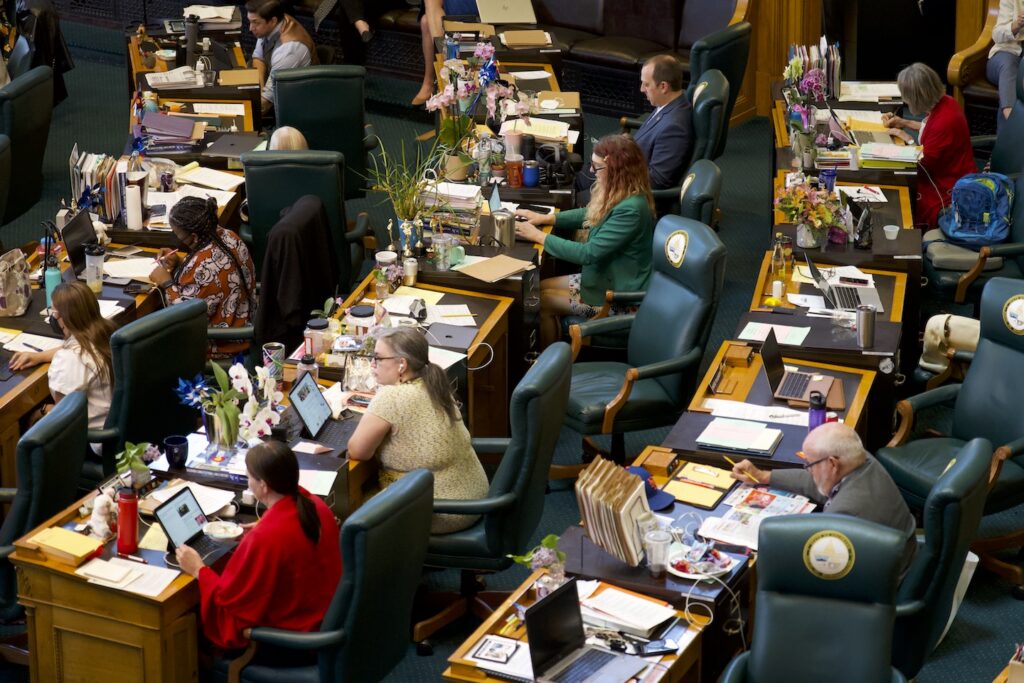
The number of women serving in state legislatures will set a new record following strong Democratic performance in last week’s midterm elections. Though many races remain too close to call, an analysis by the Center for American Women and Politics…


Last updated:
Key points
- At least 2,559 women will serve in state legislatures nationwide following recent election gains.
- Six states achieved gender parity with at least 50% female representation in their statehouses.
- The net national increase was driven by Democratic women lawmakers, while Republican female representation declined.
NewsWK — Recent elections established a historic benchmark across state capitals nationwide. Specifically, these outcomes bring a record number of women to state legislatures to address critical regional policy issues. For residents in Bennington County and surrounding communities, these political shifts shape legislative agendas. Consequently, they affect public education, family support services, and state economic development.
What Do State Legislature Election Results Mean for Local Communities?
State legislature election results directly influence how state capitals pass laws, allocate funding, and address regional challenges. Meanwhile, local lawmakers in Vermont and neighboring states focus on municipal priorities. However, nationwide shifts alter political agendas across legislative committees. Ultimately, these historic gains establish new leadership patterns that will affect public policy for years.
State legislatures enact statutes that touch daily life across Bennington, Shaftsbury, Pownal, and Manchester. Furthermore, decisions in state capitols impact local school funding, housing initiatives, and public safety grants.
Across the country, voters selected at least 2,559 women to serve in state capitols next term. Overall, that total represents nearly 35% of all state lawmakers nationwide. Therefore, the new tally surpasses the previous record of 2,488 women from 2026.
Which States Reached Gender Parity State Legislatures in Recent Voting?
Six states achieved gender parity in state legislatures following the latest voting tallies across the country. Specifically, Arizona, California, Colorado, Delaware, Nevada, and New Mexico reached at least 50% female representation in their legislative chambers. Consequently, this milestone reflects a decade-long national trend of growing female representation in state capitols nationwide.
Researchers at the Center for American Women and Politics at Rutgers University confirmed the landmark milestone. Previously, official data from the National Conference of State Legislatures showed female representation at 32.43% nationwide.
Also, figures from government relations firm MultiState show female state lawmakers grew nearly 40% over the past decade. However, stark geographic differences remain across state lines.
For example, women hold more than half of all legislative seats in Colorado, Nevada, and New Mexico. By contrast, states like West Virginia, South Carolina, and Mississippi keep female representation below 15%.
How Has the Partisan Divide Shaped Female Representation?
The total increase in female lawmakers stems almost entirely from gains among Democratic candidates nationwide. Today, Democratic women comprise roughly 64% of all female state legislators in the United States. Meanwhile, the total count of Republican female state lawmakers will drop from 867 to at least 675 in upcoming sessions.
Moreover, the overall surge occurred alongside broad Democratic gains in state legislative seats and gubernatorial races nationwide.
“While these are impressive gains for the overall number of women and Democratic women in state legislatures around the country, this is a significant decline for Republican women,” said Debbie Walsh, director of the Center for American Women and Politics.
Additionally, she added that party leaders must actively address the growing gap between political parties. “It is past time the Republican Party put in the work to mitigate the ever-widening partisan gap in women’s representation,” Walsh noted in a public release.
Why Are Democratic Women State Lawmakers Driving the Nationwide Increase?
Democratic women state lawmakers accounted for all net national gains due to strong party performance and organized recruitment networks. Specifically, party candidates capitalized on competitive races across multiple state capitols. As a result, they expanded their presence in both state senates and state houses. Still, national research highlights persistent structural hurdles that limit overall candidate participation.
Academic research highlights several common barriers that influence candidate participation across political parties:
- Lower self-assessed political ambition among prospective female candidates.
- Greater reluctance to enter competitive campaigns without direct recruitment.
- Competing demands from full-time careers and primary caregiving responsibilities.
In addition, prospective candidates often receive less formal encouragement from local party organizations during early recruitment stages.
What Other Executive and Diversity Records Were Broken?
The recent election cycle established historic benchmarks for executive leadership and broad diversity in political office. Notably, at least 18 women will serve as state governors next term, setting a record for female state executives. In addition, five Black governors will serve simultaneously for the first time in American history.
Voters also elected the nation’s first Black female governor during the midterm cycle. Furthermore, election outcomes produced the first Black Republican governor and the first Native American female governor.
Similarly, female representation in Congress reached record levels. In fact, tracking data revealed record numbers of Black, Latina, and Native American women winning federal legislative races.
How Will Statehouse Priorities Affect Southern Vermont Residents?
Local residents in Bennington County and nearby Southern Vermont towns will see national legislative shifts influence regional policy discussions. As state legislatures enact new goals, regional leaders closely monitor policy decisions. Specifically, they watch healthcare access, tax structures, and community funding. Ultimately, these national benchmarks signal evolving leadership across state capitals.
Consequently, community members in Bennington, Manchester, Arlington, and Pownal track statehouse developments to anticipate state funding patterns. Meanwhile, policy changes in neighboring New York and Massachusetts also influence cross-border workforce dynamics and economic development.
This article was produced with the assistance of AI and reviewed by our editorial team.
Sources
Related: Women Running for State Legislature Set Record
Related: How Democratic State Legislative Gains Will Reshape Regional Policy
Related: How Black Representation in Government Reaches Record Heights Nationwide