Bennington
Prescribed Fire Training Expands to Help Landowners Manage Forests
AUBURN, Wash. — In the back row of a small community college classroom, I sip my coffee and consider a cumulus cloud, a puffy white pillar over an expanse of blue. I’m not staring out the window, but at a…

Last updated:
Key points
Prescribed Fire Training Expands to Help Landowners
- Roughly 20 states now run certified burn manager programs to train private landowners and conservation groups in controlled burning.
- Research indicates that low-intensity prescribed burns can decrease the risk of severe wildfires by up to 60 percent.
- Community-led prescribed burn associations are helping neighbors share tools, labor, and safety equipment across private lands.
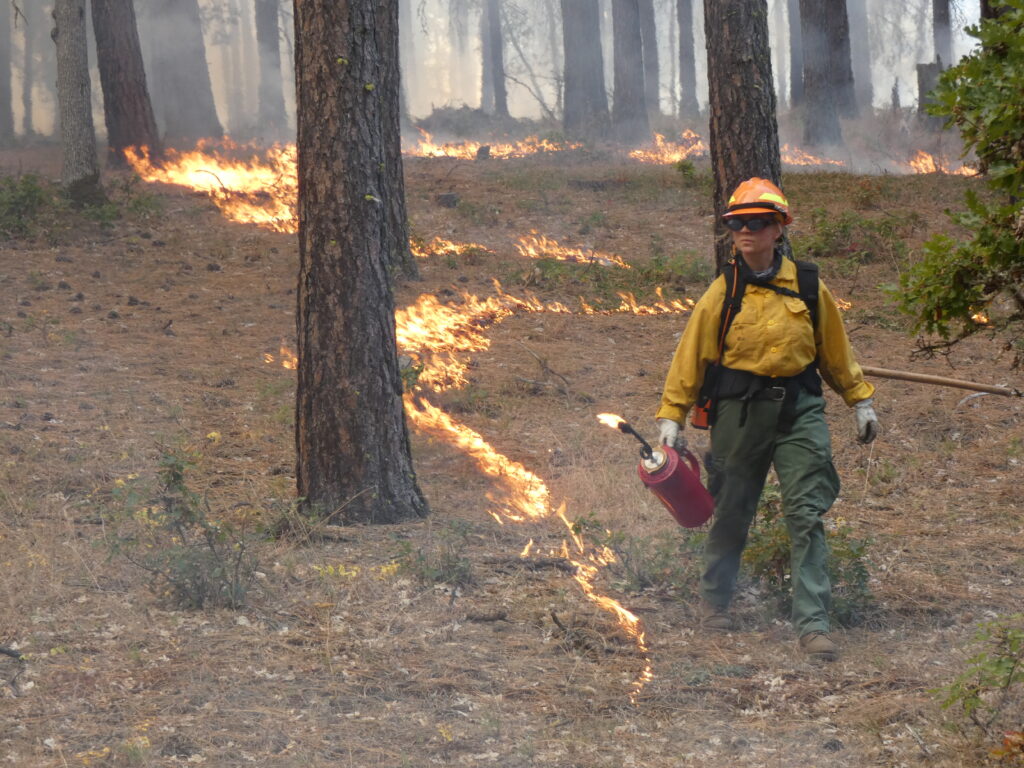
AUBURN, Wash. NewsWK — Forest managers across the country are increasingly turning to intentional, low-intensity fire to clear combustible brush, restore native habitats, and prevent catastrophic blazes. To expand this work beyond public parks, state forestry agencies are stepping up efforts to train and certify private landowners, conservationists, and local land trusts.
For decades, standard forestry policy focused strictly on total fire suppression. While that approach protected timber supplies and nearby neighborhoods in the short term, it also created dense woodlands filled with decades of accumulated dead wood, fallen needles, and thick underbrush.
Research shows that applying low-intensity prescribed fire to thin out overgrown understory can reduce the risk of destructive, high-intensity wildfires by up to 60 percent. Now, roughly 20 states have established formal certified prescribed burn manager courses to teach citizens how to safely plan and execute burns on their own acreage.
Why it matters here
In Bennington County and surrounding communities across Southern Vermont, the Berkshires, and eastern New York, private individuals, family trusts, and local conservation organizations own a vast majority of the wooded landscape. Even in areas where megablazes remain uncommon, managing forest health, invasive growth, and fuel loads is becoming an important conservation topic.
As shifting climate conditions bring hotter, drier spells during the spring and late summer, woodland management techniques that worked decades ago are facing new tests. Land trusts, private timber owners, and municipal watershed managers throughout the Green Mountains and Taconic Range regularly balance fuel management against local safety and air quality concerns.
Bringing structured fire training to private stewards ensures that local forests remain resilient while reducing the buildup of kindling that can fuel accidental brush fires.
How burn certification programs work
State-certified prescribed burn courses bring together a diverse mix of students, including land trust directors, tribal resource managers, forestry technicians, and private property owners. Over multiple days of classroom study and field exercises, participants learn the science and logistics behind lighting controlled fires.
Training covers a wide range of operational skills:
- Reading atmospheric indicators, such as cumulus clouds that signal unstable air capable of lifting smoke away from ground level.
- Calculating fuel moisture levels across different types of forest vegetation and leaf litter.
- Designing contingency plans for changing wind directions, nearby roadways, and vulnerable neighbors.
- Navigating environmental permitting, state smoke management rules, and local emergency dispatch notifications.
Earning state certification also provides critical legal protections. While putting fire on the ground always carries inherent risks, certified burn managers who follow approved safety plans receive limited liability protections under state laws.
Tony Craven, a wildfire preparedness project manager who grew up near forested mountain communities, noted how dramatically woodlands have changed over generations of suppression. “We have more trees than we’ve ever had, and the shrub layer is thicker than it’s ever been. We have 100 years of fire debt built up,” Craven said.
Community associations pool local resources
Conducting even a modest prescribed burn requires significant manpower and specialized equipment, including drip torches, water engines, portable containment tanks, and hand crews to monitor fire lines. Because single landowners rarely own all the necessary tools, community-led prescribed burn associations are gaining popularity.
These grassroots cooperatives allow neighboring property owners to share equipment, coordinate work schedules, and supply volunteer labor for each other’s burn operations. By working collaboratively, private owners can treat broader swathes of connected forestland that cross property boundaries.
State forestry leaders emphasize that public land managers cannot solve landscape-scale forestry problems alone. Kyle Lapham, a state certified burner program manager, stressed the importance of bringing private acreage into modern management efforts. “If you don’t treat any private lands, you’re missing the boat,” Lapham said.
Navigating smoke regulations and future policy
Despite growing enthusiasm for prescribed burning, practitioners still face substantial regulatory hurdles. Clean air regulations strictly limit when landowners can ignite controlled burns, restricting activity to narrow weather windows where smoke will quickly disperse without violating regional air quality thresholds.
Federal and state lawmakers have weighed legislative proposals to ease permitting bottlenecks and provide grant funding for private burn equipment. For now, forestry groups continue to advocate for broader education, encouraging woodland owners to view controlled fire not as a danger, but as an essential land stewardship tool.
This article was produced with the assistance of AI and reviewed by our editorial team.
Sources
Related: How Towns Use Controlled Burns to Prevent Wildfires
Related: State Oversight Slows Private Equity Healthcare Deals in Region
Related: NewsWK App now available for Iphone and Android Users
Related: Bennington Battle Day Marked as Historic Monument Awaits Repairs
Related: PFOA Plume Spreads to Shaftsbury and South Bennington
Related: Vermont Enacts New Data Privacy Law for Consumers
Related: Changes to Fire Codes in Vermont: What Local Residents Need to Know
Related: Gridlock in Bennington: Bridge Closures, Roundabout Overhauls, and Sewer Repairs Stall Commuters
Related: Local Impact of Bipartisan Push to Reform Childcare Systems
Related: Navigating AI in Classrooms: Local Schools Face Tech and Privacy Risks
Related: Border County Tax Pressures Mount as New York Shifts SNAP Costs
See a typo? Report it here.