Alaska
States Push for Closer Review in Domestic Violence Deaths
Families who believe local officials prematurely ruled their loved ones’ deaths suicides or accidents — rather than investigating whether domestic violence played a role — are pushing lawmakers in a growing number of states to require additional scrutiny. Advocates call…

Last updated:
Key points
States Push for Closer Review in Domestic Violence
- Families and advocacy groups are urging state lawmakers to require deeper investigative scrutiny into deaths that may involve intimate partner violence.
- Legislation addressing potential hidden homicides has been introduced in several states, including neighboring New York and Massachusetts, following California’s Joanna’s Law.
- Lawmakers are refining proposals to balance the need for thorough investigations with the staffing and budget realities of local police and medical examiner systems.
NewsWK — Families who have lost loved ones under suspicious circumstances are urging lawmakers across the country to require deeper scrutiny when investigating deaths that involve a history of domestic abuse. The legislative push, which has reached neighboring statehouses in Massachusetts and New York, aims to ensure that potential intimate partner homicides are not prematurely classified as suicides, overdoses, or accidental deaths.
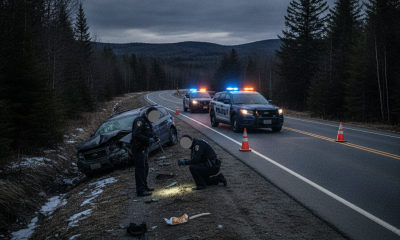
Advocacy groups refer to these overlooked cases as hidden homicides. They argue that when first responders quickly label an unattended death as self-inflicted or accidental, critical physical evidence and crucial context about relationship abuse can be lost before a thorough inquiry ever begins.
Why it matters here
For residents across Bennington County and our neighboring communities in Berkshire County, Massachusetts, and Rensselaer and Washington counties in New York, community safety depends heavily on thorough, coordinated death investigations. In rural and small-town settings throughout Southern Vermont and the border region, local police departments and regional medical examiner systems often operate with tight budgets and limited staffing.
Ensuring that investigators pause to evaluate domestic abuse histories before making final determinations directly affects how justice is served for local families. Transparent death investigation protocols help protect vulnerable community members, support domestic violence prevention networks, and provide grieving families with clarity and closure during difficult times.
The push to identify overlooked homicides
During recent legislative sessions, lawmakers in at least five states, including Illinois, Massachusetts, Minnesota, New York, and Oregon, introduced measures designed to flag unexplained or suspicious deaths connected to domestic abuse. While these proposals have largely stalled in committee reviews due to questions over funding, training requirements, and administrative capacity, advocates continue to push for their passage.
Advocates note that standard homicide investigations receive significant resources, including comprehensive scene processing, forensic analysis, and extensive witness interviews. By contrast, cases initially assumed to be suicides or accidents often bypass those intensive investigative steps.
Casey Gwinn, co-founder of the Alliance for HOPE International, noted the frequent speed of initial determinations. “In many of our cases, they make a conclusion on the manner of death within 30 minutes of arriving at the scene. They don’t know anything about the family, the relationship, the history,” Gwinn said.
Key issues highlighted by advocates include:
- Inconsistent protocols between neighboring jurisdictions when assessing unattended deaths.
- Limited numbers of completed autopsies due to cost and staffing restraints.
- Gaps in communication among police agencies, medical examiners, and local domestic violence service organizations.
- Difficulties for surviving family members seeking public records or independent second autopsies after a manner of death is recorded.
California sets an early standard
California established a precedent in 2024 by passing Senate Bill 989, known as Joanna’s Law, which took effect last year. The statute requires law enforcement personnel to interview family members before concluding the cause and manner of death in specific situations. It also grants families the ability to request a comprehensive autopsy whenever defined risk factors for domestic homicide are present.
The law was named after Joanna Lewis, whose death was initially classified as a suicide despite prior domestic violence protective orders filed against her husband. Anti-violence organizations that helped craft the California statute are now working to bring similar measures to other states, including Alaska, Arizona, and Nevada.
Balancing mandates with local resources
While advocates emphasize the importance of thorough reviews, law enforcement officials and medical examiners have raised practical concerns regarding mandatory requirements. In states like Oregon, legislation faced pushback over the projected financial burden of requiring substantially more autopsies and the difficulty officers face when next of kin cannot be located.
Lawmakers are now refining these proposals to focus on structured evaluations rather than automatic, universal autopsy mandates. Updated legislative language in several states seeks to require specific preliminary steps, such as reviewing prior police calls, conducting toxicology screenings, taking additional medical imaging, and interviewing relatives, before investigators assign a final manner of death.
Oregon State Sen. Sara Gelser Blouin, who is working on an updated version of her state’s bill, emphasized the need for workable policy. “People want to do this, and they want to get it right. They don’t want us to pass a law that can’t be implemented because it’s too confusing or that makes it worse,” Gelser Blouin said.
What to watch moving forward
As state legislatures prepare for upcoming sessions, lawmakers in New York, Massachusetts, and across the nation are expected to revisit these policies. For our local region, any future reforms adopted in Albany or Boston could shape regional investigative practices and provide new legal frameworks for families seeking accountability in complex domestic violence cases.
This article was produced with the assistance of AI and reviewed by our editorial team.