
Bennington
Bird Flu in Dairy Cattle Spreads to 22 States as Vaccine Urgency Grows
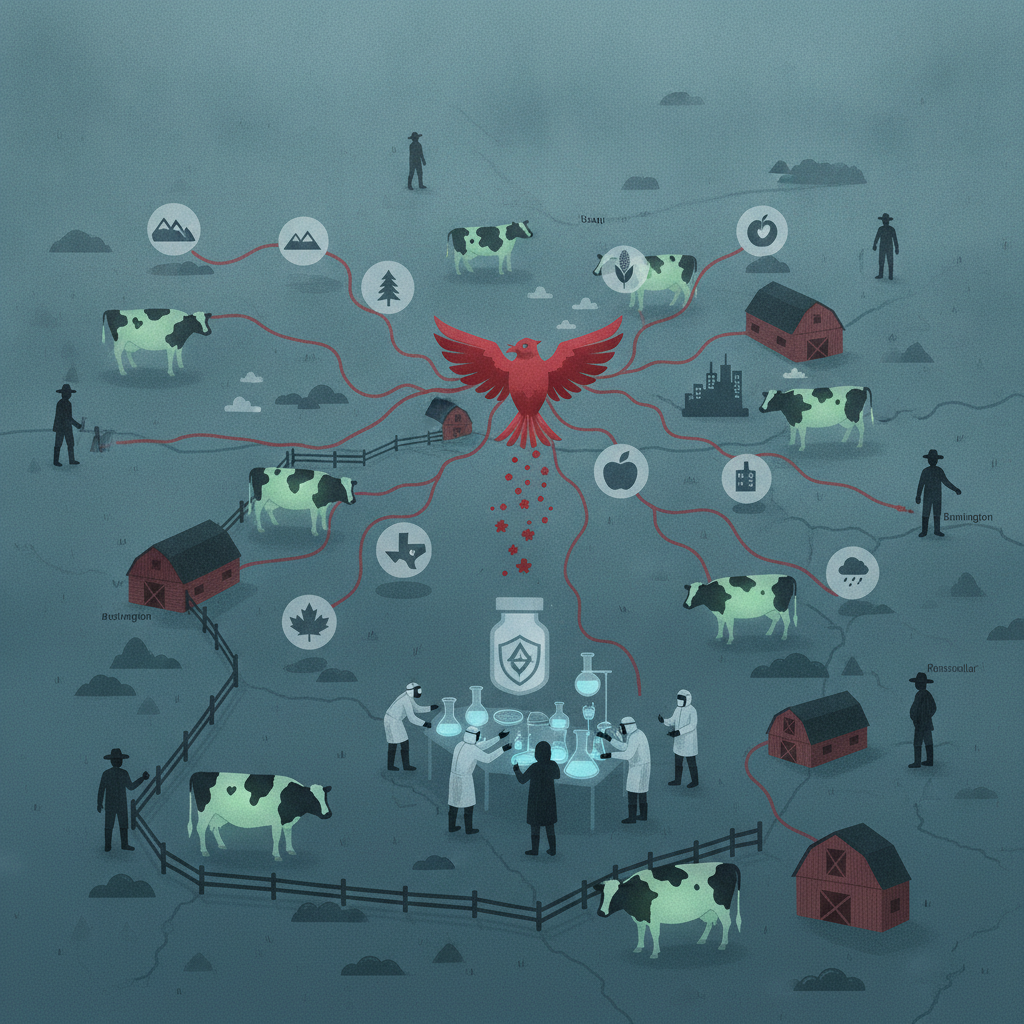
More states are seeing new cases of bird flu in cattle as state agricultural officials urge the federal government to prioritize approving vaccines for dairy cows. The virus, highly pathogenic avian influenza H5N1, known commonly as bird flu, has been…


Last updated:
Key points
- State agricultural leaders are asking federal regulators for emergency vaccine approvals to control avian influenza in dairy cattle.
- The virus has spread to 22 states, with recent detections in Oklahoma, Oregon, and Indiana bringing total cattle infections over 1,200.
- While consumer milk supplies remain safe through pasteurization, local producers are keeping biosecurity high to protect herds and farmworkers.
NewsWK — Local farms in Bennington County have avoided infections so far. However, the persistent spread of avian influenza elsewhere highlights ongoing vulnerabilities for the nation’s milk producers.
How is bird flu in dairy cattle expanding across the country?
Avian influenza cases in cows have now spread to 22 states nationwide. This total follows recent detections in Oklahoma, Oregon, and Indiana. Agricultural officials report more than 1,200 total cattle infections since early 2024, when the virus jumped from wild birds. Furthermore, officials have recorded at least 146 infections this year.
The virus is known specifically as highly pathogenic avian influenza H5N1. It has circulated in wild bird and poultry populations for years. However, its expansion into cattle marked a significant shift in animal health risk. Recently, Oklahoma recorded its first case in cattle since the initial multi-state outbreak began. Meanwhile, Oregon and Indiana also confirmed their first infected herds earlier this month.
Other states have also reported active viral spread over the past month. For example, animal health agencies in Colorado, Idaho, Texas, and Washington state logged recent herd infections. In Washington state alone, agriculture departments recorded roughly three dozen new cattle cases within four weeks. Consequently, state veterinarians emphasize that the virus remains an active threat to farming operations nationwide.
What does the spread of H5N1 mean for local dairy farms?
Vermont and nearby agriculture hubs in eastern New York and western Massachusetts have avoided major outbreaks. Still, local farms in Bennington, Rensselaer, and Berkshire counties face economic risks if the virus becomes endemic. Therefore, farmers must maintain strict biosecurity practices to shield cattle, farmworkers, and milk production from contamination.
For regional producers, an outbreak brings immediate financial and operational hurdles. Most cows survive the illness. However, caring for sick herds increases labor and veterinary costs. Additionally, farm operators must separate affected animals and conduct routine herd testing to prevent broader contamination.
Local dairy safety measures provide vital protection for consumers and farm workers alike. Consider these key facts regarding herd health and agricultural risk:
- Worker Protection: Farm employees working directly with sick cattle face the highest exposure risk. Therefore, they require protective equipment.
- Economic Stress: Herd quarantines and lower milk output create severe financial strain for independent family farms.
- Cross-Species Risk: Uncontrolled viral spread in cows increases opportunities for the virus to spill over into poultry flocks.
Why are state officials urging swift action on an H5N1 vaccine dairy cows need?
State agricultural leadership organizations recently sent a formal request to federal regulators. Specifically, they demanded an accelerated emergency vaccination strategy for livestock. Officials caution that dairy herds risk long-term endemic infection without coordinated immunizations. Consequently, this risk creates continuous financial strains and health threats across rural farming communities.
On Nov. 6, two national groups sent a joint letter to the U.S. Department of Agriculture. They were the National Association of State Departments of Agriculture and the National Assembly of State Animal Health Officials. Both groups urged federal officials to establish an emergency vaccination framework. Furthermore, they stressed that cows only develop short-lived immunity after contracting the virus. As a result, herds remain susceptible to reinfection later.
State leaders warn that managing constant reinfections will drain public and agricultural resources. “Veterinary and state government leaders need every available tool to protect the agricultural economy in their states and empower their farmers in combating this virus to protect their dairy herds and poultry flocks,” said Dr. Alex Hamberg. He serves as president of the National Assembly of State Animal Health Officials. “We are asking USDA for their support in helping our farmers.”
How can regulators protect bird flu dairy herds from endemic risk?
Securing long-term stability for dairy producers requires a coordinated federal response. This strategy must combine rapid vaccine deployment with transparent public health monitoring. State leaders argue that relying solely on herd quarantines leaves farms vulnerable. Specifically, herds face repeated viral introductions from wild migratory birds.
How soon could a USDA avian influenza vaccine reach dairy herds?
Federal regulatory processes currently govern several candidate vaccines undergoing active field trials and emergency review. The U.S. Department of Agriculture supports rapid development. However, formal approval timelines face constraints from established safety testing requirements. Consequently, these rules leave farmers reliant on biosecurity measures in the interim.
Developing effective livestock vaccines involves complex regulatory hurdles. Currently, several vaccine candidates are undergoing field trials or awaiting final approval for emergency use. However, testing protocols require time to ensure both safety and efficacy. Previously, federal authorities launched a $1 billion initiative to battle poultry outbreaks. That effort included funding for vaccine research. Now, state agriculture departments want similar urgency applied to cattle treatments.
Human health risk from the virus remains low for the general public. Still, farmworkers face real dangers. Nationwide, officials have confirmed three human deaths linked to the virus since the outbreak began. This toll includes one dairy worker in Washington state earlier this month. Meanwhile, labor advocates worry that human cases among farm labor may go underreported. They note that workers often fear immigration enforcement. Therefore, public health leaders advocate for better worker protections and accessible medical screening alongside herd vaccinations.
Federal agencies continue to review vaccine candidates. Meanwhile, local dairy farmers across Southern Vermont and neighboring border communities enforce strict sanitization protocols. Finally, local agriculture officials encourage farm owners to monitor herd health closely. Farmers should report any sudden drops in milk yield immediately.
This article was produced with the assistance of AI and reviewed by our editorial team.
Sources
Related: Federal Vaccine Order Targets New York and Neighboring States
Related: How Cancer Vaccine Hesitancy Could Threaten New Medical Treatments