Arizona
How Do Election Betting Laws by State Impact Southern Vermont and Border Communities?
On Friday morning, the prediction market platform Kalshi gave the Democratic candidate in Minnesota’s U.S. Senate race an 87% chance of winning. The volume of trading on the outcome exceeded $1.8 million. This is exactly the type of activity Minnesota…

Last updated:
Key points
- A legal divide has emerged between states trying to ban election betting and federal regulators claiming exclusive jurisdiction.
- Twenty-three states currently prohibit wagering on political outcomes, though enforcement remains difficult online.
- The U.S. Supreme Court may ultimately decide if states have the power to regulate political prediction markets.
NewsWK — Midterm elections are approaching. In Southern Vermont, residents in Bennington, Pownal, and Manchester see a surge in online political wagering. Bettors place millions of dollars on which party controls Congress. However, the legal rules governing these wagers depend entirely on your location. Furthermore, this growing trend sparks fierce debate over state sovereignty and local election integrity.
Is It Legal to Bet on Elections in the Tri-State Area?
Legal rules for election betting vary sharply across Vermont, New York, and Massachusetts. In fact, federal regulators claim exclusive authority, but many state laws historically ban gambling on political races. As a result, local residents must navigate a confusing patchwork of state bans Alongside Ongoing Federal Court battles.
Currently, 23 states completely ban election betting. These traditional laws aim to protect the ballot box. However, the rise of online prediction markets creates a major regulatory gray area. Vermont legalized mobile sports betting in early 2024. Yet, state law strictly prohibits wagering on political races. Therefore, understanding election betting laws by state is crucial for local voters.
In our region, residents frequently cross state lines. For instance, a commuter driving from Pownal to Williamstown faces different legal realities. Similarly, a trip from Hoosick Falls to Bennington brings legal shifts. Some states actively warn residents that these online wagers violate local laws. Meanwhile, betting platforms argue that state rules do not apply to them. Here is a quick look at the current landscape:
- At least 23 states completely ban political wagering.
- Federal regulators classify political contracts as financial swaps.
- Federal courts remain divided on whether state bans apply to these platforms.
- Some state officials warn that betting could impact your voting eligibility.
How Does Prediction Markets Election Gambling Affect Local Voters?
Online betting platforms allow users to wager money on congressional races and national outcomes. For Southern Vermont voters, this practice raises serious concerns about local democratic integrity. In addition, critics argue that financial contests incentivize interference. Consequently, heavy betting could distort voter behavior in close regional races.
Indeed, the rise of prediction markets election gambling alarms local election officials across the country. In Maryland, election administrator Jared DeMarinis warned that political betting damages public trust. Therefore, he asked state prosecutors to investigate these online platforms. He wants to stop the practice before it becomes deeply entrenched.
Similarly, the Wisconsin Elections Commission issued a public advisory to its voters. Specifically, the commission warned that residents who bet on an election could face voting eligibility challenges. These developments show how quickly political wagering changes the voting landscape. Also, local civic groups worry about the broader impact on democracy.
“It’s supposed to be a civic duty where people are deciding what candidate they actually think is best for a leadership position, not what candidate can make them the most money if they bet the right way,” Schiffrin said.
Therefore, many advocates call for stricter federal and state limits.
Why Are Kalshi and Polymarket Election Betting Platforms Facing Legal Battles?
Major online platforms argue that their political contracts are financial swaps under federal jurisdiction. However, state officials in Maryland and Arizona have launched legal challenges to stop them. Furthermore, federal courts remain deeply divided on the issue. Judges cannot agree whether federal financial laws override traditional state gambling bans.
As a result, the legal battle over Kalshi and Polymarket election betting is rapidly escalating. In Arizona, Attorney General Kris Mayes filed criminal charges against Kalshi for accepting state bets. However, a federal judge quickly halted that prosecution. The judge ruled that federal law likely preempts state gambling restrictions.
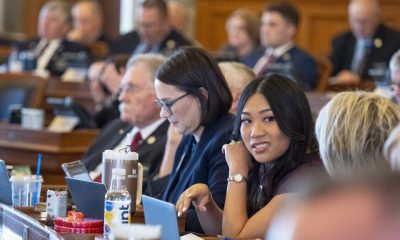
Meanwhile, Minnesota passed a near-total ban on prediction markets earlier this year. Yet, a federal judge blocked that law before it took effect. State Representative Emma Greenman, who helped lead the ban, expressed deep disappointment. She argued that local communities should decide whether to allow political gambling.
“They jeopardize people’s trust in government and government decision-making,” Greenman said.
Consequently, this legal conflict has reached the federal appeals courts. For example, the 9th Circuit Court of Appeals supported state-level restrictions. In contrast, the 3rd Circuit Court of Appeals upheld federal regulatory power. New Jersey recently asked the U.S. Supreme Court to resolve this split. Thus, the High Court’s decision could clarify whether states can enforce their own election betting laws.
What Is the Current Federal Stance on Political Wagering?
The Commodity Futures Trading Commission currently oversees these prediction markets under federal law. In fact, a single commissioner, Michael Selig, pushes to keep political contracts legal under a federal framework. However, this stance angers watchdog groups. They argue that political betting undermines public trust in democratic elections.
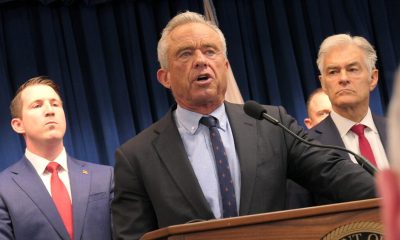
Currently, the federal government has largely sided with the prediction platforms. The Commodity Futures Trading Commission has only one active commissioner, Michael Selig. Recently, he proposed a rule that explicitly defines political contracts as financial swaps. Therefore, this definition places them under exclusive federal jurisdiction.
In addition, Selig defended the products in public statements. He stated that Americans use them to hedge financial risks and gather information. However, 16 civic watchdog groups strongly protested this move. They argue that betting on elections incentivizes interference. Furthermore, they believe these contracts go against the public interest.
As midterm elections approach, these platforms remain widely accessible to local residents. Whether you live in Bennington, Hoosick Falls, or North Adams, the debate is far from over. Ultimately, local voters must watch the courts to see if states regain control over their elections.
This article was produced with the assistance of AI and reviewed by our editorial team.
Sources
Related: State Officials Target Online Prediction Markets Over Gambling Concerns
Related: How Prediction Markets Lobbying Impacts Vermont Gambling Regulations
See a typo? Report it here.