Bennington
New Public Charge Rule Sparks Health and Care Fears Across Bennington County
New rules going into effect next week allow immigrants’ enrollment in safety net resources to be taken into account for lawful immigration status applications, the latest in the Trump administration’s immigration overhaul. The rules will have wide implications for mixed-status…

About New Public Charge Rule
Last updated:
Key points
- A revised federal public charge rule taking effect Sept. 18 allows immigration officials to consider enrollment in Medicaid, CHIP, and food assistance during green card reviews.
- Health researchers estimate that up to 4.1 million people in mixed-status households nationwide could abandon public benefits due to legal concerns.
- Federal estimates show the disenrollment trend could remove nearly $9 billion annually from public benefit spending, reducing revenue for local healthcare providers and grocers.
NewsWK — A major shift in federal immigration policy could soon reshape safety net enrollment across Southern Vermont and neighboring border communities. Local community advocates and healthcare workers are preparing for ripple effects that reach far beyond national headlines.
The updated federal framework takes effect on Sept. 18. Under the revision, immigration officials may review use of food aid, healthcare coverage, and housing assistance during green card reviews.
Why it matters
The updated rules directly threaten mixed-status families across Bennington County and adjacent areas like Rensselaer and Berkshire counties. When households avoid nutrition support or clinical visits out of legal anxiety, overall public health and economic stability decline rapidly. As a result, both vulnerable residents and rural healthcare facilities face immediate community-wide risks.
Rural clinics and regional hospitals often operate on tight budgets. Consequently, widespread disenrollment from health programs can slash essential clinic revenues across Southern Vermont.
Furthermore, local school districts and food pantries usually absorb the strain when families forgo routine food support. Community health leaders stress that early care prevents costly emergency room visits later.
How will the public charge rule immigrant benefits policy work?
Under the revised policy, federal agents can penalize green card applicants who enroll in non-cash safety net programs. The regulation rescinds 2022 standards that protected access to healthcare and nutrition aid. Therefore, immigration officers will actively evaluate whether an applicant might depend heavily on public government assistance in the future.
The updated standard specifically targets lawful permanent residency applications. It applies broadly to several categories of green card seekers:
- Spouses, parents, adult children, and siblings of United States citizens
- Certain foreign employment visa holders, including medical school graduates
- Widows and widowers of lawful residents or citizens
- Certain enlisted personnel in the United States armed forces
However, federal rules still exempt specific humanitarian classifications. For instance, refugees, asylees, and victims of human trafficking remain exempt from these public charge tests. In addition, survivors petitioning under the Violence Against Women Act face no penalties. Individuals holding Temporary Protected Status also keep their full protections.
How will USCIS public charge green card reviews change?
USCIS officers will now hold wide personal discretion to assess basic food and health assistance during green card reviews. Caseworkers will thoroughly examine applicant records for enrollment in Medicaid, the Children’s Health Insurance Program, and food aid. As a result, receiving standard benefits can lead directly to permanent residency denials.
President Donald Trump emphasized the policy goal in an executive order following his inauguration. In that order, he declared his administration would “uphold the rule of law, defend against the waste of hard-earned taxpayer resources, and protect benefits for American citizens in need, including individuals with disabilities and veterans.”
Consequently, examiners will view vital immigrant safety net benefits through a much stricter lens. This intense scrutiny applies even when individuals legally qualified for aid under state and federal law.
What are the economic and health consequences?
The policy could cause millions of eligible individuals to leave public assistance programs nationwide. Healthcare research organization KFF projects that between 1.4 million and 4.1 million enrollees could abandon Medicaid and CHIP. Families often withdraw from aid due to acute fear, which severely damages local economies and community wellness.
Meanwhile, the U.S. Department of Homeland Security previously calculated the financial scope of widespread disenrollment. The department noted that state and federal benefit spending could drop by nearly $9 billion every year. Yet that steep decline carries severe economic blowback for local businesses and regional medical centers.
For instance, federal analysts warned that hospitals, neighborhood pharmacies, and Medicaid healthcare providers could lose substantial operating revenue. In addition, independent grocers and local agricultural producers that accept federal food benefits may experience sudden sales drops.
Why do mixed status households public benefits face risks?
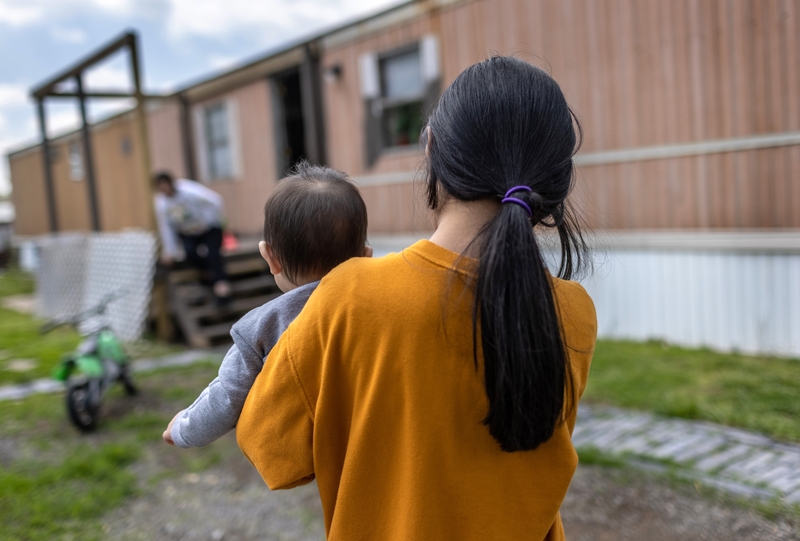
Mixed-status households face unique challenges because parents without permanent status frequently drop benefits for eligible citizen children. Families pull back from routine healthcare and pediatric nutrition due to legal fears. Specifically, parents worry an enrollment record will trigger deportation or green card denials for family members.
Medical professionals warn that delayed healthcare creates long-term harm for vulnerable children. Dr. Sural Shah, chair of the American Academy of Pediatrics’ Council on Immigrant Child and Family Health, outlined those risks directly.
“When a child is hungry, it can affect every aspect of their development and lead to chronic conditions like heart disease and diabetes, even into adulthood,” Shah said. “Without accessing WIC, babies and young children will miss out on critical nutrition supports that are important for brain development in the first 1,000 days of life. Medicaid and CHIP are lifeline programs.”
Advocates also warn that people with complex disabilities face heightened hardship under the new standards. For example, the Autism Self Advocacy Network noted that disabled immigrants rely heavily on supportive public programs to maintain daily independence.
Therefore, regional service providers encourage local families to consult accredited legal aid groups before canceling necessary medical coverage or food assistance.
This article was produced with the assistance of AI and reviewed by our editorial team.
Sources
Related: Trump Green Card Restrictions Lawsuit: VT, NY Join Challenge
Related: Border County Tax Pressures Mount as New York Shifts SNAP Costs
See a typo? Report it here.