Bennington
Student Loan Default Collections: What Vermont Borrowers Must Know
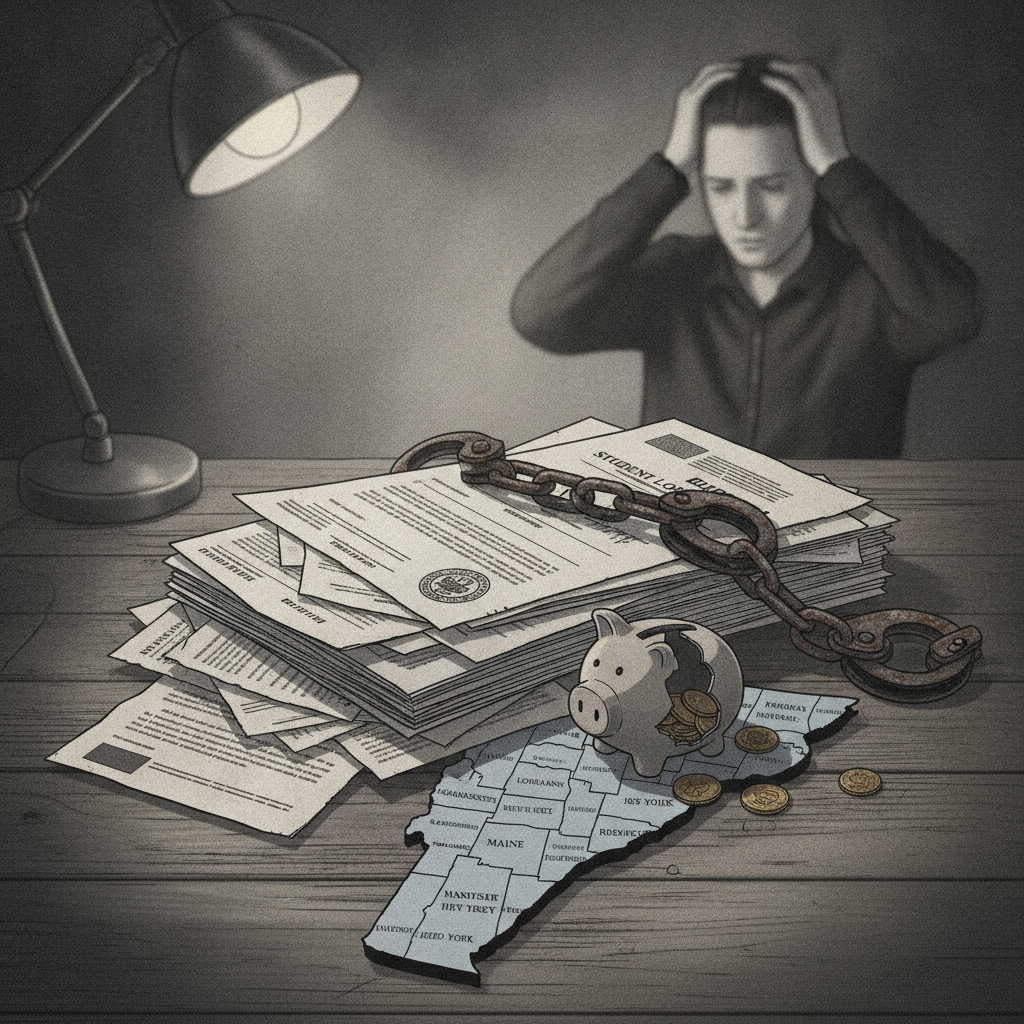
A long-postponed reckoning could be coming soon for millions of student loan borrowers who are now faced with garnished wages and seized tax refunds as soon as next year. Since pandemic forbearance finally expired last year, more than 9 million…


Last updated:
Key points
- Federal agencies prepare to restart forced student loan collections, including wage garnishment and tax refund seizures, after long delays.
- More than nine million borrowers nationwide are currently in default on $234 billion in federal student loan debt.
- While regional default rates in New England remain lower than the national peak, local borrowers in Southern Vermont still face significant risk of automated collection actions.
NewsWK — Residents Across Bennington County and Southern Vermont with federal student debt may soon face aggressive collection efforts. Specifically, federal officials plan to resume forced collections next year. This action puts tax refunds and paychecks at risk for millions of defaulted borrowers.
Reporting from Stateline shows more than nine million borrowers remain in default nationwide. Together, these individuals owe an estimated $234 billion in delinquent educational debt. While Vermont historically maintains lower default rates than national averages, local households will still feel the economic pinch.
Federal student loan default collections have remained on pause since early pandemic relief efforts began. However, federal authorities are now preparing to restart collection activities following recent administrative delays.
When Will Student Loan Default Collections Resume for Borrowers?
Federal officials plan to resume enforcement actions against defaulted student loan borrowers early next year. After multiple extensions delayed enforcement throughout 2024, industry experts expect aggressive collection efforts to restart in 2025. Consequently, this return to standard collections will target borrowers who fell behind after pandemic forbearance protections ended.
The pause on collection activities received another brief extension this past January. Still, policy analysts note that federal agencies are quietly laying the groundwork for full resumption.
Meanwhile, Betsy Mayotte, founder of The Institute of Student Loan Advisors, issued a warning. Many borrowers remain unprepared for the transition.
“It’s heartbreaking,” Mayotte said. “People tend to get caught off guard when their tax refund is taken and if they’re struggling financially, a lot of times they’re counting on that refund to catch up.”
Furthermore, data from the Federal Reserve Bank of New York indicates that default rates climbed sharply in late 2025 and early 2026. Older borrowers have faced particular strain because accumulated interest drives total balances out of reach.
What Does Federal Student Loan Default Mean for Southern Vermont Families?
These enforcement actions will trim expected annual tax returns. As enforcement begins, local workers struggling with debt may find less disposable income for groceries, housing, and routine utility bills.
Vermont, New Hampshire, and Massachusetts report lower default rates than Mississippi or Louisiana. In those southern states, over 25 percent of borrowers are in default. Still, New England borrowers face significant total debt loads.
The financial pressure touches residents across all income brackets. For example, Timothy Varro, a 40-year-old attorney, owes $375,000. He accumulated the debt while attending college in New Jersey and law school in Rhode Island. Ultimately, his situation highlights the systemic pressure.
“I fear that unless something miraculous happens, I will default and my wages will be garnished for life,” Varro said.
Similarly, younger workers also face hurdles. Taylor Lewis, 26, defaulted on $29,000 in undergraduate loans. Her default occurred after an entry-level position in her field failed to materialize. Because she missed payments, her lender demanded the entire balance at once.
Key figures regarding national and regional student debt include:
- Over nine million federal student loan borrowers are currently in default nationwide.
- Total defaulted student loan debt exceeds $234 billion.
- States like Louisiana and Mississippi report default rates above 25 percent.
- The lowest state default rates were 15 percent for Massachusetts, New Hampshire, Utah and Wisconsin.
How Will Student Loan Wage Garnishment and Tax Seizures Work?
Federal agencies hold broad authority to recover delinquent debts directly from earnings and tax returns. Notably, they can act Without Seeking Prior Court approval. Once enforcement resumes, administrative officers can automatically deduct portions of a worker’s paycheck. They will also confiscate federal tax refunds until the borrower satisfies the defaulted debt.
Unlike standard consumer debt, federal student loans allow unique collection mechanisms. Therefore, employers receiving garnishment orders must withhold wages directly.
Meanwhile, state programs in neighboring New England regions are attempting to cushion the blow. For instance, Maine provides debt counseling through its state finance authority. It also offers tax credits for borrowers living and working locally. Likewise, Connecticut offers similar tax incentives to businesses that assist employees with repayment.
Preston Cooper, a senior fellow at the American Enterprise Institute, noted that mixed messaging from federal officials created widespread confusion. Specifically, Cooper explained that repeated extensions led many borrowers to assume payments remained paused. Many held this belief until credit bureaus flagged their accounts.
Why Are Student Loan Tax Refund Seizure Warnings Increasing for 2025?
Warnings are escalating because annual tax refund season represents the primary vehicle for federal debt recovery. As enforcement ramps up in 2025, federal authorities will automatically divert tax refunds from defaulted borrowers. Consequently, this process recovers outstanding federal student loan default balances before those funds reach personal bank accounts.
Therefore, borrowers relying on annual tax refunds for seasonal property taxes or medical bills should evaluate their options quickly. Fortunately, federal loan rehabilitation and consolidation programs offer structured pathways to exit default before aggressive recovery actions begin. Local financial counselors encourage borrowers to review their online loan portals and verify current account statuses today.
This article was produced with the assistance of AI and reviewed by our editorial team.
Sources
Related: National Crime Rates 2025: Federal Report Shows Steep Drop
Related: How Other States’ Policies Could Shape Medical Debt Relief Vermont Residents Watch