Bennington
Women Running for State Legislature Set Record
A record number of women are running for state legislative seats this November, more than two-thirds of whom are Democrats. Across the 46 states with legislative seats on the ballot, a total of 3,824 women are running — up from…

Last updated:
Key points
- A record 3,824 women are running for state legislative seats across 46 states this election cycle.
- Women comprise 35.5 percent of all state legislative candidates nationwide, an all-time high.
- Democratic women represent 68 percent of all female state legislative nominees this year.
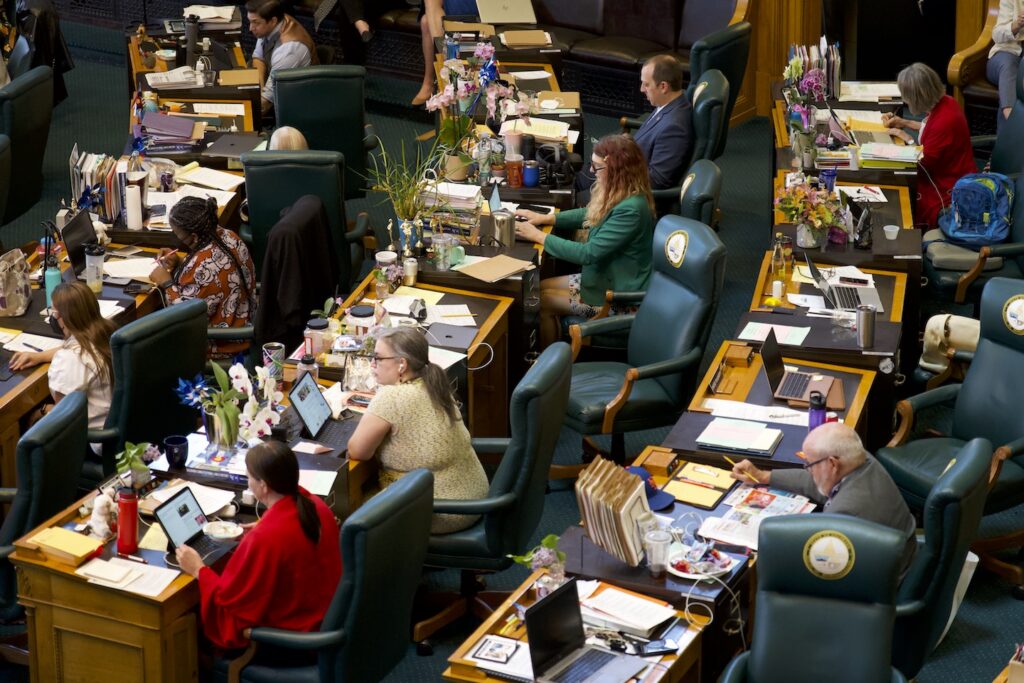
NewsWK — State legislative races are making national history. Specifically, a record number of women candidates are seeking office in state capitals this year.
How does the surge in women state legislative candidates affect local voters?
Nationwide, 3,824 female contenders are running for statehouse seats. This historic field gives local voters more choices. It also changes how candidates address housing, healthcare, and family budgets.
Data from Rutgers University shows women make up 35.5 percent of all state legislative contenders this cycle. Notably, this national total tops the previous record of 3,621 female candidates set in 2022. Furthermore, Stateline reporting highlights that this shift reflects steady growth across state capitals.
Currently, female lawmakers hold roughly one-third of statehouse seats across the United States. That figure represents an all-time high. However, it remains well below equal gender representation. Researchers note that long-term progress in state capitals has moved at a steady, gradual pace.
Why are record numbers of female political candidates stepping forward now?
A record number of female political candidates are running today. Economic concerns and recent legal decisions directly affect daily family life. Many women serve as primary caregivers and household budget managers. Therefore, concerns over grocery bills, childcare, healthcare, and reproductive rights push more women to seek legislative office.
Political trends show a noticeable partisan divide among female contenders nationwide. For example, midterm elections often favor the political party out of power in Washington. Also, the national focus on affordability gives female candidates an extra advantage on the Campaign Trail.
Pollsters report that women frequently frame economic discussions around household budgets and daily expenses. Because cost of living remains a top concern, these candidates resonate strongly with local voters.
What role do political parties play for a record number of women candidates?
Party affiliation plays a major role in candidate recruitment across state legislative districts. Currently, Democrats account for 68 percent of all nominated female statehouse candidates. Meanwhile, Republican organizations are expanding their outreach efforts. They recruit conservative women through dedicated candidate training programs.
In addition, Democratic women hold about 64 percent of female-held legislative seats nationwide. Debbie Walsh directs the Rutgers research center. She emphasized that gender parity requires growth across both major parties.
“If the goal is for there to be gender equity in these legislatures, it’s not going to happen by only electing Democratic women,” Walsh noted.
Furthermore, she added that political power requires female representation on both sides of the political aisle.
How do representation levels compare across state legislatures?
Female representation varies significantly across state borders and regions nationwide. For instance, Nevada, Colorado, and New Mexico lead the nation. In those states, women hold more than 50 percent of legislative seats. Conversely, West Virginia, South Carolina, and Mississippi report female representation levels below 15 percent in their state capitols.
Here is a breakdown of key facts regarding female representation in state capitols:
- National total: 3,824 women are running for state legislative seats across 46 states.
- Candidate percentage: Women comprise 35.5 percent of all state legislative candidates this election cycle.
- Highest representation: Colorado, Nevada, and New Mexico lead with over 50 percent female legislators.
- Lowest representation: West Virginia, South Carolina, and Mississippi report under 15 percent female lawmakers.
- Ten-year growth: The total number of women serving in state legislatures grew by nearly 40 percent over the past decade.
What unique perspectives do women in state legislatures bring to public office?
Women in state legislatures frequently focus on issues directly impacting working families, education, and household costs. Pollsters note that female candidates often discuss economic issues through daily living expenses. Additionally, research indicates that female lawmakers often seek collaborative solutions. They also build cross-aisle cooperation when crafting state legislation.
Stefanie Bord is a former teacher and a candidate for the Texas state House. She noted that women offer practical experience in managing everyday challenges.
“Women are sort of like on the front lines of managing their homes and their families,” Bord explained.
She emphasized that women directly observe problems resulting from laws passed without female input. Similarly, nonpartisan advocacy groups report that female candidates often run to serve their communities. Organizers in southern states also report record interest from first-time candidates. These women step up despite heavy family demands.
What comes next for women state legislative candidates in future elections?
Political action committees and party organizations are building permanent support networks for future cycles. These groups want to maintain strong candidate pipelines. Therefore, groups on both sides of the aisle provide early campaign funding and staff training. Ultimately, these structural investments aim to ensure steady representation gains rather than temporary election spikes.
Building long-term campaign support helps candidates balance personal responsibilities with public service. Candidates often face significant personal sacrifices. For example, they miss family events and work around full-time jobs. However, early support programs help candidates navigate these campaign hurdles effectively.
Ultimately, greater gender diversity in state capitols will continue to shape policy discussions across our region.
This article was produced with the assistance of AI and reviewed by our editorial team.
Sources
Related: Women on Parole Mental Health and Housing Needs Detailed in Study
Related: Democrats State Legislature Elections: Push to Flip Key Chambers
See a typo? Report it here.