Bennington, VT News
Batten Kill Restoration Sunderland VT: How It Protects Our Waters
Conservation crews in Sunderland are restoring a degraded stretch of the Batten Kill. Led by Trout Unlimited and Ducks Unlimited, the project reshapes the riverbank to reconnect the floodplain, reducing downstream flood risks and improving wild trout habitats.

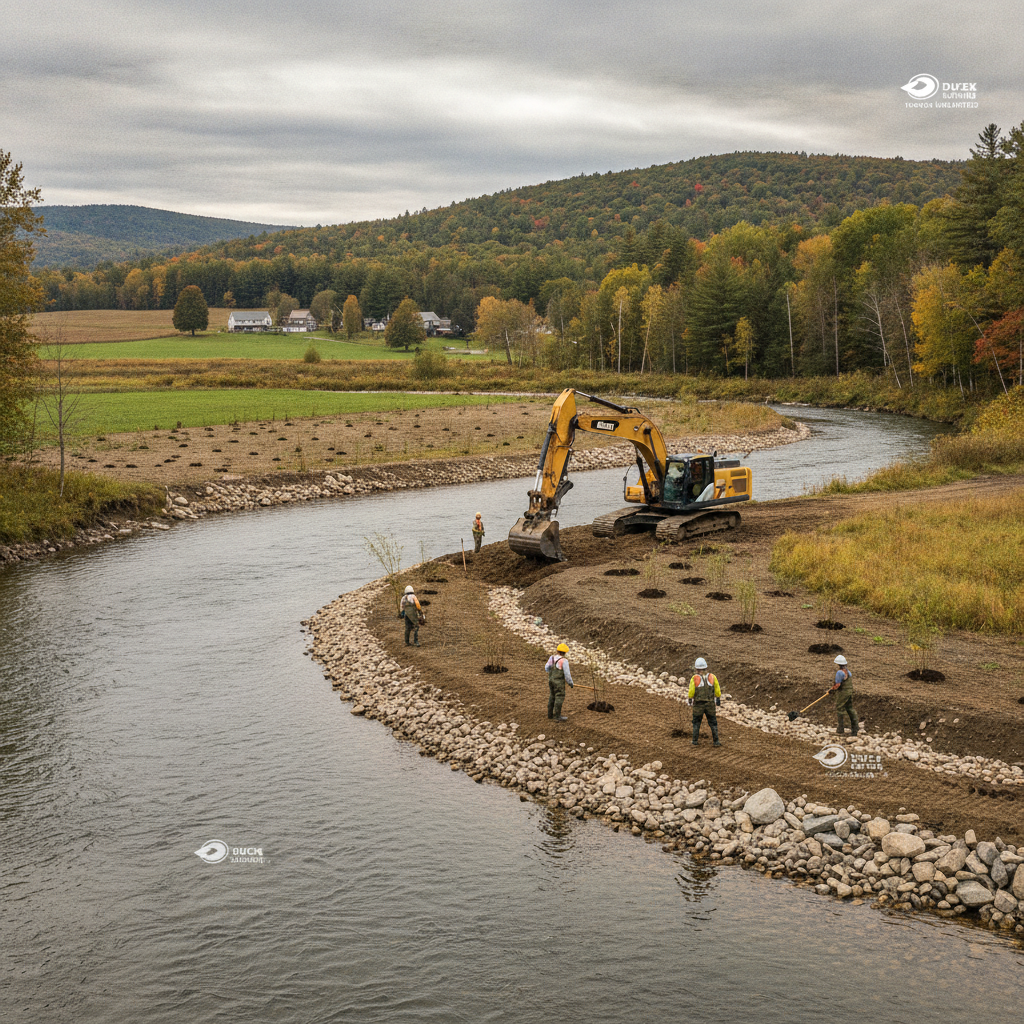
Our local waterways in Bennington County are receiving a major ecological upgrade. Currently, heavy machinery and conservation crews are working along the Batten Kill in Sunderland. They are restoring a vital stretch of the river. Consequently, this work will protect our downstream neighbors from severe flooding.
According to VTDigger, this massive effort will heal decades of erosion along our local waters. Furthermore, the work will make the river more resilient to future storms.
Why it matters
Our community relies heavily on the health of the Batten Kill. In fact, this river is a prized natural resource for local anglers, outdoor enthusiasts, and residents. By restoring the natural floodplain, the project reduces downstream flood risks in Manchester and Arlington. Additionally, it creates critical cold-water sanctuaries for wild brook and brown trout during hot summer months.
What is the Sunderland River Project?
The Sunderland River Project is a collaborative conservation effort in Sunderland, Vermont. Specifically, it restores natural water flow and improves fish habitats. Led by Trout Unlimited and Ducks Unlimited, the project combines mechanical earthwork with natural bioengineering. Consequently, partners are working together to stabilize a degraded section of the river and its tributary, Tanner Brook.
This initiative brings together several key environmental organizations. For example, Ducks Unlimited originally purchased the streamside agricultural property to restore wetland habitats. Soon after, Trout Unlimited joined the effort to manage the in-stream restoration. Currently, Jacob Fetterman is leading these efforts as the project coordinator for the Battenkill Home Rivers Initiative.
Other local partners include the Battenkill Conservancy, the Batten Kill Watershed Alliance, and the Bennington County Conservation District. Additionally, state agencies like the Vermont Department of Fish and Wildlife are providing support. They are working closely with the Vermont Department of Environmental Conservation (DEC) and the U.S. Army Corps of Engineers.
Why did the Batten Kill floodplain restoration become necessary?
The Batten Kill floodplain restoration became necessary after decades of agricultural clearing. For years, farmers mowed right up to the river’s edge. This activity destroyed the deep root systems that naturally hold the banks together. Consequently, the north bank suffered repeated collapses, leaving a steep, 8-foot vertical drop that trapped high waters.
Before the project began, the river channel had cut deep into the ground. During heavy rains, the water could not spill over onto its natural floodplain. Instead, the fast-moving water remained trapped in a deep, 3-foot channel. Consequently, this increased the river’s speed and erosive power, which caused severe damage downstream.
Additionally, the trapped water warmed up quickly, which threatened local fish populations. Meanwhile, the south bank across the river managed to retain its natural, healthy connection to the floodplain.
How does the Sunderland VT river restoration work?
The Sunderland VT river restoration works by reshaping the damaged riverbank. Specifically, crews are constructing a wide, flat terrace to absorb floodwaters. Currently, excavators are grading the steep 8-foot drop into a gentle slope. Furthermore, crews are planting native trees to bind the soil and shade the water.
Construction crews are using heavy machinery to transform the river’s edge. First, they are tapering the steep north bank back about 10 feet from the water level. This creates a stable 2-to-1 slope. Next, they are building a flat, 20-foot-wide terrace known as a bankfull bench.
This bench sits at the river’s typical annual high-water level. When the river rises, floodwaters can safely spread across this terrace. Consequently, this process slows the water down. It also allows sediment to settle, which naturally rebuilds the soil over time.
How does Trout Unlimited Batten Kill use Beaver Dam Analogs?
The Trout Unlimited Batten Kill team is installing low-tech Beaver Dam Analogs along a half-mile stretch of Tanner Brook. Specifically, these simple structures mimic real beaver dams to slow water currents and raise local water levels. Consequently, this process re-engages side channels and creates deep pools for trout.
Tanner Brook is a crucial cold-water tributary that flows through the property and feeds into the Batten Kill. To improve this stream, crews are building approximately 10 Beaver Dam Analogs (BDAs). First, workers drive rows of wooden stakes into the stream bed. Then, they weave natural branches and brush through the stakes.
These semi-permeable dams do not block the water entirely. Instead, they slow the flow and spread the water into nearby wetlands. Consequently, this action creates deep, cool pools. Here, wild brook and brown trout can find shelter during hot summer days.
What is the background of the Batten Kill restoration project?
The project site has a long history of agricultural use, which gradually degraded the local ecosystem. However, before any digging began on this historic land, experts conducted a thorough archaeological study. Ultimately, this survey confirmed that the excavation work would not disturb any historical artifacts.
Funding for this major undertaking comes from the Vermont DEC Clean Water Project program. Currently, Watersheds United Vermont is administering the grant money to ensure the project’s success. Fetterman noted that agricultural clearing had left the river “cut in.” Specifically, it was “left a little bit high” after consecutive bank collapses.
He explained that normal, annual high flows shape the channel over long periods. Ultimately, the river will always have the final say, Fetterman emphasized. Therefore, the project simply sets up the right conditions. Gradual slopes and deep roots will help the river shift safely over the coming decades.
“The river will always have the final say. The project’s role is to set up conditions – gradual slopes, deep roots, room to move – to ensure that, over years and decades, the channel can shiftin a way that is safer for downstream communities and more supportive of aquatic life.”
Sources
- https://vtdigger.org/2026/09/24/restoring-the-rivers-memory-bringing-back-the-banks-of-the-batten-kill
- https://prioritywaters.tu.org/battenkill-river
- https://www.ducks.org
This article was produced with the assistance of AI and reviewed by our editorial team.
Related: Green River Restoration Sandgate VT: Project Reconnects Floodplain to Heal Landslide Scars
Related: Green River Restoration Sandgate VT Project Tames 220-Foot Landslide
See a typo? Report it here.