Arlington
Trump Signs Childhood Vaccine Order: What It Means for Bennington Families
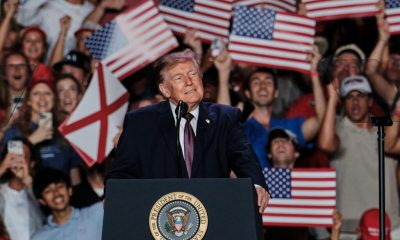
WASHINGTON — President Donald Trump on Monday signed a sweeping executive order that aims to reshape guidance surrounding childhood vaccines, standing alongside Health and Human Services Secretary Robert F. Kennedy Jr., and was met with immediate pushback. The order — which…


Last updated:
Key points
Trump Signs Childhood Vaccine Order: What It Means
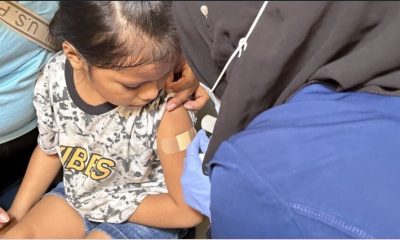
- President Trump signed an executive order calling for changes to childhood vaccine schedules, including splitting the combined MMR shot into separate doses.
- Single-disease shots for measles, mumps, and rubella are not currently available in the United States, and major medical groups pushed back against the order.
- State health rules in Vermont, New York, and Massachusetts determine school immunization requirements, meaning local policies remain unchanged.
WASHINGTON NewsWK — A new federal executive order aiming to overhaul national childhood vaccine recommendations is drawing intense scrutiny across Southern Vermont, eastern New York, and western Massachusetts, as local families and healthcare providers evaluate what the proposed changes mean for daily care.
Signed at the White House alongside Health and Human Services Secretary Robert F. Kennedy Jr., the order calls for federal programs to support parental choice, advocates for splitting combination shots into separate doses, and suggests spreading immunizations across multiple medical visits. However, state officials and local medical providers emphasize that school entry requirements across our region remain governed by state law rather than federal directives.
Why it matters here
For families in Bennington, Arlington, Manchester, and neighboring communities in New York and Massachusetts, public health rules and school entry requirements are set at the state level, not by the White House. Vermont, New York, and Massachusetts each maintain specific public health statutes governing mandatory childhood immunizations for school and childcare attendance.
Local pediatricians and clinics, including regional health networks serving Bennington County and Berkshire County, rely heavily on guidance from professional medical bodies such as the American Academy of Pediatrics. Furthermore, federal officials acknowledged during a White House briefing that individual single-disease vaccines for measles, mumps, and rubella are not currently available on the market in the United States, meaning local doctors cannot immediately offer separate shots even if parents request them.
Key changes proposed in the executive order
The White House executive order divides childhood immunizations into three distinct framework categories. The first group includes 11 vaccines recommended for all children, covering diseases such as measles, mumps, rubella, polio, tetanus, diphtheria, pertussis, chickenpox, HPV, pneumococcal disease, and Haemophilus influenzae type B.
The second category covers immunizations intended for specific high-risk populations, including RSV monoclonal antibodies, hepatitis A, hepatitis B, dengue, and meningococcal strains. A third category establishes vaccines based on shared clinical decision-making between parents and doctors, covering influenza, COVID-19, rotavirus, and additional doses for hepatitis and meningococcal disease.
A major focus of the order is a proposal to break up combined vaccines, specifically calling for the combined measles, mumps, and rubella (MMR) shot to be separated into three individual injections given at separate doctor appointments. The administration suggested that at age one, a child should undergo five separate clinical visits for vaccinations rather than receiving combined doses in a single day.
Additionally, the executive order instructs the U.S. Attorney General to pursue legal action against states that restrict or deny medical or religious exemptions for childhood vaccinations.
Reaction from medical professionals and lawmakers
The executive order met immediate pushback from medical professionals and members of Congress, who defended current immunization schedules established through extensive clinical research.
U.S. Sen. Bill Cassidy of Louisiana, a physician and chairman of the Senate Health, Education, Labor and Pensions Committee, publicly rejected the order on social media. “I’m a doctor. This executive order is wrong. The President does not have the expertise to make these changes,” Cassidy said, adding that vaccines are safe, effective, and do not cause autism.
Leaders in pediatric medicine also expressed concern about potential widespread confusion among parents. Dr. Andrew Racine, president of the American Academy of Pediatrics, cautioned that the directive risks creating unnecessary panic. “The only thing that I can see is going to happen as a result of the announcement from today is an injection of greater amounts of uncertainty and fear and confusion, when there doesn’t need to be any of that,” Racine stated during a media briefing.
Congressional leaders, including House Energy and Commerce Committee Ranking Member Frank Pallone, criticized the move as political interference in established public health policies, arguing that families deserve evidence-based guidance rather than politically curated recommendations.
What local families should know next
As discussion continues at the national level, health officials remind local residents that current state-level vaccination schedules and school enrollment requirements remain unchanged in Vermont, New York, and Massachusetts.
Parents with questions about immunization schedules, combination shots, or individual health needs are encouraged to consult directly with their local family physician or pediatric care provider.
This article was produced with the assistance of AI and reviewed by our editorial team.
Sources
Related: New York Measles Emergency Sparks Action Near Vermont Border
See a typo? Report it here.