Bennington
Supreme Court Mail Voting Rule Kept on Hold Before Midterm Vote
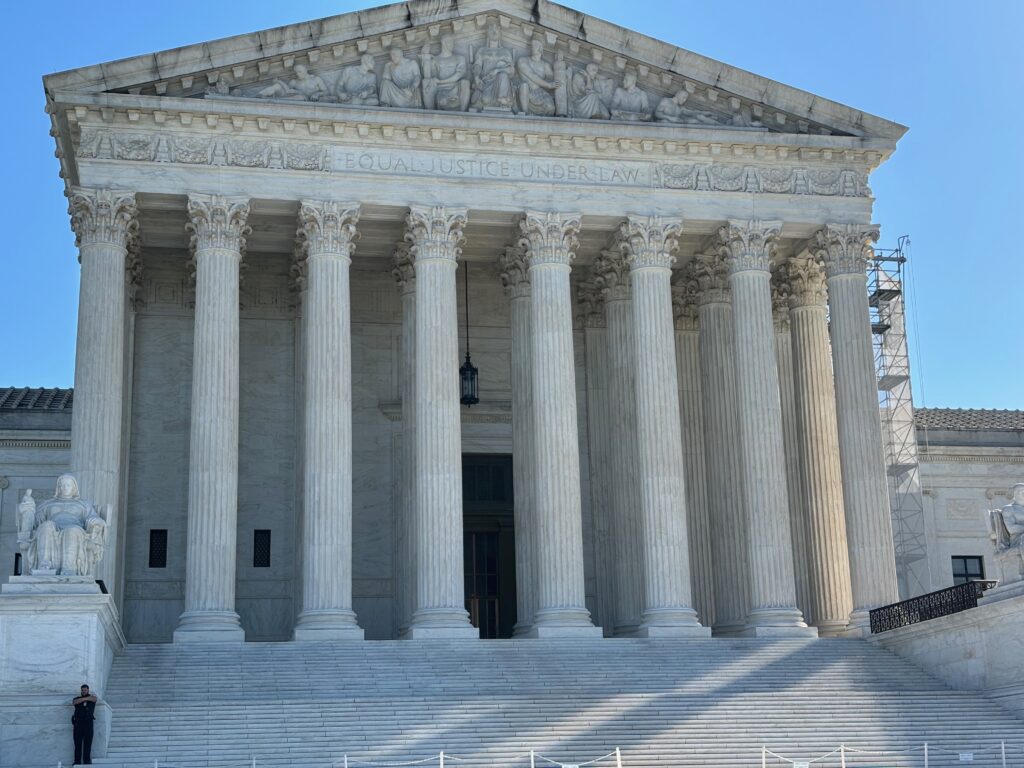
The U.S. Supreme Court on Monday kept in place a lower court’s order blocking President Donald Trump’s embattled plan to place new restrictions on mail ballots for this year’s midterm elections. The unsigned, one-paragraph order upheld a Massachusetts federal court’s injunction…

Last updated:
Key points
- The U.S. Supreme Court kept an order active that blocks new federal mail voting restrictions ahead of the November election.
- The Postal Service rule would have imposed technical envelope mandates and required states to provide registered voter lists.
- The underlying lawsuit continues in a Massachusetts federal court to evaluate the permanent legality of the rule for future elections.
NewsWK — Voters across Bennington County and neighboring border communities will see standard mail procedures continue this election season. The U.S. Supreme Court on Monday kept a lower court order active. That decision blocks federal officials from enforcing new mail-in ballot restrictions before the upcoming November election.
As a result, town clerks in Bennington, Manchester, and Pownal can process absentee ballots under current state standards. Meanwhile, election officials across the state line in New York and Massachusetts avoid eleventh-hour operational changes. The high court issued an unsigned order that preserves a nationwide injunction against the United States Postal Service policy.
Why it matters
This decision protects existing ballot processing routines for local town clerks and rural voters across Southern Vermont. Sudden changes to ballot envelopes and voter roll reporting would have overwhelmed small municipal offices weeks before voting begins. Therefore, maintaining stable rules ensures that local ballots arrive and count without unexpected administrative delays.
Many residents in rural towns like Woodford, Readsboro, and Sandgate rely on mail voting. Furthermore, elderly voters and college students in Bennington and North Adams frequently choose early voting options. If the federal rules took effect immediately, local election offices would face sudden logistical burdens. For example, town clerks would need to verify new envelope specifications while simultaneously managing normal election preparations.
How does the Supreme Court voting rights ruling affect election deadlines?
The Supreme Court voting rights ruling leaves a federal injunction intact through the Nov. 3 election. A majority of justices determined that challenging states and advocacy groups showed a strong likelihood of winning. Consequently, the Postal Service cannot enforce new ballot rules or demand state voter files during the current voting cycle.
A federal judge in Massachusetts initially granted the preliminary injunction. The federal government appealed that decision directly to the nation’s highest bench. However, the high court rejected the emergency request to lift the halt. The justices did not rule on the ultimate legality of the measure. Instead, they decided that changing election procedures so close to voting day creates unacceptable operational friction.
Justice Brett Kavanaugh wrote a brief concurring opinion explaining the timing problem. Specifically, he noted that the regulations arrived roughly 50 days before the election. Kavanaugh wrote that “applying the rule in the 2026 elections would be arbitrary and capricious… because state and local election officials do not have sufficient time to reasonably implement the rule before the elections.”
Two conservative members dissented from the majority order. Justices Clarence Thomas and Samuel Alito stated they would allow the federal policy to proceed immediately. In his dissent, Alito argued that the Postal Service possesses broad authority to oversee postal mail. Furthermore, he stated that the challengers had not yet proven their claims would succeed under regular legal review.
What were the proposed Trump mail ballot restrictions?
The disputed Trump mail ballot restrictions sought strict technical requirements for envelopes used to carry official ballots. Additionally, the rule required individual states to submit detailed lists of eligible registered voters directly to the federal government. State election officials argued these mandates overstepped federal authority and created needless administrative hurdles.
What was in the challenged USPS mail in ballot rule?
Under the contested USPS mail in ballot rule, postal administrators sought sweeping control over election mail formatting and voter roster monitoring. The proposed standards required local clerks to reconfigure envelope dimensions and markings. However, state attorneys argued that the U.S. Constitution assigns election administration directly to states, not federal agencies.
Multiple election administrators submitted filings warning the court about these sudden mandates. In their filings, they told judges that local offices lacked the time and supplies to reprint ballots. Moreover, the Postal Service failed to present evidence disproving those practical concerns. Therefore, state leaders argued the policy would disenfranchise eligible voters.
Civil rights and election advocacy organizations joined several states in filing the legal challenge. California served as the lead state plaintiff, alongside officials from Massachusetts and Colorado. Virginia Kase Solomón, president and CEO of Common Cause, welcomed the outcome. She described the measure as “a blatant power grab designed to silence voters and undermine our elections, but it failed because the people and the law were on our side.”
Former President Donald Trump sharply criticized the ruling on social media Tuesday morning. He claimed the decision harms political integrity and expressed frustration with his appointed justices on the court. But voting access advocates maintained that the Constitution leaves voting mechanics in state hands.
What is the background and what comes next for mail in voting regulations?
Legal challenges over mail in voting regulations have expanded steadily across recent election cycles. Several states, including Vermont, recently expanded early and mail voting options. Meanwhile, eight Western states now mail ballots directly to every registered voter. Consequently, national battles over postal regulations directly influence local voting procedures across the entire country.
Here is what happens next in the legal process:
- The federal preliminary injunction remains fully in effect through the November midterm election.
- Local town clerks will continue handling ballots under standard state election laws.
- U.S. District Judge Indira Talwani in Massachusetts will continue hearing the underlying lawsuit.
- The federal trial court will determine the permanent legality of the postal policy for future election cycles.
Because the emergency appeal concluded, the lawsuit now returns to the standard federal court docket. Judge Talwani will evaluate whether the executive branch exceeded its statutory powers under federal law. Meanwhile, local voters in Southern Vermont and neighboring regions can proceed with their standard mail ballot routines without alteration this fall.
This article was produced with the assistance of AI and reviewed by our editorial team.
Sources
Related: Supreme Court Clears Mail Ballot Order as VT, NY, and MA Fight Rules
Related: Federal Judge Reinstates Freeze on Mail In Ballot Rules
See a typo? Report it here.