Bennington
Ukraine naval drone strike Libya sinks Russian warship off coast
Ukraine confirms it used naval drones to strike two Russian ships off Libya Zelenskyy hails Ukraine’s attack on a Russian warship docked at a naval base in Libya Ukrainian Attack Off Coast of Libya Shows Reach of Kyiv’s Naval Drones …


Last updated:
Key points
- Ukrainian sea drones struck and sank the Russian warship Merkury docked in Benghazi, Libya, over 1,500 miles from the frontline.
- The strike also destroyed a Russian Ka-27 military helicopter and damaged the sanctioned cargo vessel MV Angara.
- The long-range attack underscores how evolving drone tactics impact global maritime security and international supply lines.
NewsWK — On Sunday, Nov. 22, 2026, Ukrainian forces demonstrated unprecedented maritime reach. They carried out a long-range operation in North Africa. Official reports confirmed that sea drones struck multiple Russian vessels in the Mediterranean Sea near Libya.
The distant operation highlights how rapidly modern military technology changes international waters.
How did the Ukrainian drone attack Russian warship targets in the Mediterranean?
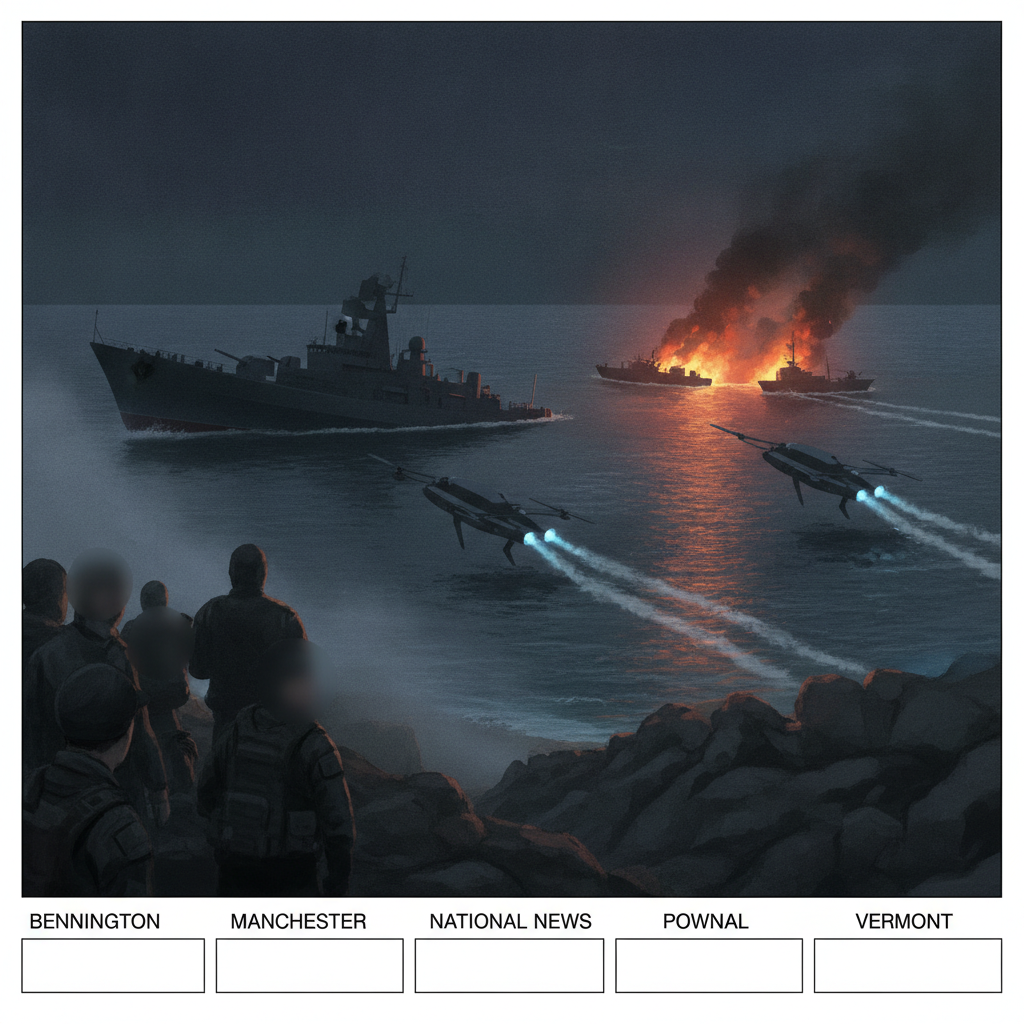
Ukrainian forces launched seven domestic sea drones from a mothership vessel. They hit Russian targets roughly 1,500 miles from the front lines. As a result, the operation disabled two major vessels in the region. Furthermore, the strike destroyed a naval corvette and a military helicopter at a Libyan port.
On Monday, Nov. 23, 2026, Ukrainian President Volodymyr Zelenskyy confirmed responsibility for the operation. Specifically, he noted that the Security Service of Ukraine conducted the long-range mission. Furthermore, Ukrainian officials released video footage showing precision strikes against the naval targets.
The primary target was the Merkury, a Russian Navy corvette commissioned in 2023. The warship docked at the port of Benghazi to refuel and restock supplies. This stop followed an agreement with eastern Libyan authorities. During the attack, explosives also destroyed a Russian Ka-27 military helicopter stationed on the warship.
At the same time, a second strike targeted the MV Angara, a sanctioned Russian dry cargo ship. Previously, U.S. officials identified the vessel as a transport ship for military equipment. Later, Libyan naval units rescued the surviving crew members from the damaged cargo vessel.
How was the Russian warship Merkury sunk Libya port operations revealed?
Satellite imagery confirmed that the Merkury capsized and sank at its berth after multiple drone impacts. First, Libyan officials reported that defense systems destroyed four incoming drones. Then, two other drones hit the ship. However, the hits triggered severe night-time fires that overwhelmed onboard crews.
Consequently, the attack left at least 10 people wounded at the Benghazi naval facility. Civil defense teams fought the flames for hours. Ultimately, the vessel rolled onto its side. President Zelenskyy later described the operation as “exemplary” during his public address.
Moreover, the Security Service of Ukraine emphasized the strategic message of the attack.
“The Russian military fleet and its logistics networks have no safe routes, even far beyond the Black Sea,” the agency stated.
What does expanding global conflict mean for Southern Vermont residents?
The operation occurred thousands of miles away. Even so, remote maritime strikes impact global trade routes and fuel stability for Vermont consumers. Broadening conflict zones frequently influence heating oil costs and international supply chains. They also affect U.S. military readiness. Therefore, residents from Manchester to Pownal feel the indirect economic effects of distant naval warfare.
Here are key facts about the international operation:
- Date of Strike: Sunday, Nov. 22, 2026.
- Location: Port of Benghazi, Libya, roughly 1,500 miles from Ukraine.
- Equipment Used: Seven Ukraine naval drones launched from a sea mothership.
- Confirmed Losses: The corvette Merkury, one Ka-27 helicopter, and damage to cargo vessel MV Angara.
- Casualties: At least 10 individuals injured in the port explosion.
Local community members who follow international affairs note a clear trend. Drone technology continues to reshape global defense strategies. Additionally, changes in Mediterranean security can alter commercial shipping lanes. These lanes carry goods to North American ports.
Why does Ukraine attack Russian ships in Mediterranean trade lanes?
Ukraine targets foreign supply lines to disrupt military logistics. It also aims to prevent arms transfers between international allies. Recently, Russian forces have increasingly used North African ports for refueling and cargo transit. Because these routes support military operations, Ukrainian planners extended their drone reach far outside the Black Sea.
In response to the incident, Kremlin spokesman Dmitry Peskov declined immediate comment on Monday. Instead, he stated that Russia‘s Defense Ministry would release statements when appropriate. Meanwhile, officials in eastern Libya requested a United Nations investigation into the origin of the drone fleet.
Diplomatic tension also spread to neighboring countries following the strike. For instance, Albania’s Ministry of Foreign Affairs issued an official statement. It rejected claims that the drones originated from its territory. Still, Ukrainian officials maintained that their long-range capabilities can project force wherever opposing naval assets operate.
Next, regional security remains tied to how international coalitions handle changing maritime risks. As defense technology evolves, distant conflicts will continue to affect global markets and national policy. Consequently, residents across Southern Vermont will see these far-reaching impacts.
This article was produced with the assistance of AI and reviewed by our editorial team.
Related: Russian Ship Explosion Benghazi Libya: Warship Sinks in Port
Related: Five Detained in Londonderry ICE Operation, Local Leaders Respond