Arlington
Antibacterial Soap vs Regular Soap: What Bennington Families Need to Know
Antibacterial soap vs. regular soap: Which should you use?


Last updated:
Key points
- Standard soap and water remain the most effective option for daily household hand hygiene.
- Daily use of antibacterial soaps can disrupt beneficial skin microbes and contribute to antibiotic resistance.
- Specialized benzoyl peroxide cleansers work best for targeted acne treatment rather than routine hand washing.
NewsWK — As winter approaches in Bennington County, local families often stock up on cleaning supplies. They want to combat seasonal germs effectively. Reporting by The Washington Post highlights growing questions about soap choices. Shoppers wonder whether to buy specialized antimicrobial hand washes or standard soap bars.
However, health experts emphasize that traditional soap remains the best option. It supports everyday hand hygiene across Southern Vermont households.
What does the soap debate mean for Bennington area families?
Local residents often assume that germ-killing hand washes provide extra protection during cold and flu season. However, medical research shows that regular soap and clean water protect everyday households just as effectively.
Families across Bennington, Manchester, and Arlington frequently encounter store shelves packed with specialized hand cleansers. Many consumer products feature labels promising extra protection against illness. Still, dermatologists caution against these extra chemicals. They do not deliver superior protection for normal daily routines. Consequently, local shoppers can focus on proper washing techniques rather than expensive antibacterial products.
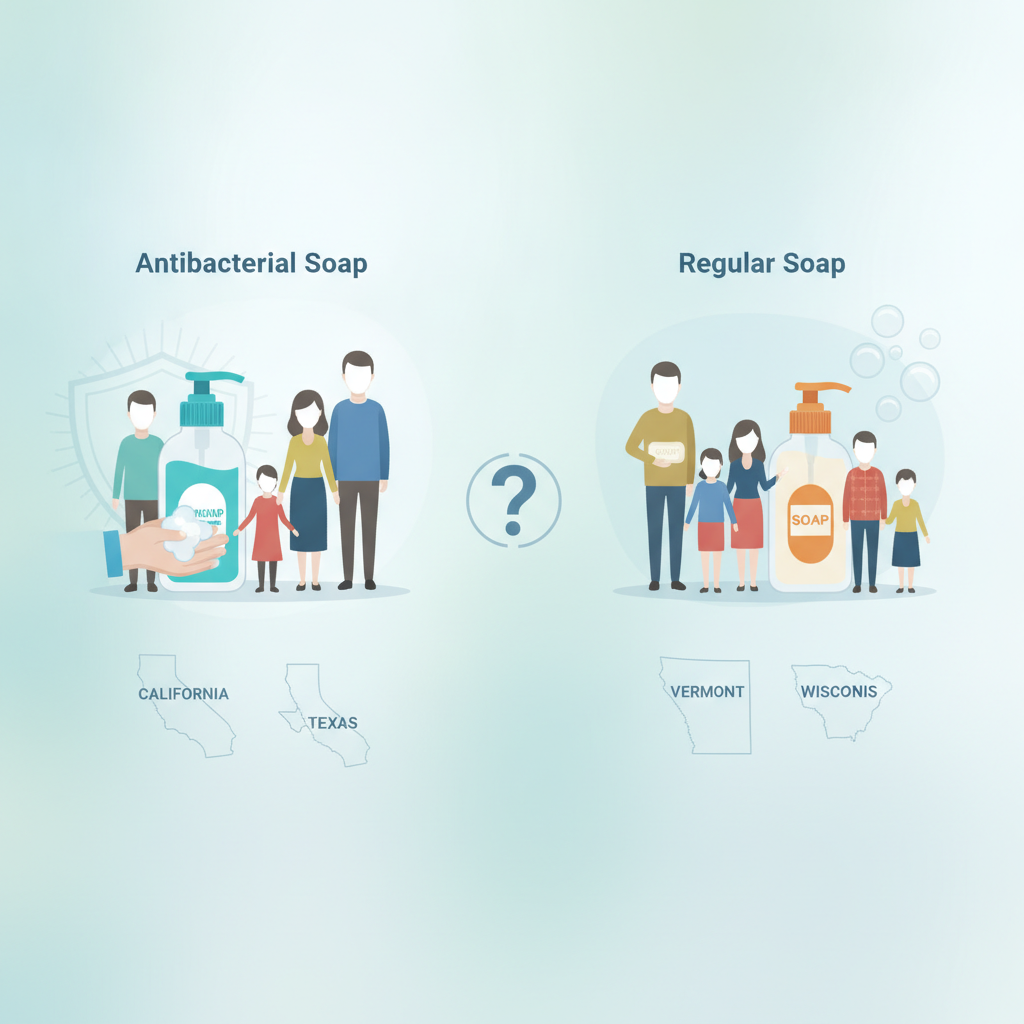
Is antibacterial soap better than regular soap?
Medical experts confirm that regular soap works just as well as specialized antibacterial formulas. It handles routine hand hygiene effectively. Then, water rinses them away completely. Therefore, everyday household hand-washing does not require heavy chemical additives.
Researchers evaluate regular soap vs antibacterial soap closely. They find almost no difference in bacterial reduction during daily use. Antibacterial formulas usually contain active ingredients like benzalkonium chloride, benzethonium chloride, or chloroxylenol. These compounds target bacteria in medical settings. However, plain soap eliminates 20 common bacterial strains just as efficiently. It achieves this during standard 20-second hand washes.
Proper hand-washing technique remains the critical factor for infection control. Accordingly, health officials recommend a clear, simple routine:
- Wet hands with clean, running water.
- Apply standard soap and build a generous lather.
- Scrub all hand surfaces thoroughly for at least 20 seconds.
- Rinse completely under clean water and dry with a clean towel.
What are the main antibacterial soap risks for daily use?
Daily use of antimicrobial cleansers can strip essential microbes from human skin. It can also trigger long-term resistance problems. Furthermore, antimicrobial ingredients kill beneficial organisms alongside harmful germs. Because of this disruption, constant use can actually weaken natural skin barriers over time.
Understanding antibacterial soap risks helps consumers make safer choices for daily personal care. Dr. Richard Gallo chairs the dermatology department at the University of California at San Diego. He warns that antimicrobial washes disrupt the healthy skin microbiome. Specifically, that disruption destroys protective microorganisms. Those microbes normally guard human skin against aggressive pathogens.
Furthermore, the Centers for Disease Control and Prevention warns against unnecessary antimicrobial chemical exposure. Frequent exposure to these active agents can contribute to broader antibiotic resistance across communities. Meanwhile, Dr. Cory Dunnick works as a dermatology professor at the University of Colorado Anschutz. microbiome
How does a Benzoyl peroxide acne wash work for skin conditions?
A specialized benzoyl peroxide acne wash reduces surface skin bacteria and cleans pores. Moreover, it works without creating antibiotic resistance. Dermatologists frequently recommend these targeted washes for specific conditions like acne or mild folliculitis. Consequently, users apply these cleansers selectively rather than using them for general hand hygiene.
For facial acne, dermatologists suggest a 4 percent benzoyl peroxide concentration. Conversely, a 10 percent concentration works best for body acne on the back or chest. However, benzoyl peroxide can bleach clothing and towels. Therefore, experts recommend using the product inside the shower and rinsing thoroughly.
Additionally, doctors caution against using over-the-counter antibiotic ointments on minor cuts and scrapes. Dr. Margo Reeder teaches as a dermatology professor at the University of Wisconsin. She warns that topical antibiotic ointments frequently cause allergic contact dermatitis. Instead, the World Health Organization and the CDC advise a simpler method. Wash minor wounds with clean water or saline and regular soap. Afterward, patients can apply simple petroleum jelly to keep the skin moist.
When should local residents use specialized antimicrobial soaps?
Specialized antimicrobial cleansers help primarily in medical facilities or during active household viral outbreaks. For example, someone in a home might suffer from a contagious illness. Then, short-term antimicrobial use can help curb transmission. Otherwise, standard soap provides complete daily protection.
A household may face an active stomach bug, flu, or COVID-19 infection. In those cases, using antimicrobial soap for a few days presents minimal risk. However, households should return to standard plain soap once the illness passes. Finally, residents may face specific skin conditions such as severe folliculitis. They should consult local healthcare providers for targeted treatments or prescriptions.
This article was produced with the assistance of AI and reviewed by our editorial team.
Sources
Related: How Rising Household Water Bills Strain Budgets in Bennington County
Related: Shaftsbury Water Department Updates Operations to Address Local Needs