Bennington
First Confirmed Measles Deaths of 2026 Reported Amid Nationwide Surge
This story was updated at 4:30 p.m. on Aug. 25, 2026 to include a statement from the Centers for Disease Control. The Pennsylvania Department of Health confirmed two measles-related deaths in Lancaster County. Both people, who lived in the county,…

Last updated:
Key points
First Confirmed Measles Deaths of 2026 Reported
- Two unvaccinated Pennsylvania residents have died from measles, marking the first confirmed U.S. measles fatalities of 2026.
- Nationwide cases have climbed to 2,777 so far this year, exceeding the entire 2025 total in the largest domestic outbreak in decades.
- Medical providers emphasize that the standard two-dose MMR vaccine offers the safest and most reliable protection against severe illness and hospitalization.
NewsWK — Public health agencies across the country are intensifying warnings about vaccine-preventable diseases after health officials confirmed the nation’s first two measles-related deaths of 2026 in Pennsylvania.
State health authorities verified that both individuals who died were unvaccinated residents of Lancaster County, Pennsylvania. Officials did not release further identifying information out of respect for family privacy.
The fatalities come during the largest national measles resurgence in decades. According to data tracked by the Centers for Disease Control and Prevention, the United States has recorded 2,777 confirmed measles cases so far this year. That total already exceeds the 2,289 infections and three deaths registered in all of 2025, which had previously marked the highest annual tally in more than 30 years.
Why it matters here
For families across Bennington County and neighboring communities in Southern Vermont, eastern New York, and western Massachusetts, the expanding case count serves as a reminder of how quickly contagious respiratory illnesses can travel through regional transit and school communities.
The United States officially declared measles eliminated in 2000 following decades of widespread immunization efforts. However, with thousands of cases now recorded nationwide, public health leaders emphasize that regional travel and declining vaccination rates can quickly challenge community immunity.
Healthcare facilities across the Northeast, including regional clinics serving rural areas, continue to stress the importance of routine immunizations to keep hospital emergency departments from becoming overwhelmed by preventable viral outbreaks.
State and Regional Outbreak Dynamics
Pennsylvania alone has confirmed 393 measles cases across 29 counties this year. Of those cases, 86 were diagnosed in a single week, and 70 individuals required inpatient hospital care. Nearly half of the state’s documented cases have centered in Lancaster County.
“Because measles was largely eliminated in the Commonwealth for more than three decades, people are not familiar with this disease and don’t fully understand the potential severity of the illness,” said Pennsylvania Health Secretary Dr. Debra Bogen. “We want to ensure every Pennsylvanian has the information they need to protect themselves, their loved ones and their communities.”
In response to rising infection rates, state leaders have expanded mobile vaccination clinics, administering roughly 35,000 immunizations in July alone, which represents an increase of 10,000 over typical monthly levels.
“Measles does not care about your county, your faith, or your social circle,” Pennsylvania Gov. Josh Shapiro said when discussing community protection. “It’s vital for every parent to know that if you or your kids are unvaccinated, you are at an increased risk for contracting this highly-contagious virus.”
Symptoms and Clinical Concerns
Measles is among the most infectious airborne pathogens known. The virus spreads rapidly through microscopic droplets when an infected person breathes, talks, coughs, or sneezes.
Health professionals note the progression of symptoms typically includes:
- High fever and general fatigue
- Persistent dry cough and runny nose
- Red, watery, and light-sensitive eyes
- A distinctive raised rash that spreads three to five days after early symptoms emerge
Approximately 20% of all confirmed measles cases require hospitalization due to complications such as severe dehydration, pneumonia, or neurological swelling.
National Vaccine Policy and Public Health Guidelines
The recent spike in cases unfolds alongside shifting national discussions regarding immunization schedules. Federal leaders have recently debated vaccine administration, including proposals to divide the standard measles, mumps, and rubella (MMR) shot into three individual doses.
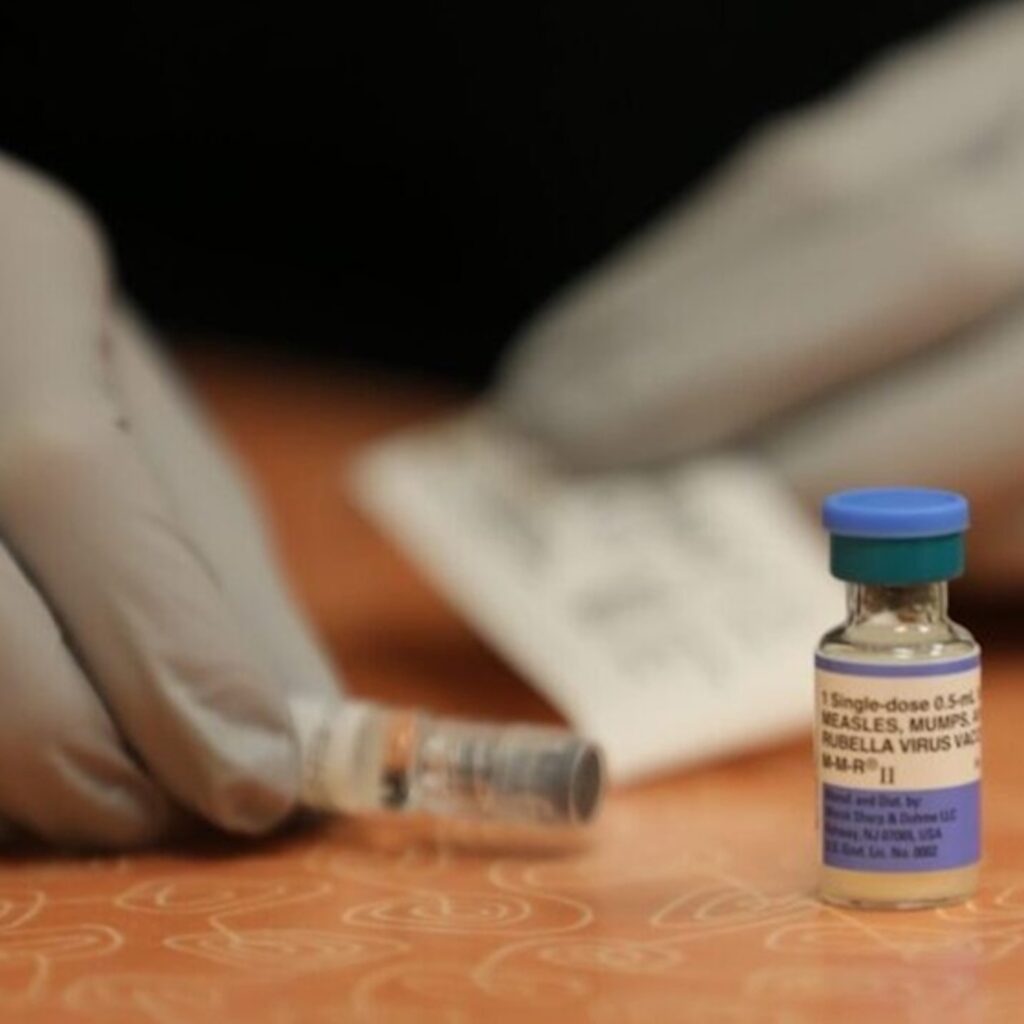
Major medical organizations, including the American Academy of Pediatrics and the American Academy of Family Physicians, advise against separating the MMR vaccine. Pediatricians note that splitting the combination shot creates logistical hurdles, requires multiple additional appointments, and increases the likelihood that children will miss necessary booster doses without providing any proven medical advantage.
To navigate changing federal recommendations, several states have coordinated through regional partnerships like the Northeast Public Health Collaborative to establish shared clinical and vaccination protocols.
CDC officials reiterated that the two-dose MMR series remains the most dependable defense against transmission. Local clinics and family practices encourage residents to review their family vaccination records to ensure they and their children are protected.
This article was produced with the assistance of AI and reviewed by our editorial team.
Sources
Related: Across the New York Border, Lawmakers Lean on AI for Opinion Columns
Related: Dartmouth Health to End Emergency and ICU Telehealth Services
Related: Federal Vaccine Order Targets New York and Neighboring States
Related: Wildfire Smoke Poses Growing Risk for Pregnant Women, Study Shows
Related: Border County Tax Pressures Mount as New York Shifts SNAP Costs
Related: As New York Declares Emergency, US Measles Cases 2025 Rise to Historic Highs
See a typo? Report it here.