
Albany
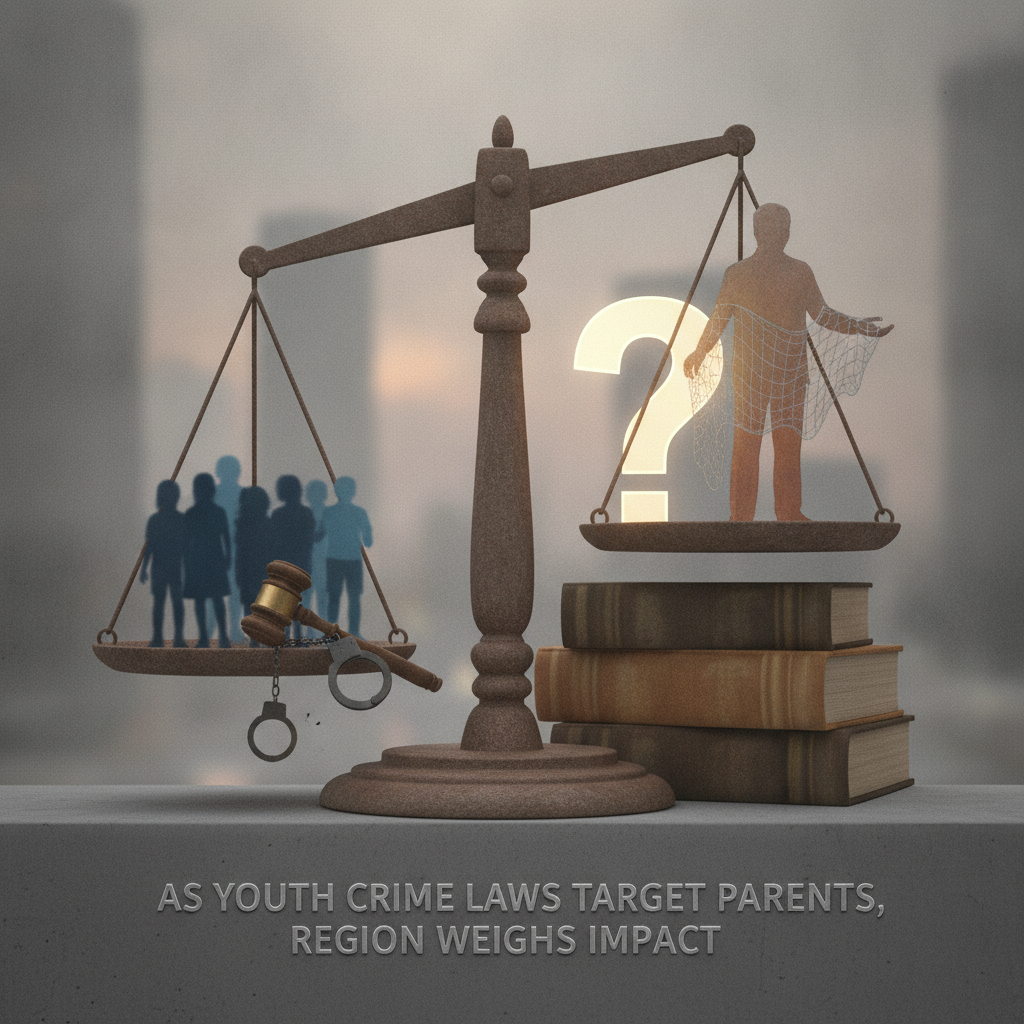
As Youth Crime Laws Target Parents, Region Weighs Impact
When young children and teenagers get into trouble, the question often comes quickly: Where were their parents? That question is again shaping public policy in communities across the country, as state and local lawmakers and prosecutors increasingly look for ways…

Last updated:
Key points
As Youth Crime Laws Target Parents, Region Weighs
- States and municipalities nationwide are expanding laws that hold parents legally and financially liable for crimes committed by their children.
- Penalties range from fines and community service to potential jail sentences, though researchers find little empirical evidence that these measures reduce youth crime.
- Experts and advocates emphasize that punitive policies can strain low-income families, advocating instead for prevention programs, family therapy, and accessible youth spaces.
NewsWK — Across the country and in neighboring New York communities, lawmakers and prosecutors are increasingly turning to a direct question when young people get into trouble: What legal responsibility do parents carry? From statutes imposing heavy fines to policies threatening jail time, efforts holding parents accountable for their children’s actions are gaining renewed momentum.
These proposals range from enforcing existing liability rules to establishing new requirements for community service, mandatory classes, and youth curfews.
Why it matters here
For families and local officials across Bennington County, as well as neighboring communities in Rensselaer County and Albany County, New York, youth conduct and school safety remain frequent points of public discussion. Albany County leaders have recently weighed proposals that include teen curfews, fines, and community service mandates for parents.
As municipal leaders, educators, and law enforcement in Southern Vermont and the northern Berkshires navigate juvenile justice policies, national and regional debates highlight the delicate balance between parental oversight, legal accountability, and community-based prevention.
New laws and rising penalties across states
States have taken various approaches to parental accountability over the past year. In Louisiana, a law took effect allowing courts to fine parents or guardians up to $5,000 if a child age 14 or older is convicted of making a school threat. The state also maintains laws permitting penalties of up to 10 years in prison when a parent fails to prevent a child under 17 from participating in a violent felony.
In New Jersey, a recent measure makes parents liable when their child incites a public brawl that causes property damage, with potential penalties of up to six months in jail and a $1,000 fine for severe offenses.
Municipalities have introduced their own rules as well. In Covington, Georgia, city officials passed an ordinance holding parents legally and financially accountable for offenses such as vandalism, disorderly conduct, shoplifting, and curfew violations, carrying possible fines of up to $2,000 or up to 30 days in jail. In Richland County, South Carolina, a targeted parental accountability initiative has led to charges against 12 parents since January 2025.
Federal prosecutors have also highlighted the issue. In Washington, D.C., U.S. Attorney Jeanine Pirro announced that parents could face up to six months in jail if they knowingly allow their children to commit crimes, pointing to large, disorderly teen gatherings and public brawls.
Parental responsibility and gun safety
The push to hold parents accountable has drawn intense national focus through high-profile criminal cases involving firearms and fatal school violence.
In Georgia, Colin Gray received a 15-year prison sentence after prosecutors established that he gave his son, Colt Gray, the gun used in the 2024 Apalachee High School shooting. Colt Gray received a life sentence without parole for the shooting, which left four people dead.
That prosecution followed the 2024 convictions of Jennifer and James Crumbley in Michigan, who were found guilty of involuntary manslaughter after their son killed four people in the 2021 Oxford High School shooting.
Background and debate over effectiveness
The concept of penalizing parents for juvenile wrongdoing is not entirely new. Similar measures spread rapidly during the 1990s, when more than 40 states enacted parental responsibility statutes covering everything from required counseling to financial restitution and jail time.
While every state has some version of parental responsibility on the books, criminologists and legal experts note that empirical evidence demonstrating their deterrent effect remains scarce. In a 2014 study surveying police chiefs and prosecutors, researchers found that law enforcement officials generally did not view parental liability laws as effective, which helps explain why such laws are rarely enforced in practice.
Scholars also warn that financial penalties and jail terms can disproportionately harm low-income families and single-parent households who may struggle with childcare access or inflexible working hours.
“We need a pretty comprehensive view, and thinking seriously about whether punishment will actually garner the outcomes that we want,” said Eve Brank, a psychology professor at the University of Nebraska-Lincoln who has spent decades studying parental responsibility laws.
Focusing on prevention and youth spaces
Rather than relying primarily on legal penalties, many family advocates argue that communities achieve better outcomes by investing in youth spaces and supportive programs.
Evidence suggests that family-focused interventions, such as behavioral parent training and home-based counseling, can effectively address underlying delinquency risks. In addition, cities such as Boston, Atlanta, and Detroit have expanded youth employment programs, extended recreation center hours, and organized community activities to provide safe environments for teens.
“I see kids that are seeking engagement that aren’t given a safe place to play and engage and to socialize and interact with each other,” said Keri Rodrigues, co-founder and president of the National Parents Union.
Looking ahead
As nearby areas in eastern New York and across the country test stricter parental penalties, communities throughout Southern Vermont are watching to see whether these measures curb youth crime or if investments in family services and local youth programs offer a more sustainable path forward.
This article was produced with the assistance of AI and reviewed by our editorial team.
Sources
Related: 50-50 Child Custody Laws Gain Momentum Across States
See a typo? Report it here.