Massachusetts
NYC Lawsuit Over Housing Surveillance Highlights Regional Privacy Debate
Under former Mayor Eric Adams, the NYPD attached video surveillance to free internet routers. Plaintiffs allege this violates their civil liberties.

Last updated:
Key points
NYC Lawsuit Over Housing Surveillance Highlights
- Two tenant associations filed a lawsuit to block the NYPD from linking 20,000 public housing cameras to real-time surveillance systems.
- The lawsuit alleges the city secretly used a free internet program to bypass required public disclosures and civil rights protections.
- Plaintiffs are asking the court to halt the surveillance program and release information on how the data has been used.
NewsWK — As municipal surveillance policies and law enforcement technology draw increasing scrutiny across the Northeast, a major legal challenge in neighboring New York City is raising critical questions about privacy, civil rights, and police transparency. According to a report first published by New York Focus, two public housing tenant associations have filed a lawsuit in New York Supreme Court to block the NYPD from connecting roughly 20,000 housing authority cameras directly to a real-time police surveillance network.
The legal action targets an expansion of the NYPD’s Domain Awareness System, a data fusion platform created after Sept. 11, 2001. The platform combines camera footage, license plate readers, facial recognition software, and emergency call logs to direct police deployment.
Allegations of Hidden Expansion and Civil Rights Violations
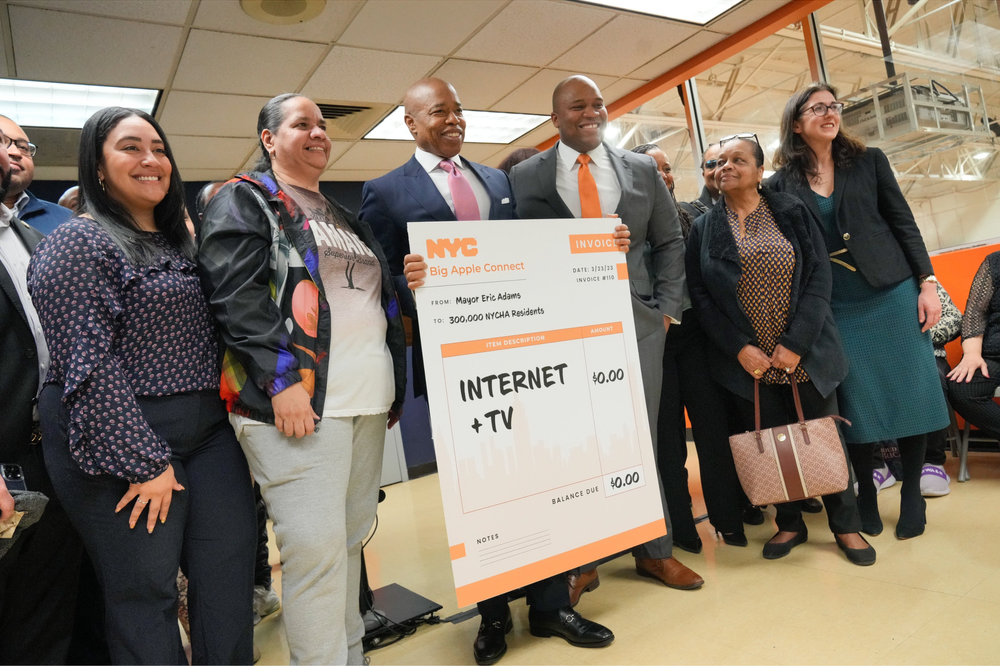
The tenant associations for the Langston Hughes and Samuel J. Tilden houses in Brooklyn allege that city officials covertly funneled the surveillance expansion through Big Apple Connect, a $100 million program originally designed to provide free internet access to public housing residents. New routers installed in common areas allowed police to stream video feeds directly without seeking individual judicial approval or obtaining on-site permission from housing managers.
According to the lawsuit, the system violates New York City laws requiring prior public disclosure of new surveillance technologies and prohibitions against bias-based policing. The filing emphasizes that public housing communities are nearly 90 percent Black and Latino, arguing the unchecked monitoring creates a discriminatory impact.
“When a crime has been committed, law enforcement can already obtain NYCHA’s permission to review the cameras,” wrote Gina Boatright, president of the Samuel J. Tilden Houses tenant association, in a sworn statement cited by New York Focus. “In my view, if law enforcement is given unrestricted access, officers will take advantage of that access.”
Key Facts of the Lawsuit
- Scope of monitoring: The system attempts to integrate nearly 20,000 security cameras across public housing properties into a centralized real-time network.
- Legal claims: Plaintiffs argue the program constitutes warrantless searches under the law and skips mandatory public reporting requirements.
- Goal of the lawsuit: Plaintiffs seek an immediate halt to the program and full disclosure on how police have used the surveillance data in investigations.
Community leaders expressed concerns that automated camera oversight damages community trust. “I would prefer in person presence to them watching us behind cameras,” stated Ciprian Noel, tenant association president at the Langston Hughes Houses, in court documents.
Why This Matters to Our Region
While the litigation is centered in New York City, court rulings on municipal surveillance practices often set legal precedents that influence public safety policies, data sharing, and privacy standards across New York state and neighboring communities in Vermont and Massachusetts. Local leaders and residents monitoring regional tech policy are watching to see if courts will enforce stricter transparency requirements on police technology.
This article was produced with the assistance of AI and reviewed by our editorial team.
Based on reporting by Zachary Groz originally published by New York Focus. Read the original story.