Arizona
New World Screwworm Outbreak Prompts Livestock Movement Restrictions
A deadly flesh-eating parasite that can plague livestock, wildlife and pets continues to spread across the American Southwest. Officials detected the arrival of the New World screwworm in June — the first time in decades the pest had been seen…


Last updated:
Key points
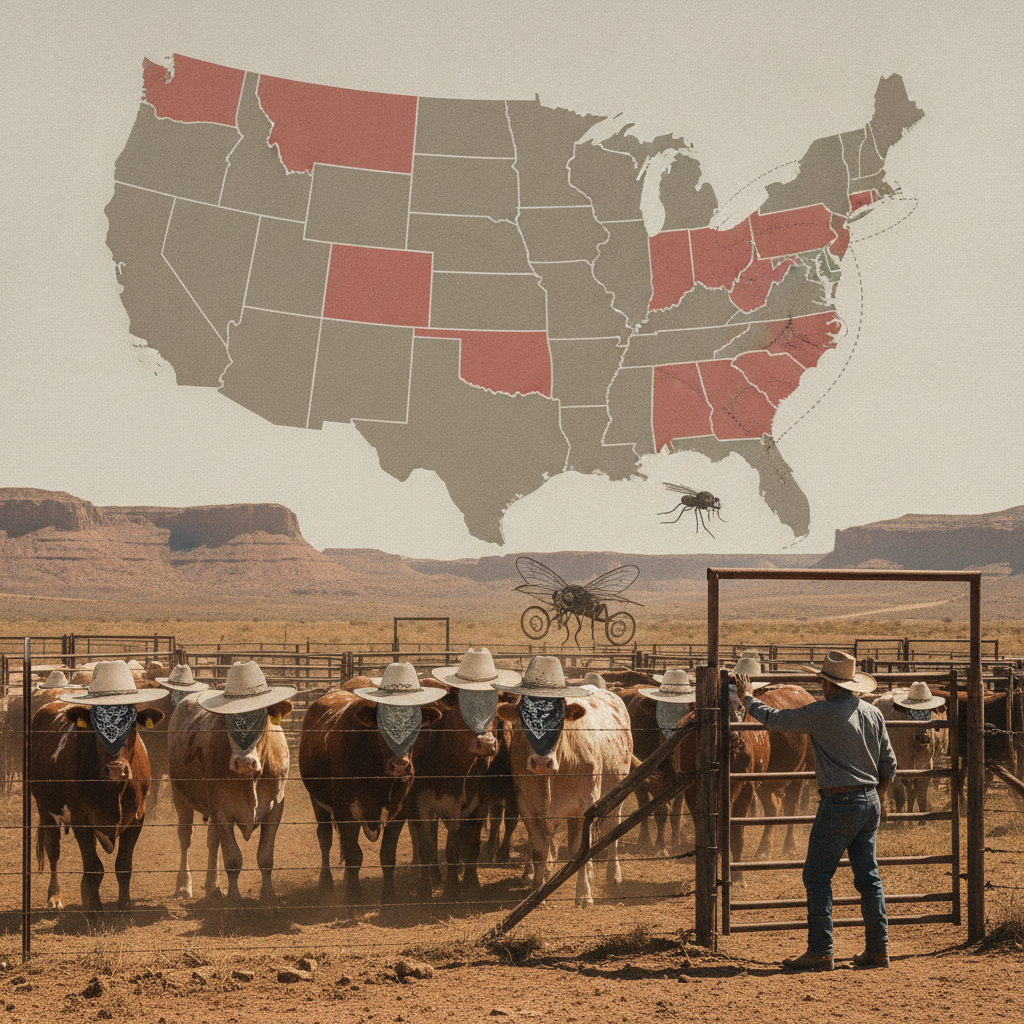
- Federal officials confirmed 139 screwworm cases across Texas, New Mexico, and Arizona since June.
- Strict animal movement restrictions are impacting livestock transportation and pet rescue transfers nationwide.
- The USDA is building a $750 million facility in Texas to produce 300 million sterile flies per week to eradicate the pest.
NewsWK — Federal agricultural officials are battling a rapidly growing insect threat across the American Southwest.
The parasite threatens warm-blooded animals, including cattle, pets, and native wildlife. Consequently, federal authorities have imposed new shipping guidelines to prevent northern spread.
How Is the Southwest Responding to the New World Screwworm Texas New Mexico Arizona Outbreak?
State and federal agricultural agencies have implemented strict quarantine zones across Texas, New Mexico, and Arizona. They also enforced new animal movement rules. Authorities confirmed 53 cases in November alone after quiet late-summer months. Therefore, the rapid spread prompted emergency travel inspections, restricted livestock transport, and paused interstate pet adoption transfers.
Officials first detected the infestation in June. It now totals 139 verified cases across three states. Officials recorded fewer than 10 total cases in August and September. However, detections spiked sharply in November.
“We got a bunch more cases all of a sudden,” said David Anderson, a livestock economist at Texas A&M University.
Texas authorities currently monitor 77 sites with confirmed infestations across 31 counties. Meanwhile, New Mexico officials expanded regional tracking zones in southern counties. Ranchers in those zones must secure state permits before moving herds. Furthermore, California now requires health certificates and permits for warm-blooded animals arriving from designated outbreak areas.
What Does the Outbreak Mean for Local Farmers and Consumers in Southern Vermont?
The parasite has not reached the Northeast. Still, local grocery shoppers may see continued high beef prices. Meanwhile, regional rescue groups face delays when transporting rescue animals across state lines.
Strict transport rules have temporarily halted pet transfers from affected Texas counties.
“It’s thrown a wrench into things, for small rescues as well as the bigger shelters,” said Mia Bendixsen. She serves as executive director of the Texas Humane Legislation Network.
Key impacts for our regional agricultural community include:
- Continued pressure on retail beef prices at local grocery stores.
- Stricter health paperwork for residents traveling south with horses or pets.
- Delays in interstate animal shelter adoption transfers.
- Increased federal surveillance at national livestock entry ports.
How Does the Flesh Eating Screwworm Fly Infest Animals?
The flesh eating screwworm fly targets warm-blooded animals. It lays eggs near open wounds or natural body openings. Once hatched, larvae burrow deeply into living flesh to feed. Therefore, ranchers and pet owners must inspect animals carefully. They should closely check newborns and recently tagged or branded livestock.
Despite its name, the adult fly resembles a standard housefly in size. However, its larvae feed directly on living tissue. Specifically, maggots enter through small scratches, tick bites, eyes, or newborn umbilical cords. Left untreated, severe infestations can quickly become fatal for animals.
Fortunately, human cases remain extremely rare in the United States. In fact, the Centers for Disease Control and Prevention reports zero domestic human infections during this outbreak. However, health agencies in Mexico and Central America have documented over 2,850 human cases.
How Is the USDA Screwworm Infestation Being Eradicated Nationally?
The U.S. Department of Agriculture is deploying sterile insect technology. This method eliminates active fly populations without chemical pesticides. Federal officials release millions of sterilized male flies to mate with wild females. Consequently, they produce unfertilized eggs. A new $750 million Texas facility will breed 300 million sterile flies weekly next year.
Female flies mate only once. Thus, releasing sterile males systematically shrinks population numbers over time. Agriculture Secretary Brooke Rollins described protecting livestock from the parasite as a national security priority.
The federal government is currently hiring 228 staff members for the new Texas facility. Additionally, federal agencies are funding facility upgrades in Mexico and Panama. These upgrades will maintain a regional defense boundary.
Meanwhile, federal officials reopened Southern import ports in August under enhanced screening protocols. Economists expect cattle imports from Mexico will eventually ease national supply shortages. However, high labor, fuel, and processing costs will keep retail beef prices elevated for the foreseeable future.
This article was produced with the assistance of AI and reviewed by our editorial team.
Sources
Related: New World Screwworm Bennington County: Livestock Risks and Economic Concerns
Related: Border County Tax Pressures Mount as New York Shifts SNAP Costs