Bennington
21st Century ROAD to Housing Act Manufactured Homes Offer Local Options
For decades, manufactured home builders have been working to shed the old image of boxy trailer homes reserved for the outskirts of cities and suburbia. Now, a small change in federal regulations could open the door for architecture welcomed in…

Last updated:
Key points
- The 21st Century ROAD to Housing Act removes the mandatory steel frame rule for factory-built housing, enabling multi-story and multi-family designs.
- Dropping the chassis requirement reduces factory construction costs by $5,000 to $10,000 per unit, helping lower overall housing expenses.
- Roughly 30 states must update statutory housing definitions and local zoning codes by July 2027 to allow chassis-free manufactured homes.
NewsWK — Federal housing changes could Soon Give Bennington County homebuilders new ways to build low-cost housing. Recent federal legislation removed a decades-old requirement for permanent steel frames. Specifically, under the 21st Century ROAD to Housing Act, manufactured homes no longer need a permanent chassis.
This technical adjustment allows factory-built units to stack into two-story homes and multi-family buildings. As a result, developers across Southern Vermont gain flexible options to address persistent housing shortages.
What Do Affordable Manufactured Housing Regulations Mean for Southern Vermont?
Affordable manufactured housing regulations give local towns new tools to address rising shelter costs in Bennington County. Factory-built construction costs roughly 50 percent less per square foot than traditional site-built framing. Furthermore, modern units look identical to standard homes. Therefore, local communities can add density without altering neighborhood character.
Factory-built homes offer significant cost savings over traditional construction methods. For example, U.S. Census Bureau data shows average new manufactured home prices reached $127,200 in 2025. By comparison, traditional site-built houses often cost twice as much per square foot.
In Bennington, Shaftsbury, and Manchester, high building costs frequently stall residential projects. However, factory construction reduces labor costs because crews build components inside climate-controlled facilities. Subsequently, drivers transport completed sections directly to local building sites.
Furthermore, removing the steel frame reduces individual unit costs even more. Industry experts estimate that dropping the steel frame saves builders $5,000 to $10,000 per home. Therefore, local non-profit housing groups and private builders can stretch construction budgets further.
How Will the Manufactured Homes Chassis Rule Change Help Local Housing?
The manufactured homes chassis rule change allows factory-built structures to drop nonremovable steel frames. Consequently, developers can build multi-family units and two-story homes at lower costs. Removing the heavy frame saves homebuilders $5,000 to $10,000 per home. In addition, it expands design options across Southern Vermont.
Since 1974, federal rules mandated that every manufactured unit feature a permanent steel chassis. However, that heavy frame made multi-story construction impractical for factory builders.
“First of all, you were putting a very heavy, expensive steel base on the bottom of these homes,” stated Stephanie Hawke, research director at UC Berkeley’s Terner Center. “If you have this heavy piece of steel on the bottom, stacking becomes more difficult,” Hawke added.
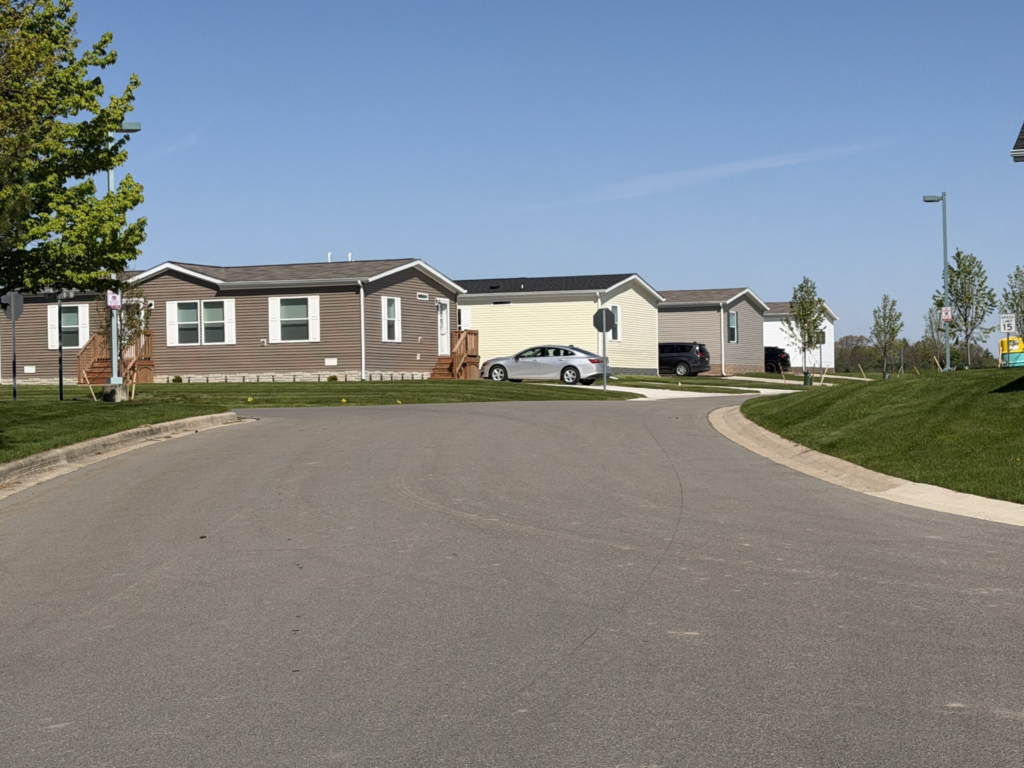
Now, factory home builders can create units that fit naturally into standard residential subdivisions. For example, community developers plan to place two-story manufactured structures onto existing park lots. Also, companies can combine two-story structures with duplex layouts to offer smaller rental apartments.
“This is a change that’s gonna help every manufactured home community out in the country,” stated Eugene Landy, chairman of UMH Properties.
Why Do HUD Manufactured Home Regulations Require State Law Updates?
Federal HUD manufactured home regulations require states to treat chassis-free homes like traditional manufactured structures by July 2027. However, roughly 30 states, including nearby New York, still define these homes using outdated chassis language. Therefore, state lawmakers must update these definitions so local buyers can access modern factory-built options.
The federal housing law requires states to update statutory definitions before July 11, 2027. Meanwhile, states with biennial legislative sessions have until 2028 to complete the required legal revisions.
Research from Pew Charitable Trusts shows that over 30 states must update their code definitions. For instance, New York, Maine, and Virginia still explicitly require a permanent chassis in state law. Conversely, states like North Carolina, Tennessee, and Texas automatically adopt federal code updates.
If a state delays legislative updates, local builders cannot utilize these chassis-free designs. Consequently, area residents miss out on lower-cost home construction while neighboring states move ahead.
What Obstacles Remain for Modern Factory-Built Homes?
Restrictive local zoning and property titling rules still create significant hurdles for potential buyers. Many towns restrict factory-built homes to specific parks or prohibit them in single-family zones. Furthermore, some laws classify these homes as personal property rather than real estate. Consequently, this classification prevents buyers from obtaining traditional long-term mortgages.
Even with federal reforms, local zoning rules create substantial barriers across the country. For instance, a National Zoning Atlas study examined 6,700 zoning districts in Texas. The analysis found that 33 percent of districts banned factory housing. Meanwhile, 11 percent required special permits.
Additionally, financing rules create financial hurdles for buyers in many regions. Many state laws classify manufactured units as personal property similar to motor vehicles. Because personal property loans carry higher interest rates, home buyers pay significantly more over time.
According to Pew research, a standard $100,000 mortgage saves a buyer roughly $49,000 over personal property loans. To solve this issue, several states recently streamlined their property conversion laws:
- Georgia: Updated titling procedures to simplify real property classification.
- Maine: Streamlined rules for registering factory-built structures as real estate.
- New York: Passed legislation expanding mortgage eligibility for manufactured home buyers.
- Kentucky: Prohibited local municipalities from enforcing stricter design rules on factory housing.
What Comes Next for Local Homebuyers?
As state regulations adapt, Southern Vermont homebuilders can introduce chassis-free multi-family options. Meanwhile, residents should watch local planning board meetings as towns consider zoning updates for modern factory-built homes.
Housing advocates hope local selectboards in Bennington County will evaluate zoning restrictions. By updating municipal land-use rules, area towns can encourage affordable residential development. Ultimately, local buyers will benefit directly as construction costs drop and available housing units increase.
This article was produced with the assistance of AI and reviewed by our editorial team.
Sources
Related: Border County Tax Pressures Mount as New York Shifts SNAP Costs
Related: Why New Home Completions Are Dropping Across the Northeast
See a typo? Report it here.