Arlington
Why Gen Z politicians face steep barriers from New England to Kansas
Editor’s Note: This story is part of Gen Z at the Ballot Box, a collaboration between States Newsroom and The 19th. TOPEKA, Kan. — After state Rep. Angel Roeser defied her fellow Republicans and voted against their plan to ask…

Last updated:
Key points
- Young lawmakers face intense pressure to conform to party lines, often leading to isolation if they vote independently.
- Low pay and demanding schedules in part-time legislatures prevent many working-class youth from running for office.
- A large portion of Gen Z voters reject political parties, focusing instead on specific issues like housing and technology.
NewsWK — Local government boards in Southern Vermont often struggle to find young leaders. From Bennington to Brattleboro, municipal seats frequently sit empty or attract only retirees. In fact, this local trend mirrors a national struggle. Today, many Gen Z politicians face steep barriers inside established political parties.
What does low youth representation mean for Southern Vermont town halls?
Southern Vermont communities often struggle to attract younger residents to local government boards. As a result, towns make critical choices on housing, child care, and economic growth without Gen Z input. Consequently, local leaders overlook the generation most affected by these long-term decisions.
In towns like Shaftsbury, Pownal, and Arlington, local selectboards decide major policies. However, young working adults rarely have time to serve in these roles. This happens because volunteer positions demand long hours without any pay. Therefore, older residents make most community decisions. In turn, this dynamic leaves younger families feeling ignored on issues like school budgets and housing.
Why did Angel Roeser leave Kansas state politics?
Former Kansas State Representative Angel Roeser, a 25-year-old Republican, chose not to seek reelection after party leaders isolated her. Her experience shows the steep costs young lawmakers face when they challenge party leaders. In addition, it illustrates how difficult independence can be for young officials.
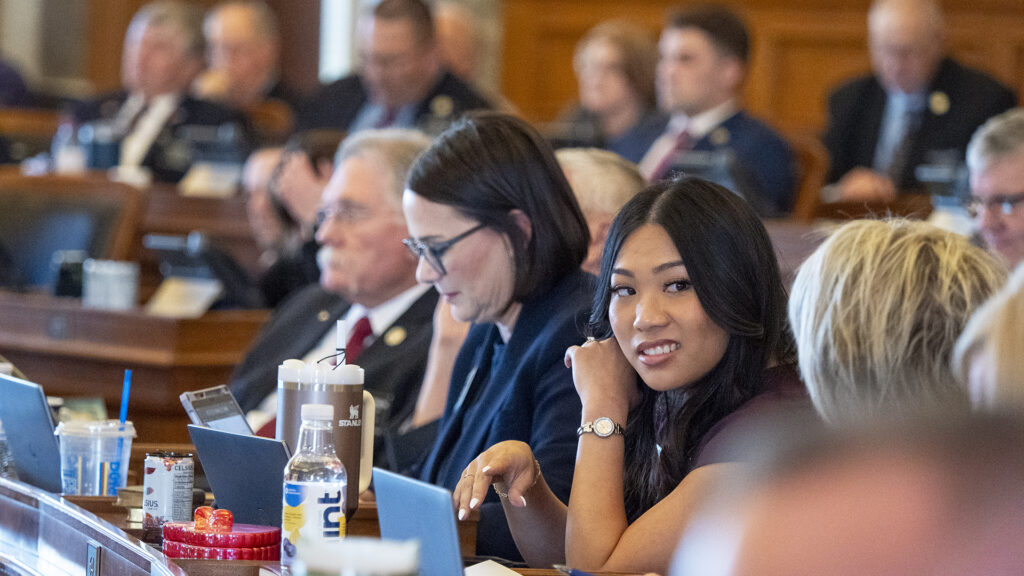
Roeser entered the Kansas House in 2024 at just 23 years old. Soon, she found herself at odds with party leadership. For instance, she voted against a Republican plan to change how Kansas Selects Supreme Court justices. In response, her party colleagues shared an aggressive graphic online. The image labeled her and three other dissenters as “obstructionists.” Moreover, Roeser suspected the graphic used an artificial intelligence composite of her face. She also struggled to secure meetings with House Speaker Dan Hawkins. While Hawkins denied blacklisting her, Roeser felt completely ostracized. Because of this tension, she decided to step down after one term.
“I was labeled before I even had a chance to legislate. And when I did not live up to the hype, my own party turned on me.”
Ultimately, Roeser chose to return to the private sector as a business strategist. Her departure leaves her district, which includes many college students, without a peer in the state legislature.
How does Generation Z political representation shape legislative policy?
Young lawmakers in US politics change how legislatures address modern challenges like artificial intelligence, housing affordability, and education costs. Without these voices, policy choices often ignore the economic realities of younger generations. Furthermore, older financial models no longer match what young workers face today.
What unique perspectives do young lawmakers in US politics bring?
Young lawmakers bring firsthand experience with modern economic pressures, especially soaring costs for college and housing. Their daily lives provide crucial context that older legislators may completely misunderstand. As a result, they can introduce fresh legislative solutions based on current economic challenges.
For example, Reed Krewson is a 24-year-old Democrat running for the Kansas House. Krewson noted that some older lawmakers do not even know how to use email. In contrast, younger generations understand digital data and social media intuitively. Additionally, Krewson shared his own struggle to buy a condo in Overland Park. He plans to use that lived experience to improve housing policy. In comparison, older politicians bought homes under vastly different economic conditions. Similarly, former legislator Brandon Woodard recalled a telling question from an older colleague. The colleague asked why students do not simply mow lawns to pay for tuition. In response, Woodard had to explain that modern tuition rates make that impossible.
What financial barriers keep Gen Z politicians out of office?
Low salaries for state and municipal officials create a major barrier for young people starting their careers. Many legislatures in Vermont and Kansas operate part-time schedules with low compensation. Consequently, these financial demands often limit public office to retirees or wealthy individuals.
Serving in a part-time legislature remains costly. Young people often carry heavy student loans and lack personal savings. In Kansas, representatives earned between $40,000 and $60,000 in 2025. Lawmakers recently raised this pay so working-class citizens could serve. Meanwhile, Vermont state legislators face similar financial strains. Low weekly pay during the session makes it difficult for young workers in Bennington County to run. Thus, this economic hurdle keeps young voices away from the table.
Furthermore, a national survey by Tufts University highlights this political divide. Researchers polled over 5,000 Gen Z voters and found that 43% do not align with any party. Instead, Specific Issues Drive their civic engagement. Alberto Medina, a spokesperson for the university research center, noted that young people enter politics to fix a broken system.
“Young people are getting involved in politics, not because they think it’s great, not because they think it’s working. But often because they think it’s not working and they want to change it.”
Ultimately, young leaders will continue to face steep uphill battles without major changes to pay and party culture.
This article was produced with the assistance of AI and reviewed by our editorial team.
Sources
Related: Housing Vouchers Bennington VT: Low-Income Rental Programs Begin to Stabilize
Related: How Parking Minimums Bennington Housing Debates Are Reshaping Local Growth
Related: Federal Housing Bill Bennington VT: What Trump’s Standoff Means for Local Residents
See a typo? Report it here.