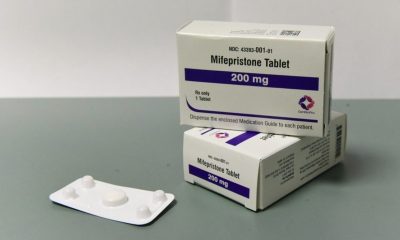
Bennington
How the FDA Abortion Pill Safety Review Impacts Southern Vermont Patients
The U.S. Food and Drug Administration said late Wednesday that it expects to complete its long-awaited safety review of abortion pills by mid-December and issue a report evaluating the results by March 2027. The agency disclosed the information in a…

Last updated:
Key points
- The FDA will complete its safety review of mifepristone by mid-December, delaying any policy changes until March 2027.
- The ongoing federal review pauses major lawsuits and preserves current mail-order telehealth rules for Southern Vermont patients.
- Local advocates and rural healthcare providers are closely monitoring the potential impact of future federal REMS program updates.
NewsWK — Federal regulators have delayed their decision on mail-order abortion medication until next year. This delay also leaves Southern Vermont healthcare providers and patients in a state of limbo.
According to court documents first highlighted by Stateline, the federal safety review of mifepristone will conclude in mid-December. The agency then expects to publish its final report by March 2027. This timeline therefore delays any immediate changes to the Trump administration abortion pill policy. Political analysts suggest the administration wants to avoid controversial decisions before the upcoming midterm elections. Meanwhile, local advocacy groups are watching the federal timeline closely.
What does this federal delay mean for Southern Vermont patients?
Local healthcare providers in Bennington County face prolonged uncertainty as federal regulators delay decisions on medication abortion. While Vermont law strongly protects reproductive rights, federal restrictions on mail-order prescriptions could limit local access. Patients in rural mountain towns often rely on these digital services to bypass travel barriers.
Vermont voters enshrined reproductive liberty in the state constitution in 2022. However, federal regulations still govern how pharmacies distribute medication. If the FDA restricts telehealth, local patients will feel the impact.
In addition, many residents in towns like Stamford, Readsboro, and Searsburg live far from major medical centers. These patients often use telehealth to access reproductive care. Because travel during Vermont winters presents serious challenges, mail-delivery options remain vital for rural equity.
Furthermore, local clinics also serve patients traveling from neighboring states. Visitors from New York and Massachusetts frequently seek care in Bennington. Consequently, changes to federal rules would disrupt these regional healthcare networks.
How does the Louisiana v FDA lawsuit update affect national rules?
The latest Louisiana v FDA lawsuit update reveals that federal courts have paused active litigation during the safety assessment. This legal pause keeps current telehealth prescribing rules active through at least early 2027. Consequently, Southern Vermont residents can continue using mail-delivery options for medication abortions for now.
In this case, three states sued the federal government to block mail-order abortion pills. Specifically, Louisiana, Texas, and Missouri argue that federal mail policies undermine their state-level bans. A federal judge paused that lawsuit to let the FDA finish its study.
Indeed, federal lawyers submitted their timeline to the court on Wednesday. They confirmed the FDA is actively conducting its FDA abortion pill safety review. Specifically, the agency is comparing the safety of medication abortion to surgical procedures. Instead of waiting, opponents of abortion rights are already criticizing the timeline. They accuse the administration of delaying action for political reasons. In response, some groups have threatened to reject the final report if it declares the drug safe.
What is the mifepristone REMS program review looking at?
The mifepristone REMS program review focuses on whether the FDA should roll back its 2023 decision allowing telemedicine prescriptions. Officials are analyzing safety data to decide if patients must once again visit clinics in person. This review directly threatens the convenience of modern mifepristone telehealth regulations.
The FDA uses the REMS program to monitor high-risk medications. In 2023, the agency eased these rules to allow certified pharmacies to mail mifepristone. Now, regulators are reconsidering that decision.
Medical experts argue that years of data prove the safety of mail-order abortion pills.
“Mifepristone is one of the most studied, most politicized drugs in the country,”
said Mary Ziegler. She serves as a law professor at the University of California, Davis. Ziegler expects political pressure, rather than science, to guide the final decision.
If the federal government reinstates the old REMS rules, telehealth providers would face severe limits. Patients would then have to make in-person clinic visits just to receive a pill. This change would therefore heavily burden working families in Rural Bennington County.
Why is there a debate over the safety data?
Activists and researchers disagree on which data the FDA should use for its safety assessment. Anti-abortion groups want the agency to analyze Medicaid insurance claims, pointing to studies claiming high complication rates. Conversely, mainstream medical organizations maintain that mifepristone has an excellent safety record.
Some conservative organizations have published non-peer-reviewed papers. These papers claim that 11 percent of mifepristone patients experience serious complications. However, researchers note these studies use a much broader definition of “adverse events” than the FDA.
Other researchers also warn against relying solely on insurance claims. Many telehealth patients pay out of pocket because their insurance does not cover the service. Therefore, billing databases do not paint a complete picture of telehealth safety.
For now, Southern Vermont providers will continue operating under current laws. Local doctors urge patients to stay informed as the federal review progresses. In the meantime, we will continue to monitor this story as the December deadline approaches.
This article was produced with the assistance of AI and reviewed by our editorial team.
Sources
Related: Telehealth Abortion Lawsuit Threatens Regional Mail Delivery Rules
Related: Federal Judge Rules Against Mifepristone Restrictions Impacting Abortion Access in Southern Vermont
Related: How Will National Abortion Pill Restrictions Affect Southern Vermont Patients?
See a typo? Report it here.