Bennington
Labor Union Membership Growth Rises Across Region and Nation
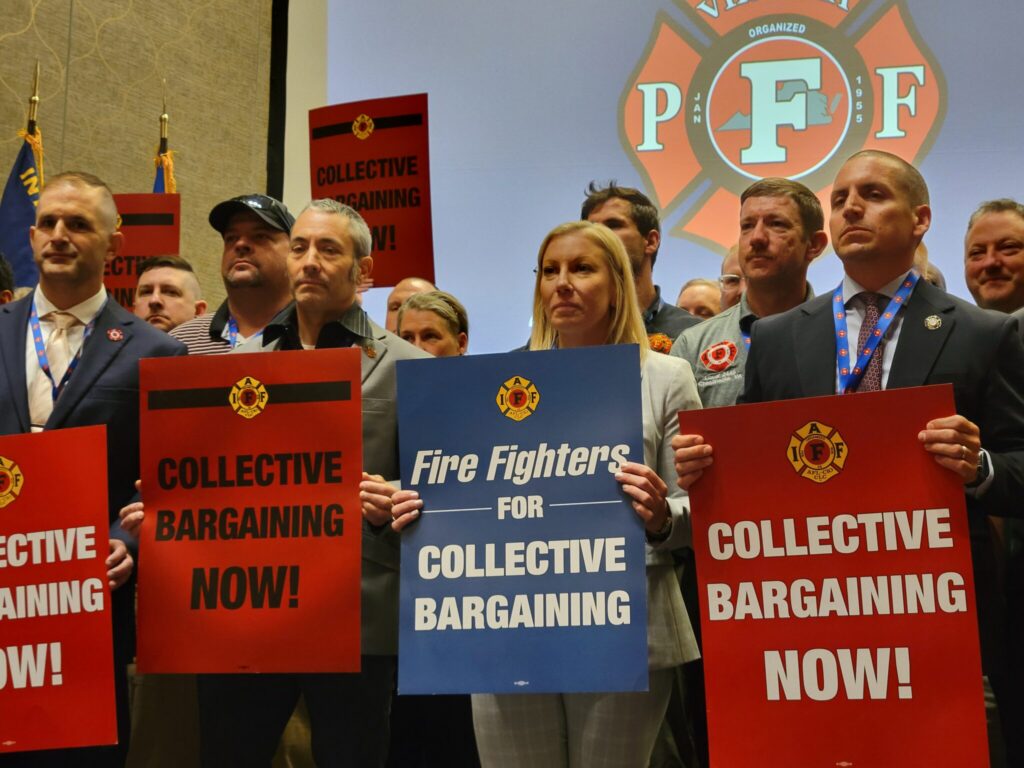
Labor union membership continues to climb in the United States, though the increase remains sharply divided by the politics of individual states. Last year, the nation added more than 411,000 union members — the largest annual growth since 2008, according…

Last updated:
Key points
- The United States added over 411,000 union members last year, marking the largest annual labor surge since 2008.
- States that protect collective bargaining added union members at three times the rate of right-to-work states.
- Cost-of-living adjusted hourly wages average $37.24 in collective bargaining states compared to $34.16 in right-to-work states.
NewsWK — Workers across the country joined organized labor in record numbers last year. For residents in Bennington County and nearby border towns, the shift highlights sharp regional differences in workplace rules.
Nationwide, payrolls added more than 411,000 union workers over the past year. That increase marks the largest single-year expansion for organized labor since 2008.
Why it matters
Local families across southern Vermont, eastern New York, and western Massachusetts navigate a shared regional economy. Many workers commute daily across state lines between Bennington, Hoosick Falls, and North Adams.
Vermont, New York, and Massachusetts all uphold strong collective bargaining rights. Because our region protects organizing, local employers and public agencies face a very different labor landscape than businesses in southern or western states.
Furthermore, policy differences directly influence local wages, benefits, and municipal budget planning.
What did the state of the unions study reveal?
A recent state of the unions study from researchers at the University of Illinois shows that labor rules shape workforce expansion. States that support bargaining added union members at triple the rate of right-to-work states. Nationally, over 14.6 million employees now carry union cards, representing roughly 10% of American workers.
The report examined data from across the nation to identify the primary causes of this resurgence. Researcher Robert Bruno, who directs the labor education program at the University of Illinois at Urbana-Champaign, pointed directly to statehouses.
“What seems to be the number one driver is the state of the state,” Bruno stated. “If the policy is anti-union, it suppresses worker will. Where the law allows worker will to flourish, as I would argue it should, then you see higher numbers. So you can’t ignore politics. You can’t ignore policy.”
Currently, 26 states enforce right-to-work statutes that ban mandatory union dues. In those states, union membership averages only about 5%. By comparison, states supporting collective bargaining maintain an average union density of nearly 14%.
What is driving union membership trends across states?
Recent union membership trends reflect changing economic pressures and shifting public sentiment across both political parties. Public support for organized labor has climbed steadily in recent Gallup polls. Meanwhile, inflation continues to push employees toward collective action to secure higher wages.
Study coauthor Frank Manzo IV, an economist with the Illinois Economic Policy Institute, connected the surge to household finances.
“More Americans are turning to unions as a bulwark against the rising cost of living, and more public sector workers turned towards unions last year in the wake of some federal actions and federal headwinds,” Manzo explained.
Yet national union density remains far below historic peaks. In 1954, more than a third of American workers belonged to unions. Today, the national rate hovers near 10%.
How does right to work vs collective bargaining impact pay?
Evaluating right to work vs collective bargaining reveals clear wage differences across state lines. Even after adjusting for regional living expenses, workers in collective bargaining states earned higher hourly pay. In those states, average hourly earnings reached $37.24, compared to $34.16 in right-to-work jurisdictions.
However, free-market researchers offer a contrasting perspective on these economic figures. A 2025 review of 147 research studies by the Mercatus Center at George Mason University highlighted potential economic downsides. Their report concluded that aggressive union activity can slow overall job creation. They also found it may lower corporate research investments and increase the risk of business closures.
Additionally, those analysts argued that the modern wage gap between union and nonunion labor has narrowed substantially.
How are state labor laws evolving nationwide?
State lawmakers introduced numerous changes to state labor laws over the past year. Democratic legislative groups tracked worker-protection measures that passed across 19 separate states. Several of those laws explicitly broadened collective bargaining opportunities for non-traditional workers.
Key state actions this year included:
- Illinois granted collective bargaining rights to rideshare drivers and gig economy workers.
- Washington extended public bargaining protections to certain student employees at state universities.
- Virginia lawmakers passed a bill to end a longstanding ban on public-sector bargaining, though Gov. Abigail Spanberger vetoed the measure after lawmakers rejected her implementation amendments.
- Southern statehouses enacted new statutory hurdles designed to restrict union drives.
At the federal level, former President Donald Trump attempted to remove bargaining protections from over 1 million federal employees. Those orders sparked federal court challenges. In response, federal employee unions launched fresh internal recruitment campaigns.
What comes next for local workers?
For our communities in Bennington County, labor stability remains essential for public schools, healthcare centers, and regional manufacturers. Area employers must continue competing for skilled talent in a labor-friendly tri-state market. As national union debates intensify, local wage standards and workplace rules will keep shaping daily life throughout southern Vermont.
This article was produced with the assistance of AI and reviewed by our editorial team.
Sources
Related: Bennington Battle Day Marked as Historic Monument Awaits Repairs
Related: Border County Tax Pressures Mount as New York Shifts SNAP Costs
See a typo? Report it here.