Bennington
Vermont State Employee Telework Dispute Reaches State Supreme Court
The Supreme Court heard oral arguments over whether Gov. Phil Scott had the right to order state employees back to the office without union bargaining. Read the story on VTDigger here: State and employees’ union butt heads over telework in…

Last updated:
Key points
- The Vermont Supreme Court is reviewing a case that could affect telework policies for state employees.
- Governor Phil Scott’s directive for a three-day in-office workweek is being challenged by the employees’ union.
- Local state employees in Bennington County are awaiting the court’s decision, which may redefine their work arrangements.
MONTPELIER, Vt. NewsWK — The ongoing dispute between Vermont state officials and the Vermont State Employees’ Association has reached the state Supreme Court, with significant implications for local employees in Bennington and throughout Vermont. The court is reviewing whether the state can require a return to in-office work without first negotiating with the employees’ union.
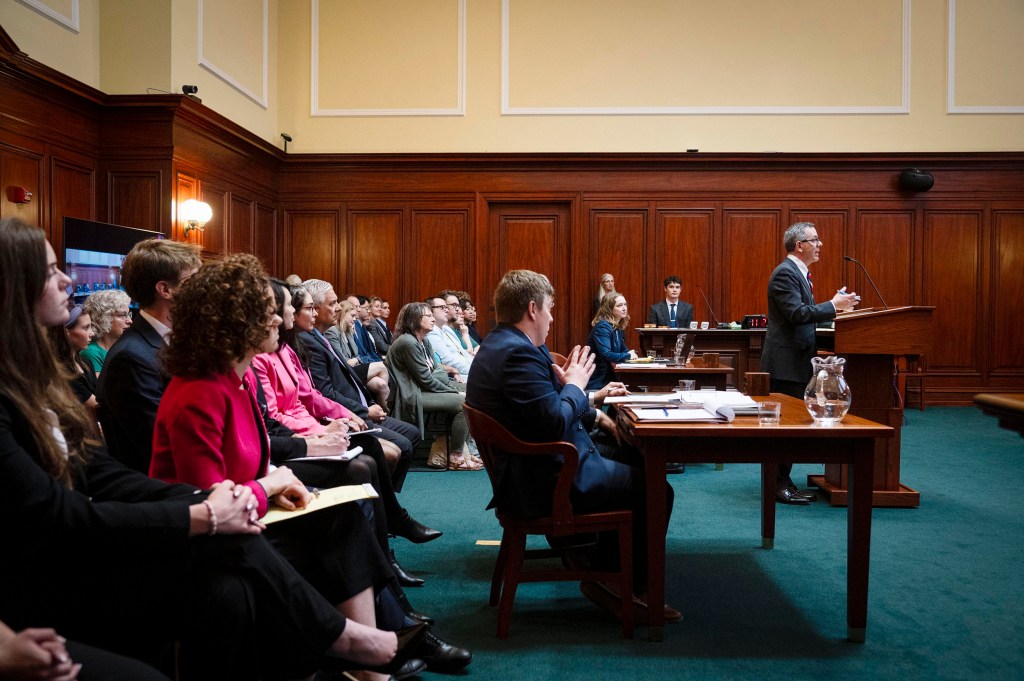
During oral arguments on June 18, 2026, attorneys for both sides presented their cases. This legal battle arises from Governor Phil Scott‘s directive mandating that state employees return to office work three days a week starting in December, after many had been working from home due to the COVID-19 pandemic.
Background on the Vermont Supreme Court Telework Case
Alfred Gordon O’Connell, representing the union, emphasized that the outcome of the case will clarify the rights of approximately 8,000 unionized state employees. He stated, “what their rights will look like on the other side of this decision” remains uncertain as the court deliberates.
A previous ruling by the Vermont Labor Relations Board favored the union, stating that the state should have engaged in collective bargaining before changing telework policies. This prompted the state’s appeal, leading to the current Supreme Court hearing.
Implications for Local State Employees
For residents of Bennington County, particularly those employed by state agencies, the court’s decision could directly impact work arrangements and job security. Institutions such as the Bennington Police Department and local offices of the Vermont State Police may see changes in operations depending on the ruling. Local employees are closely watching the case, as it could redefine their work environments in the aftermath of the pandemic.
Debate Over Vermont State Employee Return to Office Mandate
In the courtroom, both sides presented their arguments vigorously. Justice Nancy Waples raised critical questions about the extent of the governor’s authority to alter teleworking agreements without union input. The court’s five justices engaged actively, indicating the seriousness of the issues at hand.
What’s Next?
The state administration has already signaled potential changes to teleworking policies, which may further complicate matters for employees as they await the court’s ruling. Sarah Clark, the state administration secretary, acknowledged that the new interim policy could create “further disruption and uncertainty” for state workers.
As residents of Bennington observe this unfolding situation, the decision by the Vermont Supreme Court will play a crucial role in shaping the future of telework in state employment across the region.
This article was produced with the assistance of AI and reviewed by our editorial team.
Based on reporting originally published by VTDigger. Read the original story.
Related: Bennington 250 Announces ‘250 for 250’ Year-End Gala to Support Anniversary Celebrations
Related: Bennington Battle Day Marked as Historic Monument Awaits Repairs
Related: Warm, Cloudier Pattern Sets In for Bennington County Before Weekend Drizzle and Cooler Air
Related: Damp Late-August Stretch Brings Rain, Drizzle, and Cooler Temperatures to Bennington County
Related: Border County Tax Pressures Mount as New York Shifts SNAP Costs
Related: Smithsonian Partners With Bennington Groups for Cultural Initiative
See a typo? Report it here.