Bennington
US Catholic Bishops AI Regulation Push Targets Lawmakers and Ethical Tech Rules
American bishops plan for ‘groundswell’ of political action for AI regulation Bishops’ conference president delivers a yawn of a speech US bishops revamp their investment guidelines to address AI, private prisons, crypto Bishops Discuss AI, Immigration, Vote on Cause for…


Last updated:
Key points
- The U.S. Catholic bishops launched a nationwide lobbying effort for stronger artificial intelligence regulations and guardrails.
- Bishops voted 217-0 to adopt updated investment guidelines barring funds for unmonitored military AI, private prisons, and risky cryptocurrencies.
- The assembly established an annual national Day of Prayer for Racial Justice and called for humane immigration enforcement rules.
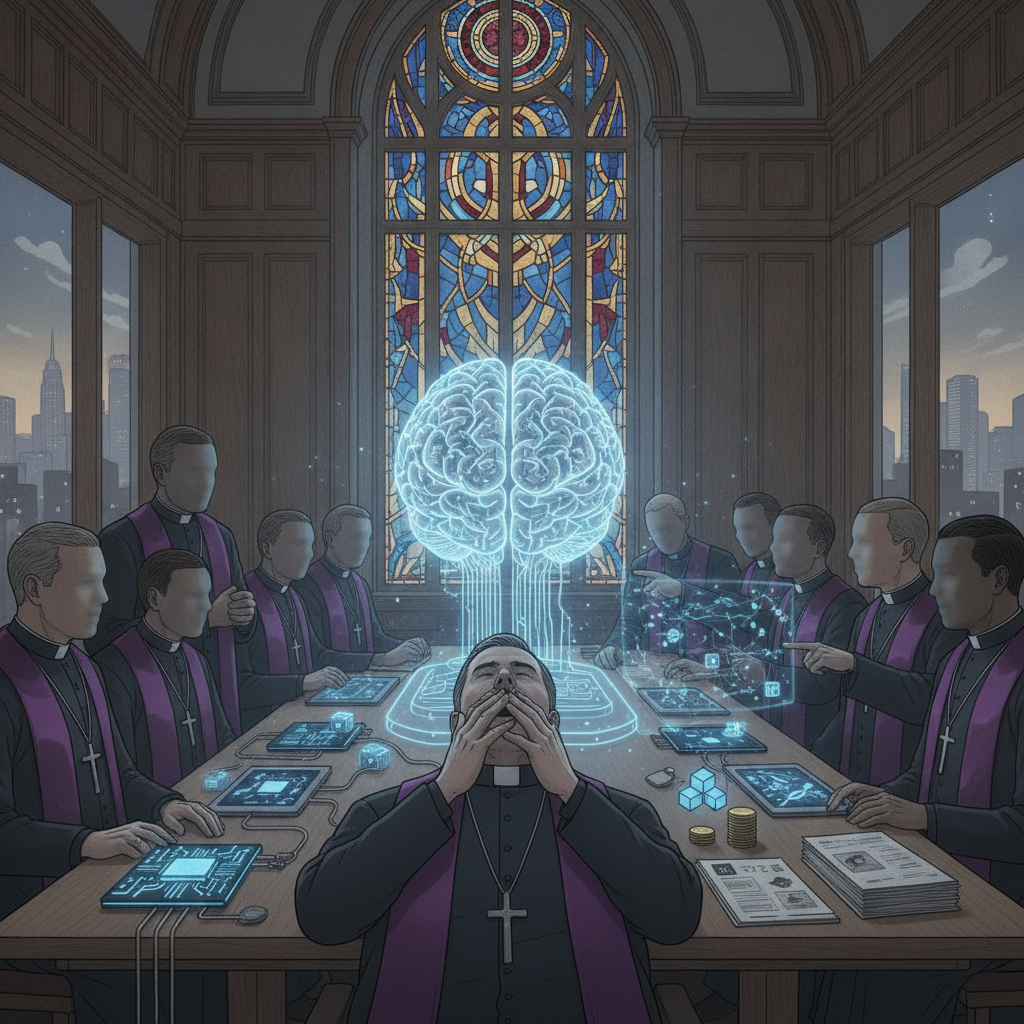
NewsWK — First, the United States Conference of Catholic Bishops launched a campaign to establish artificial intelligence guardrails. Also, the conference updated its financial investment policies.
What Does US Catholic Bishops AI Regulation Mean for Southern Vermont Parishes?
The legislative push and revised guidelines shape how local Catholic institutions manage resources. Parishes across Bennington, Manchester, and surrounding towns will soon adapt to these new standards. Furthermore, area residents will see greater focus on digital ethics, online safety, and screen addiction, alongside updated rules for diocesan funds.
Local church leaders in Bennington and across Vermont often align financial portfolios with national conference standards. Therefore, these changes directly impact how regional diocesan funds, charitable trusts, and parish foundations invest their capital. In addition, the initiative brings national conversations about digital safety to rural New England communities. Currently, parents in local school districts face growing challenges with screen addiction and online safety. Consequently, church leaders plan to offer educational resources to help families navigate artificial intelligence safely.
How Will Catholic Church AI Lobbying Target Federal and State Lawmakers?
The bishops are mounting a nationwide effort in Washington, D.C., and state capitols to build pressure for tech guardrails. Bishop Oscar Cantú of San Jose, California, leads this major national initiative. Ultimately, the campaign aims to protect human dignity, safeguard workers, prevent child exploitation online, and boost public AI literacy.
Bishop Cantú leads the USCCB Task Force on Preserving Human Dignity in the Age of Artificial Intelligence. Because his diocese encompasses much of Silicon Valley, he has engaged directly with tech executives and political figures. Now, church leaders hope to leverage moral influence across 53 million U.S. Catholics and 1.4 billion worldwide. This effort follows Pope Leo XIV’s encyclical, Magnifica Humanitas. That document called for strict legal oversight of emerging technologies. Furthermore, task force consultants note that the campaign will monitor labor disruptions. Specifically, they want to protect workers whose jobs face automation risks.
Why Are USCCB Investment Guidelines AI Standards Being Updated Now?
By a vote of 217 to 0 with 1 abstention, the assembly adopted the updated financial guidelines presented by Archbishop Shelton J. Fabre. Overall, the new rules bar funding for unmonitored AI weaponry, private detention facilities, unregulated cryptocurrencies, and prediction markets.
The updated document represents the first major overhaul of the conference’s investment policy since 2021. Church leaders took action during their Fall Plenary Assembly in Baltimore, Maryland. They met at the Baltimore Marriott Waterfront.
How Do Catholic Bishops Artificial Intelligence Directives Restrict Investments?
The updated guidelines forbid investing in tech companies that create AI lacking human oversight. This ban especially targets autonomous weapons and automated enforcement systems. Furthermore, the conference prohibited investments in AI designed to manipulate users or cause addiction. Finally, the rules ban private prison operators and warn against speculative digital currencies.
The updated investment framework sets clear boundaries for church capital. For example, key exclusions and directives include:
- Complete prohibition of investments in autonomous weapons or automated military targeting systems.
- Strict bans on AI applications designed to manipulate user behavior, foster digital addiction, or harm youth.
- Categorical bans on companies that build or operate private prisons and private immigration detention centers.
- Strong caution against investing in unregulated cryptocurrencies due to potential connections with illicit activity.
- Warnings against prediction market platforms, such as Kalshi and Polymarket, citing concerns about insider trading and corruption.
- Continued bans on investments related to abortion, euthanasia, assisted suicide, human cloning, and gambling.
What Other Measures Did the Bishops Pass During the Assembly?
Beyond tech policy, church leaders passed major resolutions on racial justice, immigration, and liturgical texts in Baltimore. First, the measures established a new national prayer day and called for humane immigration enforcement. Additionally, the bishops advanced local sainthood causes and updated liturgical books for American dioceses.
On November 18, the bishops voted 180 to 15, with seven abstentions, to create an annual Day of Prayer for Racial Justice. They designated the last Sunday of October for this observance. Bishop Daniel E. Garcia of Austin, Texas, introduced the measure to encourage national reconciliation. Meanwhile, Bishop Brendan Cahill of Joliet led discussions on migration enforcement. He criticized mass detention practices, mass deportations, and the revocation of legal work authorizations. Instead, church leaders called for extended protections for Haitian migrants and greater pastoral access to detention centers. Finally, the assembly voted to advance the sainthood cause for a teenager from Bucks County, Pennsylvania. They also approved an updated Mass Lectionary to harmonize with the Catholic American Bible.
Soon, national task forces will prepare legislative proposals for state capitols and D.C. Meanwhile, local parishes across Southern Vermont will begin sharing educational materials on Tech Literacy. Parish managers will also review local investment accounts. This review ensures compliance with the newly adopted ethical guidelines.
This article was produced with the assistance of AI and reviewed by our editorial team.
Sources
Related: St. Michael Catholic School Graduation Brattleboro Honors Class of 2026