Iowa
U.S. Army Iowa Bomb Detonation Moves Forward Amid Legal Battle
U.S. Army plans to invoke emergency provisions to detonate bomb-making chemicals in Iowa Noon Sunday deadline set in Iowa Army blast challenge; Fort Madison says detonation could come Monday or Tuesday Environmental groups say legal status of planned lead detonation…


Last updated:
Key points
- The U.S. Army plans to detonate nearly five tons of unstable lead azide at an ammunition plant in Iowa by Tuesday, Nov. 24.
- Federal judges temporarily paused the open-air blasts following environmental lawsuits, but officials plan to invoke emergency rules to proceed.
- Local authorities in Iowa are advising residents to shelter indoors, protect pets, and prepare for potential lead dust plumes.
NewsWK — Federal military officials are preparing to destroy nearly five tons of volatile explosives at an Iowa facility. Meanwhile, environmental advocates and nearby residents remain concerned about potential air contamination and regulatory oversight. The upcoming operations highlight how military safety protocols balance community health with immediate explosive hazards.
What led to the U.S. Army Iowa bomb detonation plan?
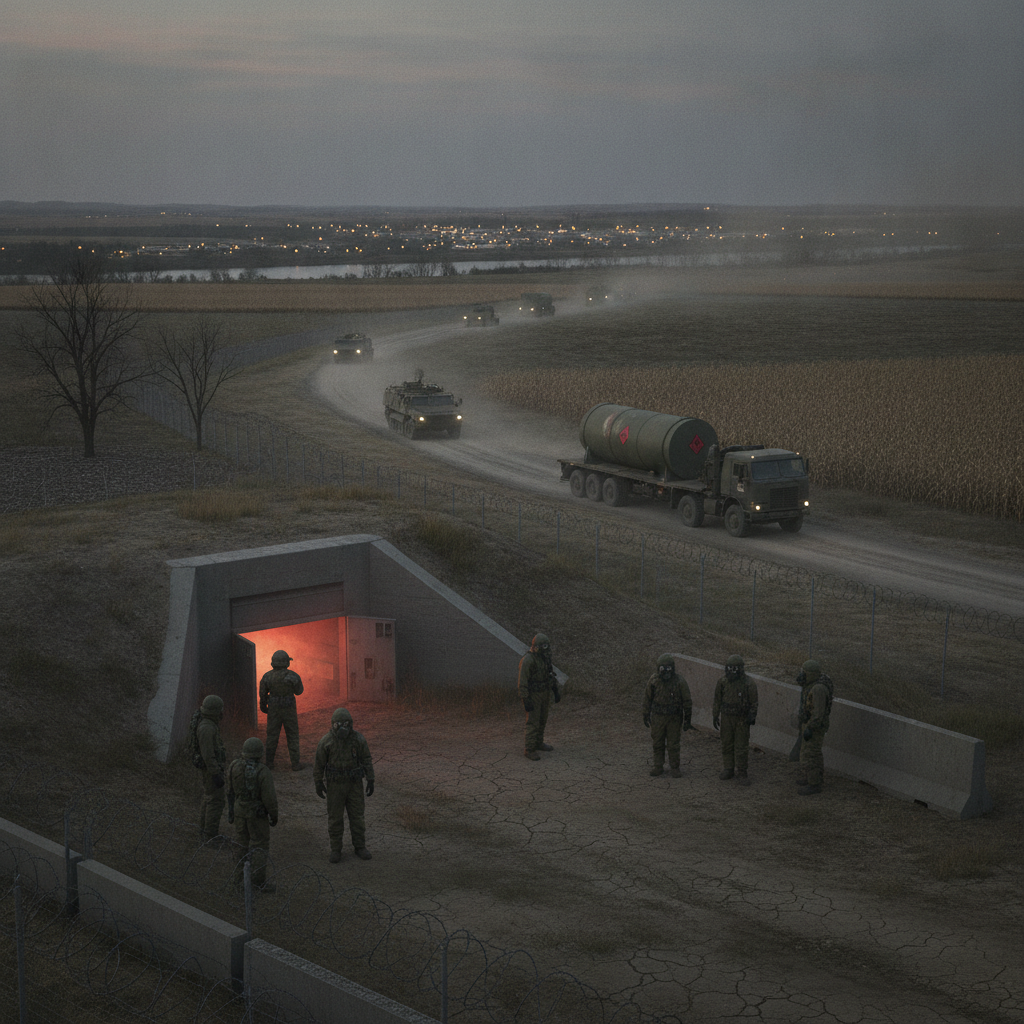
Federal officials face a ticking clock in southeastern Iowa. Recently, military crews discovered 68 drums of degraded explosive chemicals inside storage bunkers. The U.S. Army determined that nearly five tons of unstable lead azide poses an immediate safety hazard. Consequently, officials planned controlled open-air detonations near residential areas.
Military personnel first discovered the degraded chemical stockpile in March 2026. The material consists of crystallized lead azide. Previously, workers stored these drums inside earth-covered concrete bunkers at the Iowa Army Ammunition Plant in Middletown. Middletown lies about 160 miles southeast of Des Moines.
Over time, the chemical compound deteriorated significantly. freezing temperatures
Earlier in November 2026, the U.S. Environmental Protection Agency issued an emergency permit for the operation. Initially, officials planned the blasts for Friday, Nov. 20. However, public outcry forced managers to reschedule the operation for Monday, Nov. 23.
What does this emergency military disposal mean for environmental safety standards?
Furthermore, lead dust plumes can travel downwind. Therefore, regional health advisories highlight how federal emergency declarations can bypass standard environmental reviews during urgent chemical responses.
Work crews plan to destroy the material through two separate detonations. However, government modeling shows the blasts will produce a plume of toxic lead particles.
This plume will disperse into the air and eventually deposit lead on the ground. Additionally, shockwaves from the explosions could shatter glass in older nearby structures.
Consequently, state emergency officials advised certain Middletown residents to evacuate temporarily. Meanwhile, nearby homeowners should stay indoors with all doors and windows tightly closed.
Also, officials urge residents to bring pets and livestock inside shelter structures. After the blasts clear, families should wash outdoor surfaces, windowsills, and vehicles to remove lingering dust.
In addition, Iowa Governor Kim Reynolds activated the State Emergency Operations Center. This center will manage public safety responses during the event.
How did legal challenges attempt to stop the Iowa explosive chemicals detonation?
Conservation groups quickly filed suit in Federal Court to halt the planned open-air explosions. Specifically, they raised health concerns over airborne lead contamination. An Appeals Court temporarily paused the operations. However, Justice Department attorneys argued that freezing temperatures significantly increase the risk of an unintended explosion.
Several environmental organizations challenged the emergency EPA permit. These groups include the Iowa Environmental Council, Sierra Club, and Earthjustice. They argued that open-air burning releases dangerous toxins into surrounding neighborhoods.
On Thursday, Nov. 19, the 8th U.S. Circuit Court of Appeals granted a temporary hold on the permit. Subsequently, the court set a deadline of noon on Sunday, Nov. 22, for all legal filings.
However, federal attorneys filed documents late Saturday evening. These filings indicated the Army intended to proceed by Tuesday, Nov. 24. Therefore, Justice Department lawyers formally asked the court on Sunday to lift its stay immediately.
Government officials emphasized that dropping winter temperatures raise the danger of spontaneous ignition. “To protect its personnel and the surrounding communities, the Army needs to take swift action,” government attorneys stated in court filings.
Why did officials choose an Iowa Army Ammunition Plant detonation over alternative cleanup methods?
Military planners originally contracted a private firm to neutralize the dangerous lead azide through chemical treatment rather than open burning. However, officials later canceled that contract and sought emergency permission to detonate the stockpile. Ultimately, leaders cited growing instability and immediate risks to facility personnel.
Originally, military managers sought a cleaner disposal method. For instance, the Army hired a specialized contractor to chemically treat the material and convert it into harmless waste.
However, officials unexpectedly canceled that contract. Instead, leadership chose open-air detonation at the facility grounds.
Environmental groups criticized the pivot away from chemical neutralization. Consequently, representatives from the Sierra Club and partner organizations expressed frustration in a joint public statement. They stated that military leaders were trying to “sidestep the judicial process” instead of offering transparent safety data to the public.
Still, federal teams maintain that immediate disposal remains the only safe path forward as weather conditions deteriorate.
This article was produced with the assistance of AI and reviewed by our editorial team.
Sources
Related: US Supreme Court California Vote Counting Request Denied
Related: Federal Court Protects Over 1,400 Churches from ICE Enforcement