Bennington
Supreme Court AR-15 Ban Case: What It Means for Southern Vermont
After a man used a semiautomatic rifle to kill five children and wound dozens of others at a California elementary school in 1989, officials in sprawling Cook County, Illinois, banned what they called assault weapons — certain firearms such as…


Last updated:
Key points
- The U.S. Supreme Court will hear oral arguments on Dec. 2 regarding state and local bans on AR-15 rifles.
- Officials in Vermont, New York, and Massachusetts have joined competing state coalitions filing legal briefs in the case.
- A ruling expected in spring could reshape firearm regulations across Southern Vermont and the entire tri-state region.
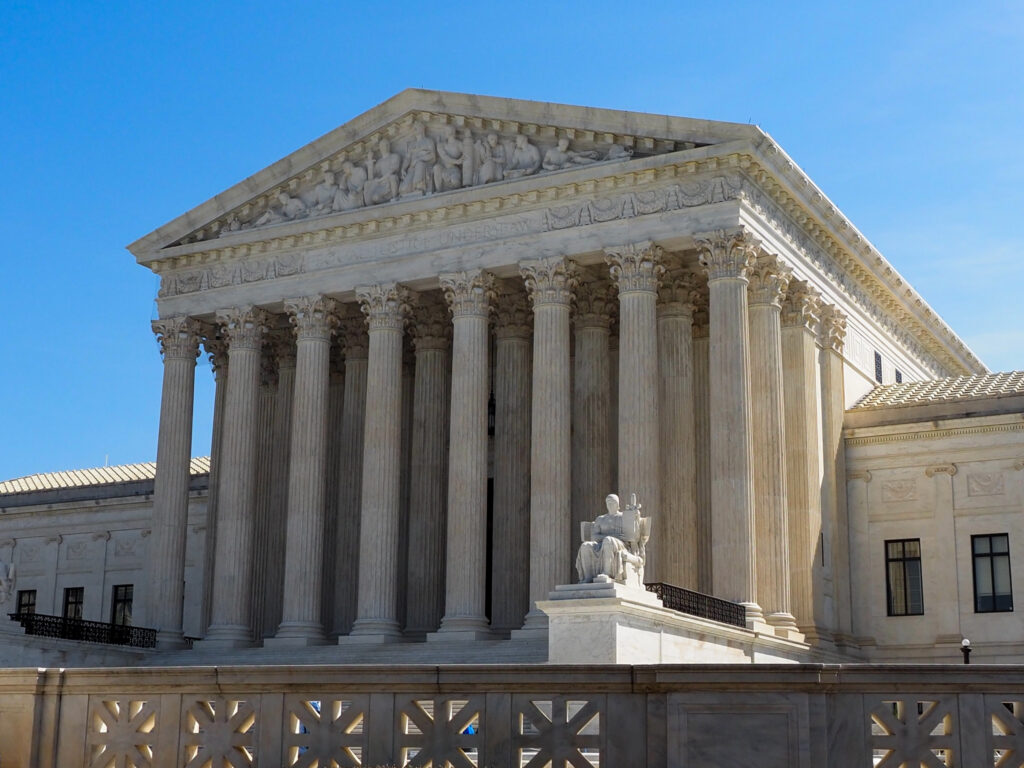
NewsWK — The U.S. Supreme Court will hear oral arguments on Dec. 2 in a landmark legal battle. The justices will review semiautomatic rifle bans. Specifically, the case will determine whether state and local restrictions on popular firearms like the AR-15 violate the Second Amendment.
The upcoming ruling could rewrite regional firearm laws for residents in Bennington County. It will also affect neighboring communities in New York and Massachusetts. Recently, Stateline reported on the national legal strategy unfolding before the High Court.
What is at stake in the Supreme Court AR-15 ban case?
The Supreme Court AR-15 ban case addresses whether governments can prohibit civilian ownership of popular semiautomatic rifles. The justices will decide if modern firearm bans fit within historical traditions of weapon regulation. Ultimately, a ruling against the bans could strike down laws in 11 states and multiple major cities nationwide.
The consolidated litigation combines two major legal disputes. It merges challenges to local restrictions in Cook County, Illinois, and statewide bans in Connecticut. Gun rights advocates argue that rifles like the AR-15 are in common lawful use across America. Therefore, they contend these firearms deserve constitutional protection Under Prior High Court precedents.
Conversely, municipal officials and public safety advocates argue that high-powered rifles present unique dangers to the public. For instance, they point to the use of semiautomatic rifles in high-profile mass shootings over recent decades. Because of those risks, supporters argue elected leaders must retain authority to restrict dangerous military-style weapons.
Furthermore, the battle has drawn formal legal submissions from officials across the nation. For example, 18 state attorneys general filed a joint brief urging the justices to uphold local prohibitions. Meanwhile, 27 state attorneys general requested that the court invalidate all such restrictions immediately.
How could the Supreme Court assault weapon ban decision impact local laws in Vermont, New York, and Massachusetts?
A decision in the Supreme Court assault weapon ban case will directly affect statutes across New England and New York. While Vermont permits semiautomatic rifles, neighboring New York and Massachusetts enforce strict bans on firearms classified as assault weapons. Consequently, a federal ruling invalidating those state laws would immediately change regional gun regulations.
Local gun owners, sporting goods retailers, and law enforcement agencies across Southern Vermont operate in a complex legal landscape. For example, residents frequently travel across state Lines Into Washington County, New York, or Berkshire County, Massachusetts. In those neighboring areas, firearm possession laws differ significantly.
Democratic state officials have urged the Supreme Court to uphold the bans. Together, the coalition argues that states require flexibility to address gun violence in their communities. However, gun rights organizations in Northern and Southern Vermont disagree. They argue that restrictive state laws unconstitutionally limit lawful self-defense options.
Consider how firearm regulations currently vary across our immediate region:
- Vermont: Limits magazine capacities. However, it allows the purchase and ownership of AR-15 style rifles.
- New York: Bans firearms classified as assault weapons.
- Massachusetts: Bans firearms classified as assault weapons.
- Connecticut: Maintains one of the nation’s strictest bans. This law forms a central part of the Current Supreme Court dispute.
Why is Viramontes v Cook County significant for the tri-state area?
The lawsuit known as Viramontes v Cook County serves as the primary vehicle testing state firearm limits before the court. Because the ruling will establish national constitutional precedent, it will bind courts and legislatures across Vermont, New York, and Massachusetts. Therefore, local leaders must prepare for sweeping changes to state gun codes.
Gun rights groups emphasize that civilian ownership of semiautomatic rifles has expanded substantially nationwide. Specifically, Georgetown University political economist William English conducted a national survey on the topic. He estimated that 25 percent of American gun owners possess an AR-15 style rifle. Overall, 30 percent of gun owners reported owning a rifle commonly classified as an assault weapon.
“This is one of the most important Second Amendment cases in American history,” Brandon Combs, president of the Firearms Policy Coalition, said in a statement. “The question is simple: Can the government ban some of the most popular firearms in America?”
Meanwhile, government prosecutors highlight the heavy lethality of high-powered civilian rifles. “The safety of our communities is at stake,” Cook County State’s Attorney Eileen O’Neill Burke said in a statement. “There is absolutely no reason that AR-15s, AK-47s and other weapons of war that were designed to inflict mass carnage should be available to the public.”
What historical standards are the justices reviewing in this Second Amendment gun rights case?
In this Second Amendment gun rights case, the Supreme Court will apply legal standards from its 2008 and 2022 decisions. First, the court ruled in 2008 that citizens hold an individual right to possess firearms for self-defense. Later, in 2022, the justices required all modern gun regulations to align with historical American firearm traditions.
Subsequently, federal appellate courts across the country have issued conflicting rulings under that 2022 standard. For instance, the U.S. Court of Appeals for the 7th Circuit upheld the Cook County ban in 2025. Shortly after that decision, the 2nd Circuit upheld Connecticut’s ban. However, the 3rd Circuit struck down New Jersey’s restrictions in July 2026.
Because these appellate courts reached opposite conclusions, the Supreme Court agreed to resolve the conflict. Meanwhile, the U.S. Department of Justice under President Donald Trump filed a brief opposing state bans. Federal officials cited 2025 FBI homicide data. Specifically, handguns accounted for 38 percent of those homicides, while rifles accounted for just 3 percent.
Still, survivors of firearm violence urge the court to consider human suffering. For example, survivors from a 1989 California school shooting filed legal briefs in the case. They detailed the severe wounds caused by rapid-firing rifles. Ultimately, they contend that historical tradition permits state legislators to restrict exceptionally dangerous weapons.
The Supreme Court will hear oral arguments on Dec. 2. Afterward, justices will deliberate throughout the winter. Legal observers expect a final ruling by late spring.
This article was produced with the assistance of AI and reviewed by our editorial team.
Sources
Related: Supreme Court Immigrant Detention: Bennington Implications Under Review
Related: Supreme Court Clears Mail Ballot Order as VT, NY, and MA Fight Rules