Bennington
Stealth Bot Prohibition Act Proposed to Stop Hidden AI Web Crawlers
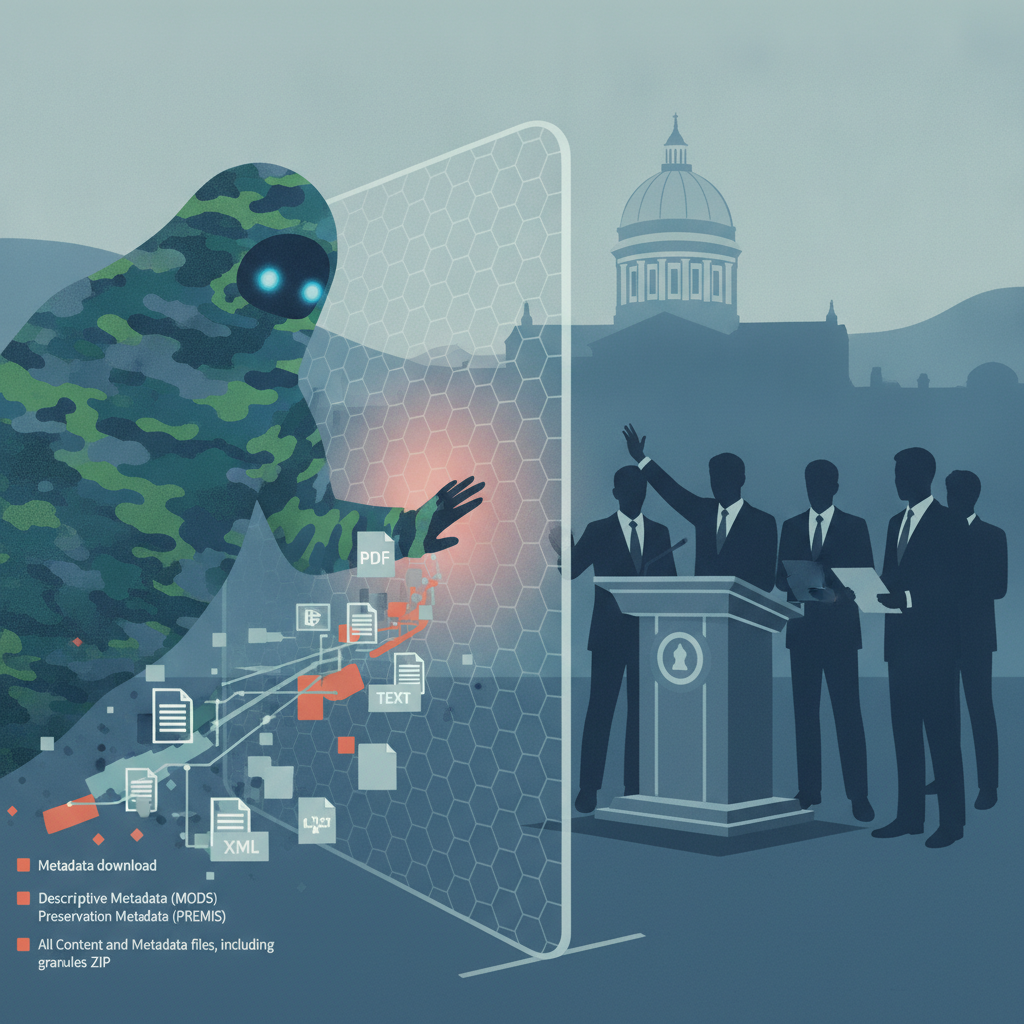
Content Files PDF XML TEXT Metadata download Descriptive Metadata (MODS) Preservation Metadata (PREMIS) All Content and Metadata files, including granules ZIP


Last updated:
Key points
- S. 5766 requires automated web crawlers to clearly identify themselves and their purpose.
- The FTC can fine non-compliant bot operators up to $53,000 per violation, with annual inflation adjustments.
- State attorneys general will have authority to file enforcement suits on behalf of residents.
NewsWK — Federal lawmakers are targeting hidden online web scrapers that disguise themselves as human users. For website owners and digital Services Across Bennington County, proposed federal rules could soon force artificial intelligence crawlers to reveal their true identities.
What is the Stealth Bot Prohibition Act?
The Stealth Bot Prohibition Act, introduced in Congress as S 5766, targets automated web crawlers that hide their identity. Senator Roger Wicker sponsored the measure alongside Senator Ben Ray Luján. Furthermore, this AI bot transparency bill requires automated systems to disclose their identity and purpose whenever they access online services.
How will FTC bot regulations protect web platforms? Stealth Bot Prohibition Act
Under S 5766, software bots cannot obscure their nature to pretend to be human while accessing generative AI tools. The Federal Trade Commission will enforce these FTC bot regulations as unfair or deceptive acts under federal law. Additionally, state attorneys general can file civil suits to protect local citizens.
What penalties apply under S 5766?
Violators face serious financial consequences under the Senate stealth bot legislation. Specifically, the Federal Trade Commission can levy civil penalties of up to $53,000 per violation. Official agencies will adjust this maximum penalty every year on January 1 using Consumer Price Index figures.
What is the legislative status of the bill?
U.S. Senators officially introduced S 5766 on November 18, 2026. Then, committee leaders assigned the measure to the Senate Committee on Commerce, Science, and Transportation. Meanwhile, Representative Laurel Lee introduced the companion bill H.R. 9915 in the House of Representatives on July 23, 2026. Representatives Valerie Foushee and Gus Bilirakis also joined as original co-leads for the House bill.
- Sets a maximum civil fine of $53,000 per violation, adjusted annually for inflation.
- Requires automated web bots to disclose identity and purpose to online services.
- Authorizes state attorneys general to bring civil suits on behalf of state residents.
This article was produced with the assistance of AI and reviewed by our editorial team.
Sources
Related: New York Plastics Bill Bennington Impact: Environmental Legislation Stalls Amid Lobbying
Related: USDA Conservation Payments Foreign Countries Bill Proposed in Senate