
Bennington, VT News
South Burlington Bus Signal Priority System Cuts Delay for Transit Riders
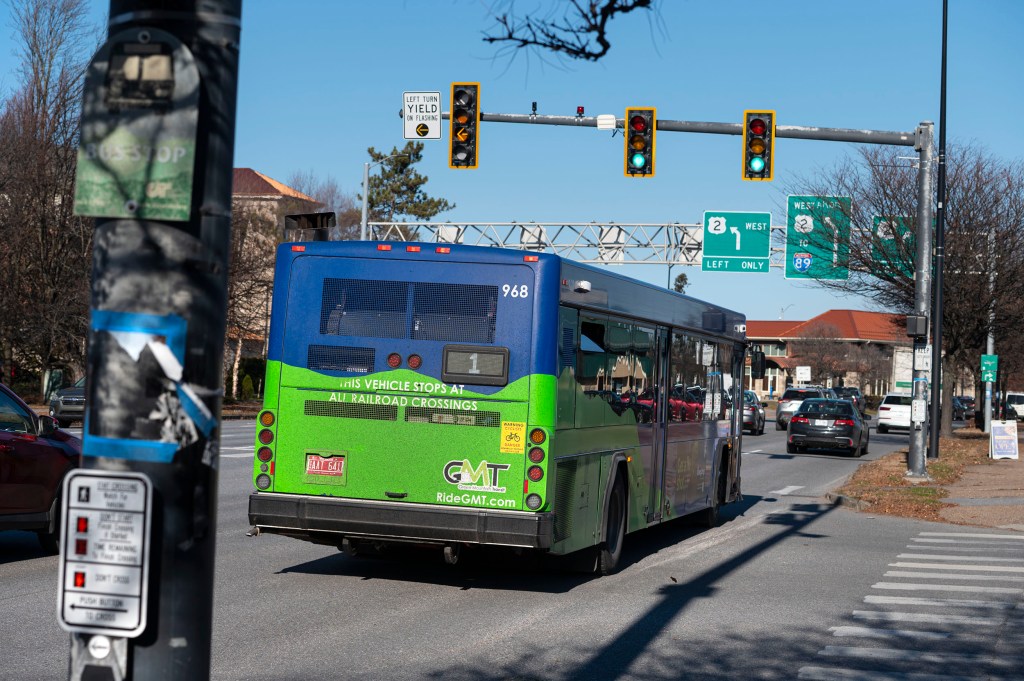
A new “signal priority” system has been speeding up Green Mountain Transit buses along the busy Dorset Street shopping corridor in recent months, data shows. Read the story on VTDigger here: South Burlington pilots new tech to get buses through…


Last updated:
Key points
- South Burlington tested a new signal priority system at four Dorset Street intersections to speed up bus travel times.
- Bus wait times at red lights dropped by at least 65 percent while side-street vehicle delays increased by only four seconds maximum.
- Transit officials hope to expand the technology to additional intersections across Vermont after extending the current pilot into 2027.
MONTPELIER, Vt. NewsWK — Public transit riders in South Burlington are seeing faster trips thanks to smart intersection technology. Recently, Green Mountain Transit and local officials launched a pilot program on busy commercial roads. Specifically, the initiative uses real-time computer tracking to cut bus delays. As a result, buses catch green lights more often on congested thoroughfares.
Traffic congestion often creates unpredictable delays for regional commuter lines. However, modern signal software offers an affordable solution. Therefore, local leaders hope this project serves as a model across Vermont transit corridors.
How does the South Burlington bus signal priority project work?
The South Burlington bus signal priority system uses real-time location tracking from transit buses. This tracking communicates directly with smart traffic Signals Along Dorset Street. California tech firm LYT developed the software to predict when a bus will reach an intersection. Then, it adjusts signal timing to move buses smoothly while keeping side-street delays minimal.
Specifically, the system extends green lights or shortens red lights for approaching buses. Public Works Director Erica Towle helped launch the initiative. She explained that the system balances bus movement with general traffic flow. Unlike emergency vehicle override systems, this technology does not completely disrupt signal timing. Instead, it makes micro-adjustments so cross-street drivers barely notice a change.
Currently, the pilot program covers four key intersections on Dorset Street. These locations connect major retail centers, including Barnes & Noble, University Mall, Trader Joe’s, and the Blue Mall. Every day, thousands of motorists and shoppers travel through these busy intersections.
What results show Vermont transit signal priority is working?
Initial data reveals a dramatic drop in bus delays across four pilot intersections on Dorset Street. Previously, outbound buses waited an average of 66 seconds across the signals. Now, that wait has dropped to just 22 seconds. Meanwhile, inbound bus delays fell from 74 seconds to 11 seconds, cutting wait times by over 65 percent.
Overall, the results demonstrate clear time savings for public transportation. Here is how the pilot performance breaks down across the test corridor:
- Outbound bus signal wait time: Reduced from 66 seconds down to 22 seconds on average.
- Inbound bus signal wait time: Dropped from 74 seconds down to 11 seconds on average.
- Overall red light delay reduction: Decreased by at least 65 percent across pilot intersections.
- Maximum cross-street driver delay: Increased by no more than four seconds on average.
Ultimately, Vermont transit signal priority proves that small technological upgrades can deliver major improvements. Because buses spend less time waiting at red lights, drivers can maintain tighter schedules throughout the day.
What Does Dorset Street traffic South Burlington mean for local drivers?
Drivers Navigating Dorset Street traffic in South Burlington experience virtually no impact from the new bus priority technology. In fact, data shows cross-street vehicles face an average maximum delay of only four seconds. City officials report no public complaints so far. Brief holds for individual cars allow dozens of transit passengers to reach their destinations faster.
Furthermore, Erica Towle pointed out that a single bus can hold dozens of commuters. A slight four-second pause for one driver keeps whole busloads of people moving. Therefore, the system creates a net gain for overall regional mobility.
Meanwhile, traffic patterns remain smooth for drivers visiting South Burlington shopping hubs from nearby communities. The smart software constantly evaluates vehicle volume. As a result, side streets do not suffer from long backups.
Why are South Burlington traffic lights testing Green Mountain Transit signal priority?
South Burlington traffic lights on Dorset Street serve one of the busiest commercial corridors in the area. In addition, Green Mountain Transit operates its heaviest route along this road, moving tens of thousands of passengers monthly. Consequently, city and transit leaders launched the pilot to reduce bottlenecks and improve route reliability without building costly new lanes.
Specifically, the main route Running Along Dorset Street is Green Mountain Transit Route 1. This busy line connects downtown Burlington, the University of Vermont, and major retail hubs. Over 45,000 riders rely on this route each month. Additionally, Route 11 uses the Same Street and benefits from reduced signal delays as well.
How will Green Mountain Transit signal priority expand in the future?
Transit leaders plan to extend the Dorset Street program into 2027 while securing long-term funding. South Burlington and Green Mountain Transit shared the $16,256 cost for the original six-month test. Next, planners hope to scale the system to additional regional intersections. Small time savings at each light compound into major schedule improvements across the bus network.
Green Mountain Transit Planning Director Chris Damiani stressed the value of saving even a few seconds per intersection. For instance, small reductions in delay give drivers essential recovery time. Consequently, drivers can stay on schedule during peak traffic hours.
Originally, Planners Chose Dorset Street because of recent high-density commercial and residential development in the area. Local officials continue to encourage public transit use to manage growing travel demand. Soon, transit leaders hope to bring similar technology to other busy routes across the region.
This article was produced with the assistance of AI and reviewed by our editorial team.
Sources
Related: South Burlington CVS Overdose Investigation Underway After Woman Found Dead
Related: South Burlington Pedestrian Audit Targets Sidewalk Hazards


