Bennington
Wildfire Smoke Poses Growing Risk for Pregnant Women, Study Shows
A new study examining pollution levels across a 16-year span found that while general pollution levels from sources such as cars and industry have significantly declined, recent increases in wildfire smoke air pollution have offset those gains and could be…

Last updated:
Key points
Wildfire Smoke Poses Growing Risk for Pregnant
- A 16-year national study reveals wildfire smoke is now the primary pollutant affecting pregnancies in the U.S.
- Rising wildfire pollution has offset gains achieved by reductions in vehicle and industrial emissions.
- Prenatal exposure to wildfire smoke is linked to increased risks of preterm birth, low birth weight, and placental damage.
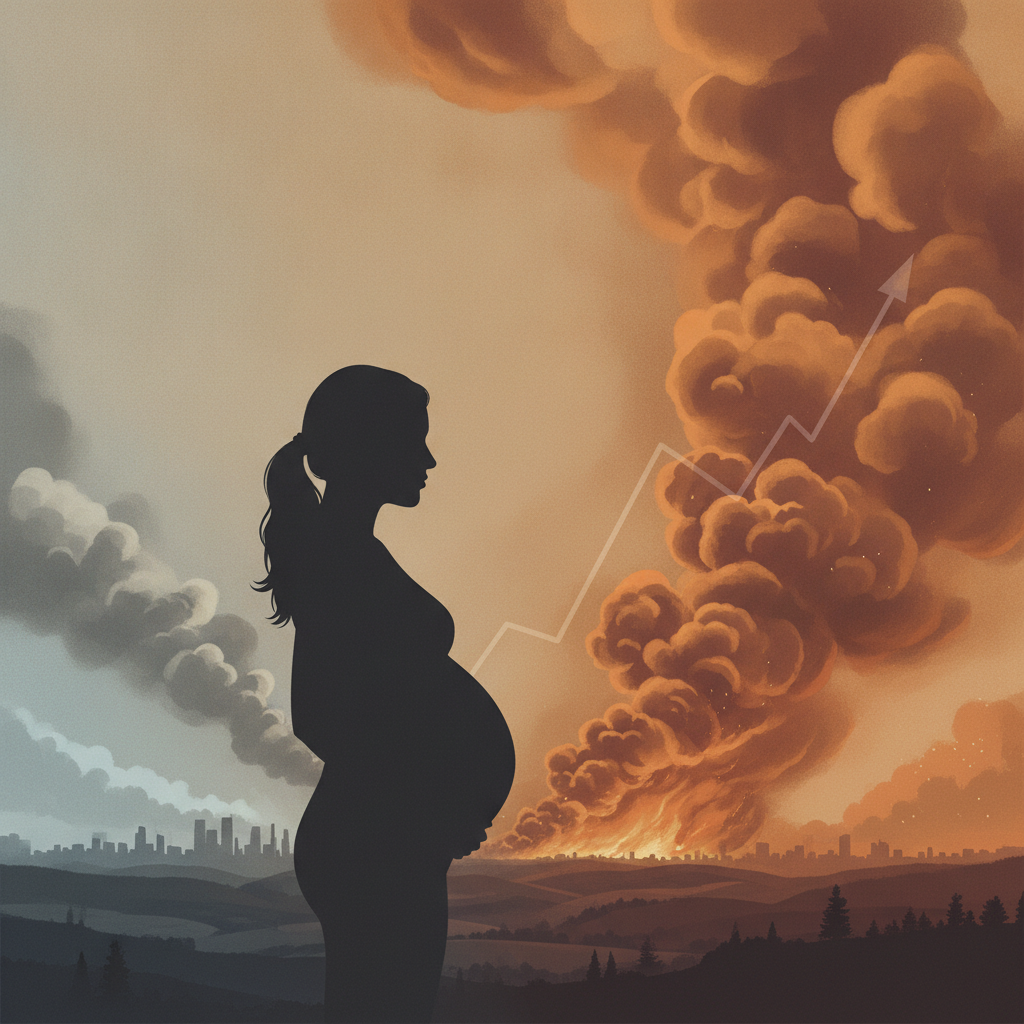
NewsWK — As summer haze from distant wildfires becomes an increasingly familiar sight across Bennington County and the surrounding region, a new national study shows that wildfire smoke has become the primary air pollutant affecting pregnancies in the United States.
According to a report first published by Stateline, while clean air regulations have successfully reduced industrial emissions and vehicle exhaust over the past two decades, rising wildfire smoke has largely canceled out those gains for expecting mothers.
Smoke Offsets Gains in Air Quality
The study, published in the journal Frontiers in Environmental Health, examined pollution and health records for roughly 64.5 million pregnancies across more than 2,800 U.S. counties between 2003 and 2019.
Researchers found that about 65% of the days that exceeded National Ambient Air Quality Standards during the study period were caused by wildfire smoke rather than local tailpipe emissions or smokestack pollution.
“Those gains have genuinely protected pregnant people and unborn babies, and without them, exposures today would be considerably worse,” said Menglu Liang, lead author of the study and assistant clinical professor of biostatistics at the University of Maryland, in a statement to Stateline. “What our findings show is that wildfire smoke is offsetting a growing share of these hard-won improvements.”
Health Risks for Mothers and Babies
Medical researchers caution that fine particles in wildfire smoke can trigger inflammatory responses that impair the placenta, which is critical for fetal growth and oxygen delivery.
Exposure during pregnancy has been associated with several health concerns:
- Preterm birth and low birth weight
- Increased risk of stillbirth
- Potential congenital anomalies
“These outcomes matter well beyond the delivery room and harms experienced before birth can echo for decades,” Liang told Stateline. “That makes prenatal exposure a particular public health concern.”
What This Means for Local Residents
Although Southern Vermont and neighboring communities in New York and Massachusetts are far from major fire zones, smoke drifting from blazes in Canada frequently lowers local air quality during summer months.
Health experts advise expecting parents to monitor daily air quality index reports, restrict outdoor exertion during high-smoke days, and utilize indoor air filtration when regional smoke advisories are issued.
This article was produced with the assistance of AI and reviewed by our editorial team.
Based on reporting by Kelcie Moseley-Morris originally published by Stateline. Read the original story.