Bennington
Iowa Army Ammunition Plant Lead Azide Detonation Set for Wednesday
Lead azide must be detonated in Iowa, Army says; some residents urged to evacuate Feds have added mitigation strategies, local aid ahead of lead azide detonation Army plans controlled detonation of lead azide in Iowa; Michigan officials monitor potential air…


Last updated:
Key points
- The U.S. Army scheduled the controlled detonation of 9,500 pounds of degraded lead azide for Wednesday, November 25, 2026.
- Officials ordered evacuations for Middletown, Iowa and a five-mile zone southwest of the ammunition plant.
- Federal agencies activated air, soil, and water monitoring to track potential lead dust dispersion across neighboring states.
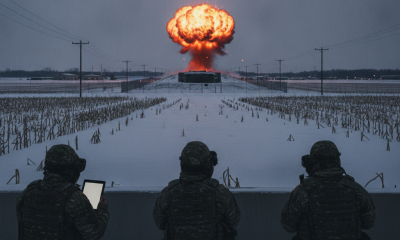
NewsWK — Federal emergency agencies are helping Iowa residents prepare for a major military hazard disposal project this week. On Wednesday morning, military crews will destroy five tons of dangerous explosive chemicals.
What is the Iowa Army Ammunition Plant lead azide detonation schedule?
The U.S. Army scheduled a controlled blast of approximately 9,500 pounds of volatile lead azide. The operation takes place on Wednesday, November 25, 2026, at 9:00 a.m. Central Time. Federal officials selected the Middletown, Iowa facility after safety delays. Consequently, crews built extra blast barriers and monitored wind patterns.
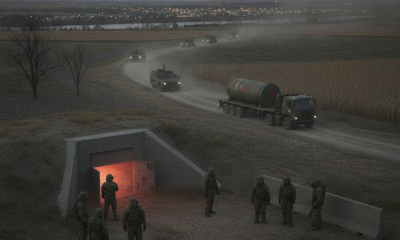
Crews originally planned the operation for earlier in the month. However, commanders paused the timeline to verify weather forecasts and enhance site protections. The explosive payload fills 68 industrial drums. Together, these containers represent the entire remaining stockpile of this specific compound in the United States.
Why did officials choose an Army lead azide detonation Middletown procedure?
Military officials determined that long-term storage caused the lead azide to degrade and form unstable crystals. Consequently, the volatile explosive became extremely sensitive to shock, friction, and mild temperature shifts. Authorities concluded that moving the material offsite posed an immediate hazard to surrounding communities.
“Inaction is no longer an option,” said Maj. Gen. Eric Shirley, who oversees the disposal effort. Because the chemical structure broke down over time, transport trucks could trigger a spontaneous blast on public highways. Therefore, commanders decided to destroy the barrels directly on the 19,000-acre plant grounds.
What led up to the lead azide controlled detonation decision?
Plant operator American Ordnance initially explored chemical neutralization with Georgia-based MuniRem Environmental in late 2025. However, federal managers chose a direct destruction plan by early 2026. The Environmental Protection Agency subsequently issued an emergency permit to allow the controlled blast.
Environmental groups attempted to stop the Operation Through Federal Court filings. Subsequently, President Donald Trump temporarily halted work on November 23 to allow judicial review. Later that same day, the Eighth Circuit U.S. Court of Appeals cleared the Army to proceed. Acting U.S. Secretary of the Army Adam Telle confirmed crews would work to contain the resulting plume on site.
How will the Iowa Army Ammunition Plant explosion affect nearby communities?
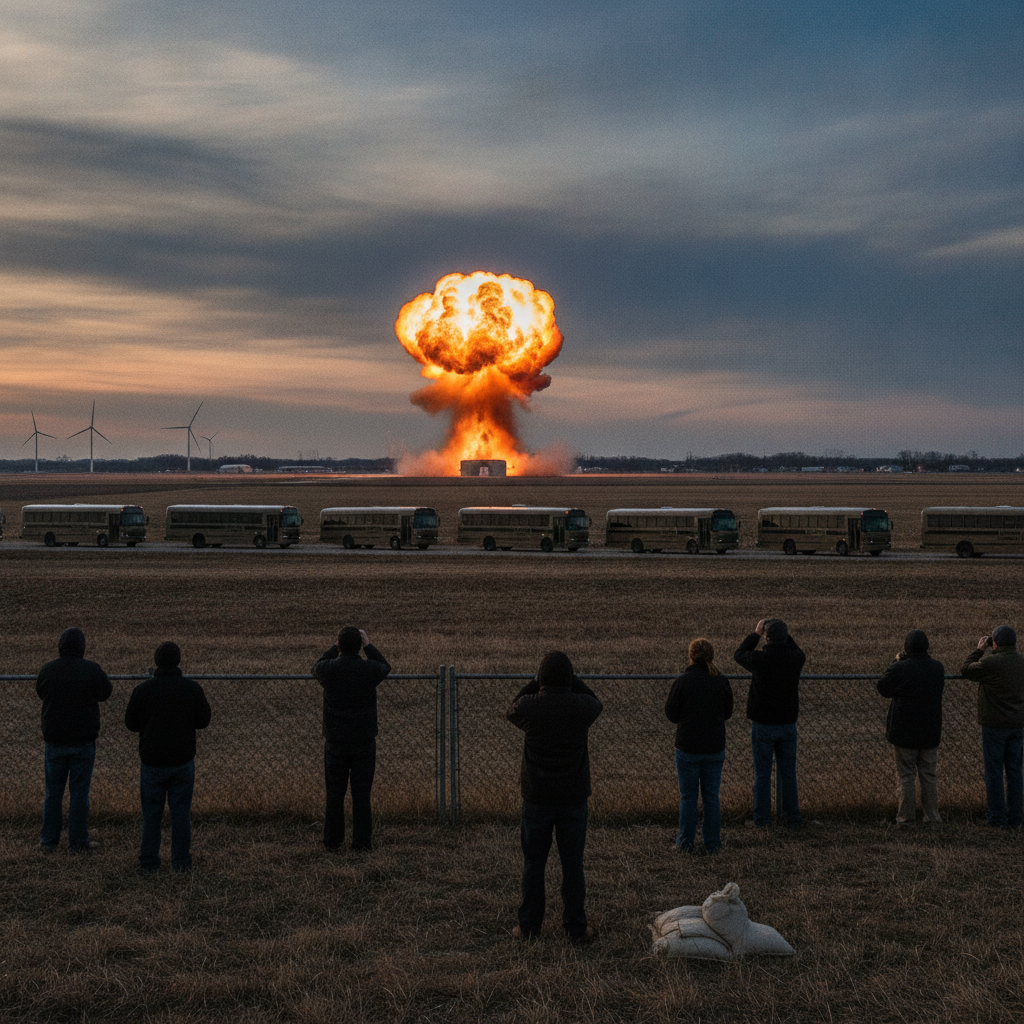
Emergency planners ordered temporary evacuations for Middletown residents. This order also covers families living within five miles southwest of the facility. Additionally, computer models suggest airborne lead dust could travel over 100 miles. Because of this risk, health officials advised regional residents to remain indoors with closed windows.
The Federal Emergency Management Agency activated local resources to support families leaving the evacuation area. Meanwhile, technicians placed thick soil barriers and water cushions around the target zone to suppress airborne particles. Officials also promised continuous air, water, and soil testing before and after the blast. Finally, maps showing predicted lead azide explosion Iowa plume movements will update hourly online.
Key facts about the upcoming military operation include:
- Total material volume: 68 drums weighing roughly 9,500 pounds.
- Evacuation zone: Middletown, Iowa and areas five miles southwest of the plant.
- Regional impact zone: Potential lead particle plume reaching over 100 miles into northern Missouri.
- Environmental safeguards: Water barriers, blast walls, and air monitoring stations.
How does this safety effort matter to readers in Southern Vermont?
While the blast occurs in the Midwest, federal oversight of military stockpiles impacts hazardous material handling nationwide. Therefore, Communities Across Bennington County and New England monitor these safety protocols closely. National decisions set key precedents for regional soil testing and air quality standards.
Engineers plan to complete both explosions during the morning hours of November 25. Afterward, environmental teams will collect soil and water samples across the surrounding countryside. Local authorities across multiple states will then evaluate the monitoring data. Ultimately, this testing ensures public safety throughout the holiday week.
This article was produced with the assistance of AI and reviewed by our editorial team.
Sources
Related: Army lead azide detonation Iowa set for Wednesday
Related: U.S. Army Iowa Bomb Detonation Moves Forward Amid Legal Battle