Arlington
Alzheimer’s Disease Prevention Study: How Exercise and Brain Games Help
Two-step routine could help ward off Alzheimer’s disease: study Bill Ritter sits down with Gail Washington to talk healthy habits in fighting Alzheimer’s disease ‘It’s never too late’: The importance of a healthy lifestyle in preventing dementia The two-minute habits…

About Alzheimer's Disease Prevention Study

Last updated:
Key points
- A six-month clinical trial found that combining indoor cycling with computerized brain games helped preserve key brain structures in older adults.
- Participants engaging in both cycling and speed-of-processing brain games showed less cortical thinning over 18 months than those doing cognitive training alone.
- Health experts encourage seniors to pair 150 weekly minutes of aerobic exercise with engaging brain puzzles to support long-term cognitive health.
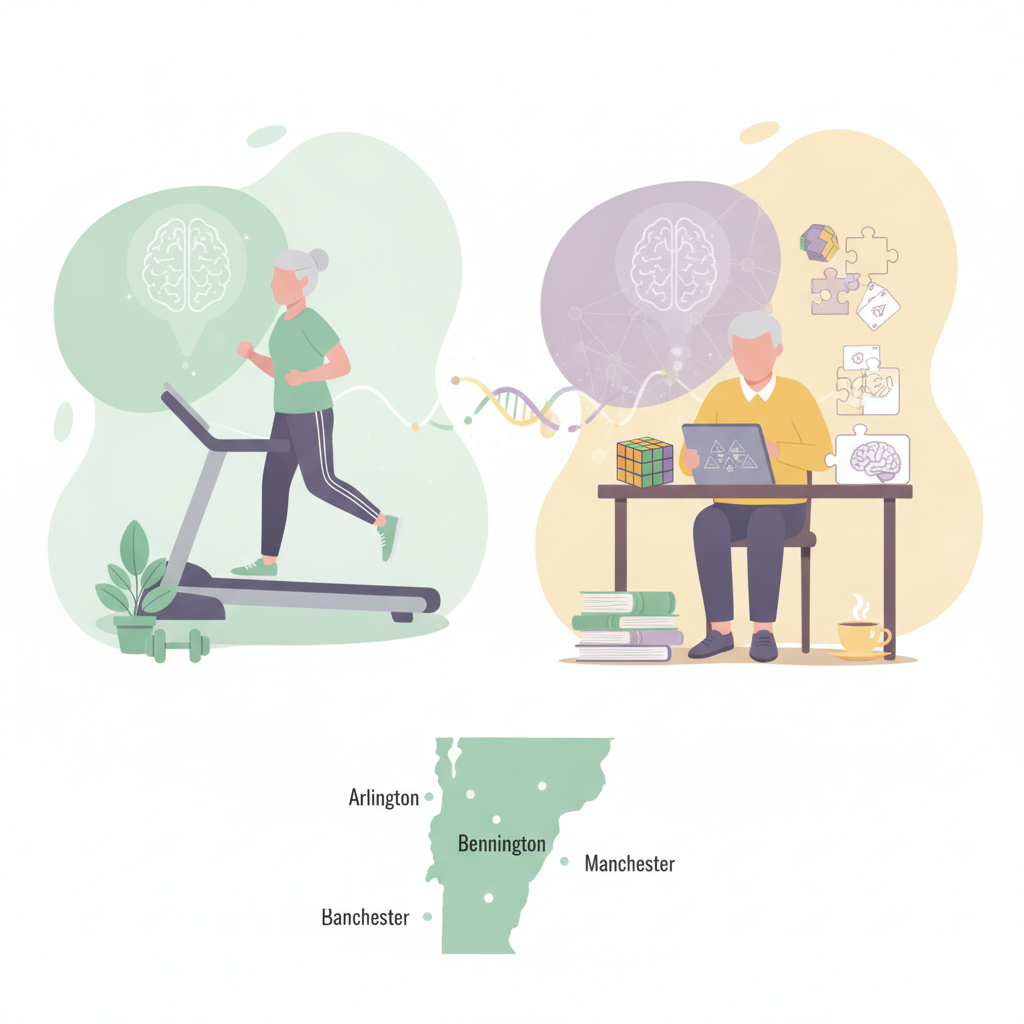
NewsWK — For Seniors Across Bennington County, keeping the mind sharp is a top daily priority. A new clinical trial shows that combining physical exercise with computer brain workouts helps aging brains. Specifically, this combined routine may slow structural tissue loss over time.
What did the ACT trial Alzheimer’s research discover about brain health?
The ACT trial Alzheimer’s research discovered that combining indoor cycling with computer games helps preserve key brain structures. Researchers monitored participants over an 18-month period. People who completed both activities experienced significantly less thinning in Alzheimer’s-vulnerable brain regions. In contrast, participants using mental games alone lost more tissue.
Researchers conducted this randomized clinical trial across three major academic facilities in the United States. The study focused on 146 older adults living with amnestic mild cognitive impairment. This condition creates memory challenges that exceed typical age-related changes. However, it is not full dementia.
Participants averaged 73.8 years of age. They joined structured sessions three times every week for six full months. Scientists split the participants into four distinct groups to compare different routines:
- Combined ACT group: Members completed 80-minute sessions. These workouts combined stationary cycling with computerized visual attention games.
- Aerobic exercise group: Members completed 30 to 50 minutes of moderate-to-vigorous indoor cycling.
- Cognitive training group: Members played computerized speed-of-processing games. These games stretch attention and visual processing.
- Control group: Members practiced simple physical stretching. They also enjoyed mental hobbies like Sudoku, word puzzles, or solitaire.
How does a cycling and brain training study track physical brain changes?
This cycling and brain training study used magnetic resonance imaging scans to monitor structural brain changes over time. Specifically, doctors evaluated cortical thickness in key regions vulnerable to Alzheimer’s disease. They gathered these scans at the baseline and at six months. Later, they scanned again at 12 and 18 months.
The MRI scans revealed promising structural trends for the combined exercise group. Participants in the joint program retained more cortical thickness in signature areas. Meanwhile, those doing only mental exercises experienced greater tissue thinning over time.
However, researchers noted that physical cycling alone offered similar structural protection in several measures. Meanwhile, brain scans also tracked white matter hyperintensities. These spots indicate vascular brain aging. Ultimately, the scans showed no significant differences between the test groups.
Can exercise and brain training dementia routines prevent mild cognitive impairment?
Exercise and brain training dementia routines show strong promise for seniors. However, researchers clarify that these habits do not fully prevent mild cognitive impairment or cure Alzheimer’s disease. Instead, structured workouts help preserve existing brain tissue. Also, they support short-term memory in seniors with early cognitive loss.
Participants in the combined group showed clear short-term gains in global cognitive scores. These improvements occurred during their active six-month training period. In contrast, participants in the control group experienced gradual cognitive declines across the 18-month study period.
However, scientists faced notable study challenges over time. Nearly 35 percent of participants dropped out before the 18-month mark. In addition, the COVID-19 pandemic forced researchers to deliver some sessions remotely. Consequently, this shift altered participant compliance.
How Can Bennington County seniors apply these research findings locally?
Health experts recommend striving for 150 minutes of moderate aerobic movement each week. Seniors can pair regular exercise bike rides with active computer games. Therefore, this dual habit offers a practical way to protect brain health.
Seniors across Southern Vermont do not need high-tech facilities to stay active. For example, local indoor cycling equipment at community centers offers safe, year-round aerobic options during cold winters. Meanwhile, digital brain-training applications and challenging visual games are readily accessible on home tablets and computers.
Because consistency matters most, medical leaders suggest picking enjoyable activities. Combining a brisk indoor pedal session with computer-based memory tasks creates an engaging weekly routine. Still, local doctors always recommend checking with a primary care provider before starting any new vigorous exercise program.
This article was produced with the assistance of AI and reviewed by our editorial team.
Sources
Related: Second Death Reported in Legionnaires’ Disease Outbreak on Manhattan’s Upper East Side
Related: Bennington Health Focus: Long Sleep Duration Heart Disease Risk