Bennington
Mass. Joins Fight For Immigrant Detention Facility Inspections
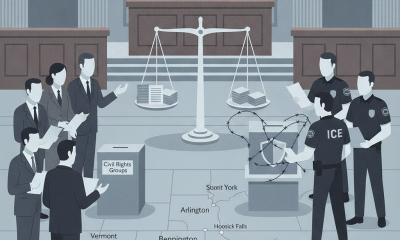
Concerned about conditions in federal immigrant detention facilities but often barred from entering them, some Democratic-led states are fighting to enforce their own health and safety standards at the sites. The Trump administration, citing the Supremacy Clause of the U.S.…


Last updated:
Key points
- Massachusetts, Colorado, and Washington have passed laws to inspect private immigrant detention centers over health and sanitation complaints.
- Private prison operators like GEO Group argue that federal preemption shields them from state-level health and safety regulations.
- Federal detention populations jumped to over 65,700 people in July as the federal ombudsman office was shuttered.
NewsWK — States across the country are clashing with private prison operators over living conditions. Nearby in Massachusetts, state leaders recently expanded health and safety checks on holding centers.
For residents in Bennington County and nearby Berkshire County, these regional policy shifts hit close to home. State borders do not stop public health concerns or family ties.
Why it matters
State inspection disputes directly affect regional public health, immigrant support networks, and state legal authority across New England. When neighboring Massachusetts enforces safety standards, regional facilities feel the ripple effects. Therefore, local families tracking detained relatives closely follow these jurisdictional battles.
Furthermore, the expanding national detention system affects immigration court caseloads across New England. In addition, health outbreaks inside locked facilities can quickly spill into surrounding civilian communities.
How does Massachusetts immigrant detention oversight work?
Massachusetts oversight empowers state auditors to inspect holding facilities directly for basic safety compliance. Massachusetts Democratic Gov. Maura Healey recently signed legislation authorizing these reviews. Under the measure, state officials examine whether private sites comply with local sanitation, health, and fire rules. Consequently, this policy holds federal contractors accountable to state standards.
Meanwhile, the new statute gives state auditors clear entry into facilities within state borders. Residents near the Berkshire County line often care deeply about humane regional custody practices. However, private contractors frequently resist state reviews. Specifically, companies assert federal supremacy in court to block inspectors.
Why are states demanding state oversight immigrant detention rules?
States demand oversight because they face thousands of complaints regarding moldy food, poor medical care, and unsanitary quarters. State leaders argue that commercial operators must obey state building, fire, and health codes. Therefore, when companies refuse entry, states respond with formal lawsuits and civil penalties to force compliance.
For example, Washington state officials recently fought the Florida-based GEO Group over unannounced health reviews. In that case, inspectors received over 3,500 complaints regarding a Tacoma center. However, the private operator denied state inspectors access 10 times since 2023.
In legal filings, Washington officials cited reports of bug-infested food and broken plumbing. Ellen Range is a section chief in the Washington Office of the Attorney General. Range stated, “Our point is that GEO is a private entity, and so it doesn’t get to claim these federal preemption defenses because those are reserved for the federal government.”
Next door in Colorado, lawmakers approved $50,000 fines for centers that block health agents. In addition, Colorado sued GEO Group over access during a confirmed tuberculosis case. A federal judge subsequently blocked parts of that statute while litigation continues.
What role do private immigrant detention facilities play?
Private immigrant detention facilities house a major portion of federal detainees under commercial contracts with the federal government. Companies manage daily meals, security, and healthcare routines inside these private centers. Consequently, these corporations argue that state health agencies have no constitutional authority over their operations.
GEO Group operates nearly two dozen detention facilities across the nation. But company leaders argue that state inspections disrupt federal policy. During a recent earnings call, GEO Group CEO George Zoley suggested full federal ownership of properties. Zoley argued that federal ownership “will provide stronger credibility in the courts…that these are federal facilities carrying out the congressional priorities of immigration programs and policies that Congress has passed.”
What are the federal immigrant detention standards today?
Federal immigrant detention standards establish baseline requirements for nutrition, legal access, and medical treatment for detainees. A Department of Homeland Security spokesperson stated that immigration officials regularly inspect sites and maintain high care standards. However, federal watchdogs and congressional investigators continue to document severe operational breakdowns and civil rights complaints.
In May, the Trump administration shuttered the Office of Immigration Detention Ombudsman. That independent office previously investigated detainee deaths and medical access complaints. Still, other government watchdogs have reported glaring issues. For example, federal inspectors documented dirty water and food storage failures at a now-closed Florida holding facility.
Key national figures illustrate the rapid expansion of the system:
- Federal authorities detained more than 65,700 individuals by mid-July.
- The nationwide detained population increased roughly 70 percent over two years.
- Federal agents arrested 51,000 immigrants in July alone.
As detention numbers rise, the struggle over health standards continues. Therefore, community advocates in Southern Vermont and neighboring regions plan to keep watching. Specifically, they want to see how federal courts rule on state authority.
This article was produced with the assistance of AI and reviewed by our editorial team.
Sources
Related: Border County Tax Pressures Mount as New York Shifts SNAP Costs
Related: State Oversight Slows Private Equity Healthcare Deals in Region
See a typo? Report it here.