Bennington, VT News
Vermont Act 181 Bennington Forum Sparks Debate Over Conservation Laws
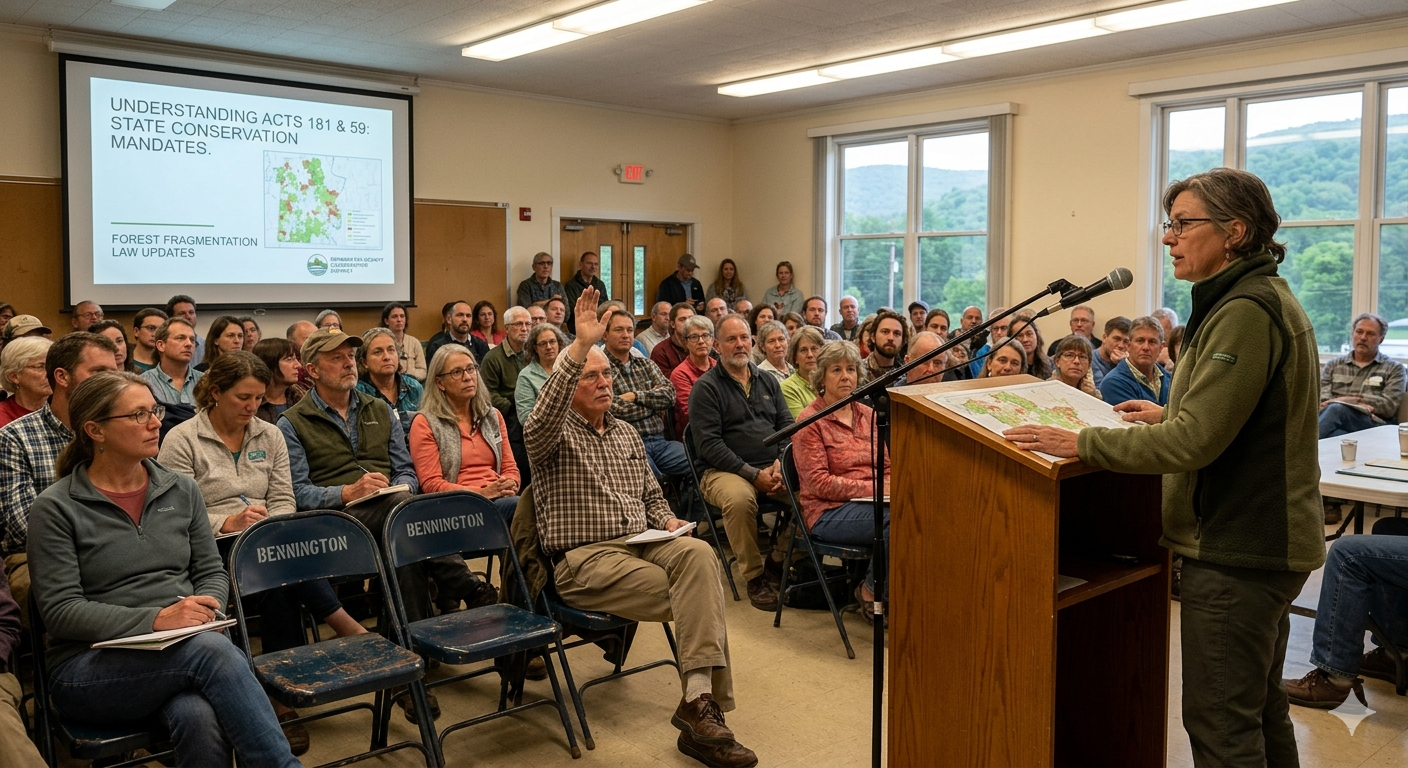
Bennington residents and landowners gathered for a forum hosted by the Bennington County Conservation District to debate the impacts of Vermont Act 181 and Act 59 on rural property rights, forest fragmentation, and state land-use regulations.

Last updated:
BENNINGTON, Vt. NewsWK —
State land-use laws and conservation mandates are drawing intense scrutiny across Southwestern Vermont, prompting local environmental groups and the Bennington County Conservation District (BCCD) to launch a regional informational tour.
The tour kicked off last night with a heavily attended public session in Bennington, where officials and residents clashed over the long-term impact of Act 181 and Act 59 on private property rights, forest fragmentation, and local economies.
Vermont 30 by 30 Act 59 and Landmark Land Use Policies
The regional discussions center on two closely linked, sweeping pieces of legislation passed by the Vermont General Assembly:
Act 59 (The Community Resilience and Biodiversity Protection Act): Enacted in 2023, this law establishes a historic “30 by 30” initiative, mandating that 30% of Vermont’s land area be permanently conserved by 2030, rising to 50% by 2050. With the state currently sitting at roughly 27% conserved land, a finalized framework is due to the state legislature this month.
Act 181: Passed in 2024 as a major overhaul to Act 250 (Vermont’s core land-use law), this statute aims to combat forest fragmentation and encourage climate resilience. It streamlines development and affordable housing projects in designated downtown “growth centers” (Tier 1) but drastically tightens environmental regulations in rural, forested, and ecologically sensitive zones (Tier 3).
Tensions Flare Over Vermont Land Use Regulations
While environmental advocates frame the laws as essential tools to protect Vermont’s vanishing biodiversity and shield contiguous forests from division, last night’s forum highlighted a stark, growing rural-urban political divide.
Addressing Act 181 Forest Fragmentation and Rural Restrictions
Local landowners, farmers, and forestry entrepreneurs expressed deep anxiety over the implementation of a new statewide “tiered” mapping system. Opponents argue the regulations unfairly penalize rural communities and working landscapes.
“Farms and managed landscapes are not outside the conservation framework — they are a key part of it,” noted land management advocates in testimony regarding the acts, pointing out that expanded permitting burdens could harm the very people maintaining woodlots and agricultural fields.
A major flashpoint in the discussion remains the impending “Road Rule,” which would trigger strict state environmental permits for private roads or long driveways constructed in rural tracts. Critics contend this rule and “Tier 3” protections disproportionately impact low-to-middle-income Vermonters trying to build on family land.
What’s Next for Bennington County Conservation District and Lawmakers?
The ongoing regional tour comes at a critical legislative juncture. Lawmakers in Montpelier have been evaluating S. 325, a compromise bill designed to hit the brakes on certain elements of Act 181. If fully passed, S. 325 will delay the rollouts of the Tier 3 regulations and the controversial Road Rule, allowing more time for mapping adjustments and public feedback from rural municipalities.
The Bennington County Conservation District and its regional partners plan to host several additional workshops over the coming weeks to help local town planning commissions and private citizens navigate the impending mapping deadlines.
Related: Bennington 250 Announces ‘250 for 250’ Year-End Gala to Support Anniversary Celebrations
Related: Bennington Battle Day Marked as Historic Monument Awaits Repairs
Related: Warm, Cloudier Pattern Sets In for Bennington County Before Weekend Drizzle and Cooler Air
Related: Damp Late-August Stretch Brings Rain, Drizzle, and Cooler Temperatures to Bennington County
Related: Border County Tax Pressures Mount as New York Shifts SNAP Costs
Related: Smithsonian Partners With Bennington Groups for Cultural Initiative
See a typo? Report it here.