
Bennington
Vermont School Closures: How Budget Mandates and Falling Enrollment Threaten Rural Classrooms
Tough budget decisions and declining enrollment are driving districts to consider closing local schools, regardless of potential district mergers. Read the story on VTDigger here: Districts around Vermont consider school closures .


Last updated:
Key points
- Harwood Unified Union School District is considering closing elementary schools in Fayston and Moretown to avoid $3.3 million in tax penalties.
- State rules double-tax school districts that exceed per-student spending caps by more than 118% of the statewide average.
- Vermont K-12 enrollment has dropped 26% over 23 years, leading 20 public schools to shut down since the 2019-2020 school year.
Montpelier, Vt. NewsWK — Residents across Southern Vermont and Bennington County are watching statewide education pressures hit local communities. Currently, school districts throughout Vermont face tough choices about keeping small, rural schools open. Furthermore, declining birth rates and strict state budget targets push several boards toward drastic consolidation plans.
What Is Driving Vermont School Closures Across Rural Districts?
Strict state spending caps and Shrinking Student Populations Drive discussions around Vermont school closures. Under new state funding rules, districts that exceed spending limits face severe property tax penalties. Because of these pressures, local school boards must reconsider operating multiple under-enrolled facilities in small rural towns.
For years, local school boards have tried to balance small class sizes with rising expenses. However, recent state legislation lowers the threshold for allowable per-pupil spending each year. Specifically, the state imposes double taxation when a district spends above 118% of the statewide per-pupil average. That heavy tax penalty applies directly to the excess spending amount.
Consequently, education leaders across Vermont must trim millions of dollars from their operating budgets. At the same time, student counts continue to drop across the state. State Agency of Education figures show statewide K-12 enrollment declined 26% over the past 23 years. In addition, 20 public schools across Vermont have shut their doors since the 2019–2020 academic year.
How Does Vermont Declining School Enrollment Affect Local Education Budgets?
Vermont’s declining school enrollment reduces state funding allocations while fixed building costs remain high. When student headcounts drop, per-pupil cost calculations rise automatically. As a result, districts face steep financial penalties. Therefore, boards must consolidate classes, reduce staff, or close smaller school buildings to lower overhead costs.
This trend reflects a broader pattern across the nation. In fact, more than 100 public schools nationwide have closed since last year due to lower birth rates. However, Vermont experiences exceptionally low birth rates compared to most other states. Therefore, rural school buildings designed for larger generations now operate far below capacity.
Meanwhile, multiple school systems across the state are evaluating structural changes:
- Hartford School District is reviewing the potential closure of an elementary school.
- Paine Mountain School District is analyzing plans to close high schools in Northfield and Williamstown.
- Cabot voters will decide this winter whether to close their town high school.
- Oxbow Unified Union School District is gathering public feedback on consolidating facilities in Bradford and Newbury.
What Are Vermont School Budget Cuts Forcing in the Harwood Unified Union School District?
The Harwood Unified Union School District must trim $3.3 million from its proposed budget. This reduction is necessary to prevent steep state tax penalties. To reach that target, board members voted on Nov. 18 to consider closing elementary schools in Fayston and Moretown. Currently, the district serves about 1,500 students across six towns.
Specifically, Harwood includes the towns of Duxbury, Fayston, Moretown, Waitsfield, Warren, and Waterbury. September data showed a 10% drop in district enrollment over nine years. Furthermore, Harwood lost 37 students this year alone. Because of these figures, board members evaluated five elementary schools during a lengthy meeting in Moretown.
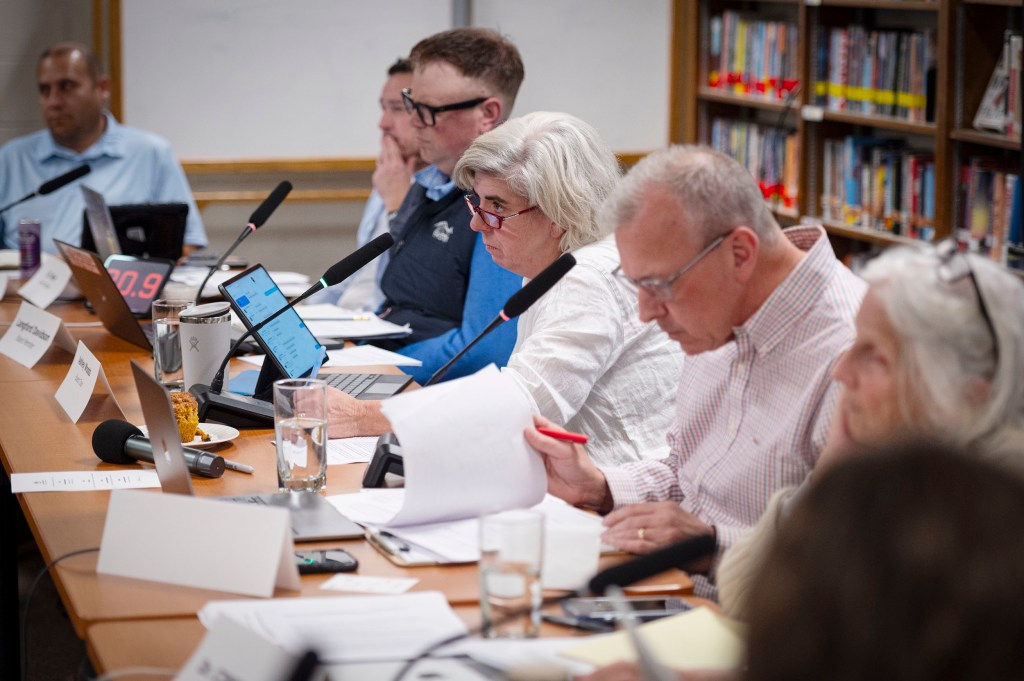
During that session, more than 175 community members packed the Harwood Middle and High School library. Across 90 minutes of public comment, residents urged the board to protect neighborhood schools. “It is exhausting. Every day I walk into work wondering, ‘Am I going to lose my job?'” said Liz Harris. Harris works as an employee at Moretown Elementary School.
Next, board members spent over three hours debating which schools to consolidate. Ultimately, the board focused on Fayston Elementary and Moretown Elementary. Fayston has the lowest enrollment in the district and sits in an isolated location. Meanwhile, Moretown Elementary sits within a FEMA flood plain and lacks a backup generator. By contrast, board members favored keeping Waitsfield Elementary open. That building features a full kitchen, walkable village access, and space for expansion.
How Do Vermont Rural Schools Closing Impact Local Community Vitality?
When Vermont rural schools close, small towns often lose key community anchors. Additionally, these communities frequently struggle to attract young families. Closure decisions can also increase commuting times for children and reduce local civic engagement. Furthermore, town residents often see long-term shifts in housing markets and local business support.
During the Moretown meeting, community members warned about the lingering effects of shutting down small schools. For example, parent Matt Williams highlighted the unique hands-on learning at Moretown Elementary. There, environmental programs connect students directly with local land and history.
Residents also heard from Tom Frazier of Roxbury, where the local village school closed in 2024. Frazier explained that the closure prompted several young families to move away. Other families chose homeschooling to avoid long bus rides. “In Roxbury there are no people having kids,” Frazier cautioned the audience. Therefore, he urged districts to preserve local schools despite potential financial penalties.
Before taking a final vote, the Harwood board must hold public hearings during early December. Those hearings will take place in Moretown, Fayston, and Waterbury. Ultimately, approving a closure requires a two-thirds majority vote by the school board.
Vermont local voters will ultimately decide how to balance fiscal responsibility with preserving neighborhood schools. These crucial choices will happen during upcoming town meeting budget votes.
This article was produced with the assistance of AI and reviewed by our editorial team.
Sources
Related: School closures and consolidations rise across Vermont and nationwide
Related: Schools Revisit Immigration Enforcement Rules as Federal Policies Shift


