Bennington
How Prediction Markets Lobbying Impacts Vermont Gambling Regulations
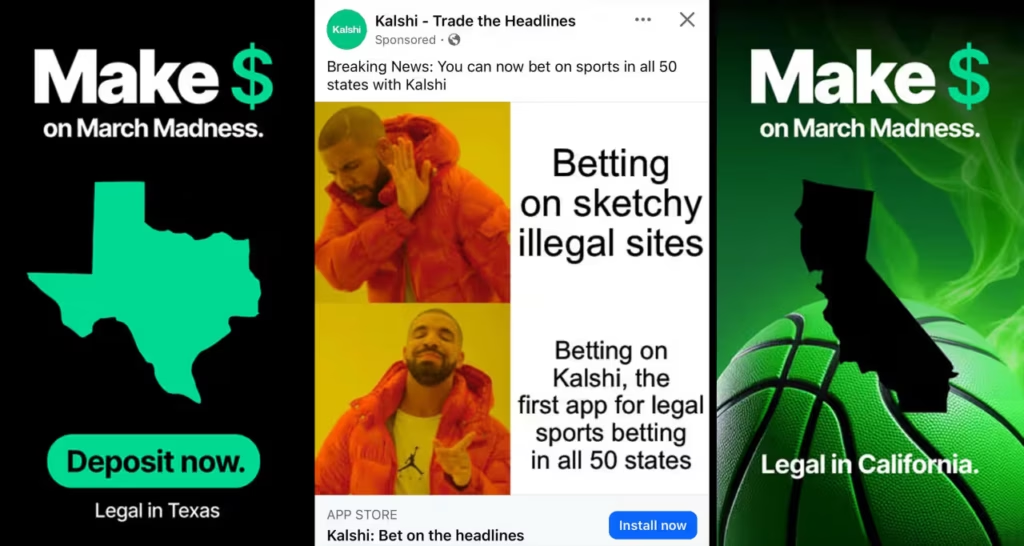
Kalshi, Polymarket and the Coalition for Prediction Markets have spent at least $3 million this year on lobbying and campaign contributions across the federal and state levels, according to a new report from the government watchdog group OpenSecrets. Prediction market…

Last updated:
Key points
- Prediction market platforms like Kalshi and Polymarket have spent over $3 million this year on political lobbying and campaign contributions.
- The platforms argue they are federally regulated commodity markets, while states counter that they act as unregulated sportsbooks bypassing local taxes and consumer protections.
- With multi-million dollar lobbying efforts and lawsuits flying across the country, the legal battle over state-level regulation may ultimately be decided by the U.S. Supreme Court.
NewsWK — Vermont legalized mobile sports betting recently to bring tax dollars back to local communities. However, a major corporate battle over online wagering is heating up across the nation. This fight could soon change how local residents bet on everything from elections to sports.
A new report from the watchdog group OpenSecrets reveals that prediction platforms are spending millions of dollars. They want to influence both state and federal governments. In addition, these platforms allow users to buy and sell contracts on real-world events.
Why it matters
This massive spending push directly impacts how Vermont regulates online wagering and protects local consumers. If these platforms successfully bypass state oversight, Vermont could lose vital tax revenues that fund public services. Furthermore, local bettors in Bennington County would lose critical consumer protections provided by state gaming laws.
Vermont has established clear rules for sports betting. These rules ensure fair play, prevent underage gambling, and fund problem gambling help programs. Meanwhile, prediction markets operate in a gray area. They claim they do not run sportsbooks. Instead, they compare themselves to traditional commodity markets, like those trading corn or oil.
Therefore, local lawmakers worry about this distinction. If a platform allows betting on sports without state approval, it bypasses local taxes. As a result, this leaves Southern Vermont communities without the economic benefits of regulated gaming. It also creates an uneven playing field for businesses that follow state rules.
Why Is Prediction Markets Lobbying Surging Nationwide?
Prediction markets lobbying is surging nationwide because online betting platforms want to secure favorable legal rules. Watchdog group OpenSecrets reports that platforms like Kalshi and Polymarket have spent over $3 million this year. Consequently, these companies are trying to influence lawmakers and regulators across the country to control online betting.
Moreover, these companies are deploying resources rapidly. For example, Kalshi has hired lobbyists in 41 different states. This list includes neighboring New York, where lawmakers are debating prediction market rules. Specifically, the industry is targeting states that are actively considering new legislation or regulatory bans.
In addition, the spending extends beyond state capitals. At the federal level, Kalshi spent nearly $1 million in just the first half of this year. They focused their efforts on Congress, the White House, and federal financial regulators. Therefore, this double-sided approach shows how high the stakes are for these companies.
What Are Kalshi Political Donations Targeting?
Kalshi political donations heavily target the executive leaders who control state enforcement and regulatory oversight. Specifically, Kalshi poured over $300,000 into attorney general associations. The company also gave a combined $250,000 to Democratic and Republican governors’ groups. As a result, this funding builds political capital before legal battles reach local courts.
Furthermore, the corporate strategy spreads money across both major political parties. Here is a breakdown of Kalshi’s recent political contributions:
- $300,000 split between the Republican and Democratic Attorneys General Associations.
- $150,000 donated to the Democratic Governors Association.
- $100,000 given to the Republican Governors Association.
A spokesperson for Kalshi, Dani Lever, stated, “Like many U.S. regulated companies, we support candidates on both sides of the aisle.” However, critics argue this money aims to blunt state-level legal challenges. In fact, state attorneys general are often the first line of defense against unregulated gambling.
How Do Prediction Market Gambling Regulations Affect States?
State prediction market gambling regulations affect local communities by determining whether betting platforms must follow consumer safety and tax rules. While Vermont enforces strict limits on sports wagering, prediction markets claim they are commodity platforms. Consequently, they argue federal regulators, rather than local gaming boards, should govern their operations.
However, many state lawmakers reject the industry’s comparison to corn or oil markets. They argue that betting on a football game or an election outcome is gambling, plain and simple. Therefore, they believe these platforms must follow the same rules as local sportsbooks.
As a result, this debate has triggered a flurry of lawsuits. Some states have tried to ban these platforms outright. Meanwhile, the platforms are fighting back in court. They argue that state-level prediction market gambling regulations are invalid because federal law preempts them.
Why Is the CFTC Prediction Markets Debate Important?
The CFTC prediction markets debate is important because federal claims of sole authority threaten state regulatory powers. The Commodity Futures Trading Commission has even sued nine states to block local enforcement. As a result, this legal showdown leaves the future of state-level oversight and consumer protection in serious doubt.
Meanwhile, the federal agency currently faces significant internal challenges. The five-member commission has four vacancies, leaving it heavily understaffed. Yet, the agency continues to defend its oversight of the CFTC prediction markets. Consequently, this federal stance complicates state efforts to protect local consumers.
In addition, many legal experts believe this clash is heading to the highest court in the land. Brad Lipton, a director at the Roosevelt Institute, noted that prediction markets face a survival question. He stated, “It’s not at all clear to me that their business model can compete if they are going to comply with state law.” Furthermore, he suggested the lobbying push is an attempt to build enough political power to bypass these legal issues.
Ultimately, the outcome of this battle will shape the future of online wagering in Southern Vermont. If federal regulators win complete control, local authorities will have no say in how these platforms operate. Therefore, local residents may see unregulated betting options expand, while state tax coffers remain empty. We will continue to track this issue as it moves through federal courts and affects our region.
This article was produced with the assistance of AI and reviewed by our editorial team.
Sources
Related: Border County Tax Pressures Mount as New York Shifts SNAP Costs
Related: State Officials Target Online Prediction Markets Over Gambling Concerns
See a typo? Report it here.